Augmented Reality gaming promised to revolutionize our lives, transforming mundane environments into digital playgrounds, yet big tech often leaves us waiting for that “killer app” to justify the expensive hardware.
While companies pour billions into heavy headsets and complex ecosystems, the real revolution might just be happening in a garage with a 3D printer and a cheap microcontroller. A brilliant maker has taken matters into their own hands, proving you do not need a thousand-dollar visor to blast aliens in your bedroom. This is the story of how a simple ESP32 chip is breathing new life into the dream of home AR gaming.
The DIY Hero We Didn’t Know We Needed
The gaming world is full of promises, but delivery is often where things fall short. That is until a maker known as HJWWalters decided to bypass the industry giants and build something purely for the love of engineering. The project surfaced recently on social channels and has quickly become a beacon for the open-source community.
HJWWalters designed a handheld console that looks less like a Game Boy and more like a prop from a futuristic movie. It is a gun-shaped device powered by the versatile ESP32 microcontroller. But this is not just a plastic toy; it is a fully functional Augmented Reality system that uses your actual surroundings as the game map.
The device scans the room and generates digital targets that appear on its screen, overlaid onto the live video feed of your home. It creates an instant connection between the physical world and the digital game logic, something Nintendo and Sony have spent decades trying to perfect.
Under the Hood: How a Cheap Chip Powers AR
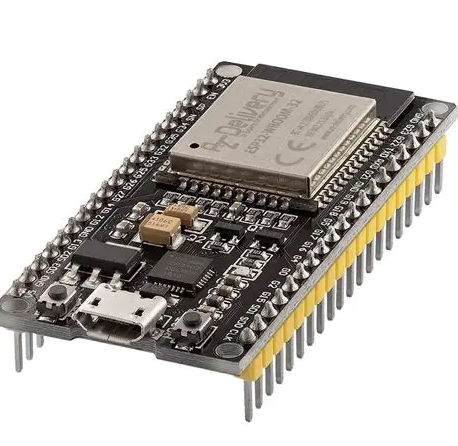
What makes this project truly fascinating is the hardware efficiency. Most AR systems require powerful processors to handle video feeds and object recognition. This project manages to pull it off using the ESP32-CAM, a module that costs less than a decent cup of coffee.
The setup features a GC9A01 circular TFT display mounted on the back of the barrel.1
The system uses AI technology to analyze the video feed in real time, identifying potential spawn points for targets based on the layout of your room.
This means the game adapts to your environment. A target might pop up from behind your sofa or hover near your bookshelf. The immersive nature of the gun-shaped controller forces you to physically aim and squeeze a trigger, adding a tactile layer that tapping a smartphone screen simply cannot match.
Gameplay Mechanics: Simple yet Addictive
The beauty of this project lies in its simplicity. Modern AAA games are often bloated with complex mechanics and loot boxes, but this ESP32 shooter goes back to the roots of arcade fun.
The rules are straightforward. You have 10 shots.1 The system generates targets that appear in your environment, and your job is to locate them through the circular display and take them down.1 The game tracks your score and records your hits, ending only when you have exhausted your ammunition.1
There is no artificial time limit.1 The only clock ticking is the battery life of the device itself. This creates a “pick up and play” loop that is incredibly satisfying. It essentially turns your entire house into a carnival shooting gallery, where the targets are digital but the aiming skill required is very real.
The Immersion Factor
The 3D-printed enclosure is what really sells the experience. By shaping the controller like a gun and mounting the screen directly in the line of sight, the maker has solved a major ergonomic issue found in mobile AR games.
When playing Pokémon GO, you are holding a phone flat in your hand, which feels disconnected from the action. Here, the form factor dictates the function. You naturally raise the device to your eye level to aim, aligning your physical posture with the in-game action.
This “tactile immersion” is a lesson for big hardware manufacturers. Sometimes, the shape of the controller matters just as much as the resolution of the screen. The feedback from the trigger and the act of physically scanning the room creates a sense of presence that is hard to fake.
Why This Matters for the Future of Gaming
We are currently in a strange limbo regarding AR technology.2 The hardware is getting better, but the use cases are often relegated to industrial applications or simple social media filters.
Projects like this remind us that innovation often comes from the bottom up. By using accessible components like the ESP32 and sharing the process online, makers like HJWWalters are democratizing the technology.1 They are showing us that we do not need to wait for a massive corporation to authorize our fun.
This project is a proof of concept that affordable, fun, and immersive AR is possible today with off-the-shelf parts. It challenges the notion that you need bleeding-edge processors to do computer vision gaming. Sometimes, all you need is clever coding, a 3D printer, and a creative spark.
It is refreshing to see a project that prioritizes fun and ingenuity over profit margins. HJWWalters has not just built a toy; they have laid a blueprint for how homebrew gaming can push the boundaries of what we think is possible with cheap electronics. As we wait for the metaverse to figure itself out, it seems the best way to enjoy AR right now is to build it yourself.
What do you think about DIY gaming projects like this? Would you build your own AR blaster if you had the plans? Share your thoughts and this article with your friends to keep the conversation going!