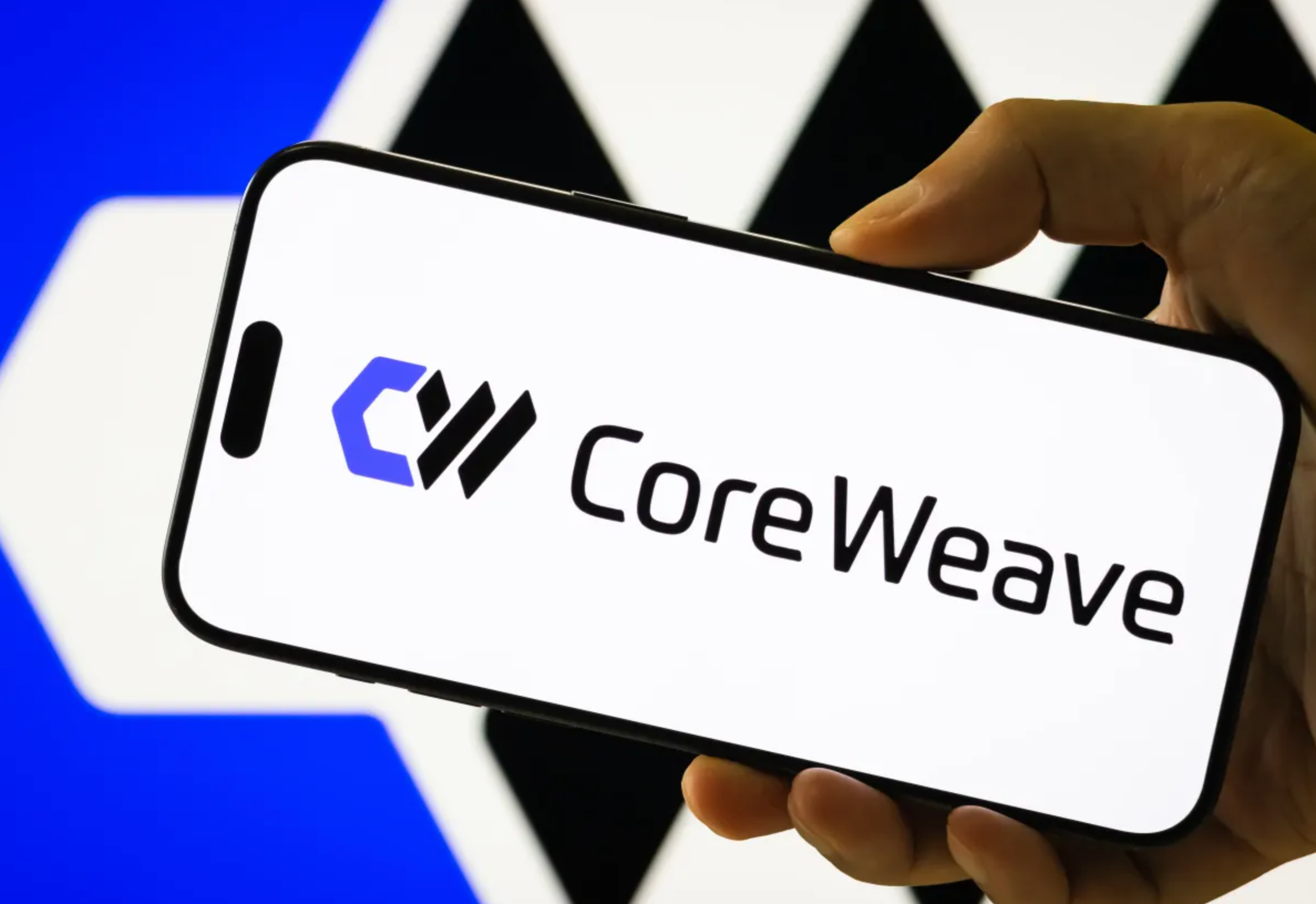
CoreWeave’s stock has staged a sharp comeback after months of doubt, showing how closely its fate is tied to Nvidia and the wider rush to build artificial intelligence infrastructure.
The cloud computing firm, which focuses on heavy duty AI workloads, went public in March and quickly became one of the most talked about new names in the market. Shares surged more than 300 percent in the months after the debut, then slid through late 2025 as investors questioned debt, spending risks, and whether the AI boom could slow. Now, renewed confidence around demand and Nvidia’s backing is pulling the stock back into the spotlight.
CoreWeave fills a critical gap in AI computing
CoreWeave’s rise is rooted in a simple problem facing the tech world. Training and running modern AI models requires massive computing power, especially graphics processing units, or GPUs. Buying and running this hardware is costly and slow, even for large firms.
CoreWeave steps in by offering on demand access to vast clusters of Nvidia GPUs. Customers can rent computing power for hours, weeks, or longer terms without building their own data centers. This flexibility has made the company a key supplier to businesses racing to deploy AI tools.
This model has driven triple digit revenue growth as companies scramble for AI capacity they cannot easily build themselves.
Among CoreWeave’s customers are major technology players such as Meta Platforms and OpenAI, both of which rely heavily on Nvidia chips to train and run large language models.
Nvidia’s deep investment strengthens the story
CoreWeave’s close relationship with Nvidia sets it apart from many other AI infrastructure firms.
Nvidia already owned about 7 percent of CoreWeave before the company went public. More recently, the chipmaker made a fresh move that caught Wall Street’s attention, investing about $2 billion in CoreWeave Class A common stock.
The goal is clear. CoreWeave plans to build up to 5 gigawatts of AI focused data center capacity by 2030, sometimes called AI factories. Nvidia’s investment helps fund that expansion while also securing more places to deploy its own high end chips.
Nvidia has also committed to buying any unused CoreWeave computing capacity through April 2032. For investors, this agreement acts as a safety net, reducing the risk that expensive GPU fleets sit idle if customer demand fluctuates.
Why the stock lost steam in late 2025
Despite strong growth, CoreWeave’s stock stumbled as 2025 went on. The pullback was not about a sudden collapse in demand, but fear.
Investors worried about how much debt CoreWeave would take on to build enough data centers to meet demand. AI infrastructure is capital intensive. Power, cooling, land, and chips all require huge upfront spending.
There was also a broader mood shift. After years of gains, some investors questioned whether AI stocks had run too far, too fast. Talk of an AI bubble grew louder, and high growth names like CoreWeave felt the pressure.
Concerns centered on a simple scenario. If AI spending slowed, CoreWeave could be left with heavy debt and lower margins before reaching full profitability.
The numbers behind the rebound
The stock’s recent performance suggests those fears have eased, at least for now.
Even after last year’s decline, CoreWeave shares remain up about 172 percent from their IPO price. Since the start of this year alone, the stock has gained more than 50 percent.
Here is a snapshot of where the company stands now:
| Metric | Latest Figure |
|---|---|
| Market capitalization | About $50 billion |
| Gross margin | Around 49 percent |
| 52 week price range | Roughly $33 to $187 |
| Average daily volume | About 30 million shares |
Strong margins indicate that demand for GPU capacity remains tight, allowing CoreWeave to price its services at a premium.
What this means for everyday investors
CoreWeave’s story highlights both the promise and risk inside the AI boom.
On one hand, AI demand shows no sign of slowing. Companies across industries want more computing power, not less. CoreWeave sits in the middle of that rush, selling picks and shovels in a modern gold rush.
On the other hand, the business depends on continued heavy spending. If budgets tighten or new technology reduces the need for brute force computing, growth could cool.
CoreWeave’s future is closely linked to the pace of AI adoption and Nvidia’s ongoing dominance in advanced chips.
For investors, that means the stock may remain volatile, swinging with each shift in sentiment about AI.
The bigger picture for AI infrastructure
CoreWeave is not alone. Its rise reflects a broader trend toward specialized cloud providers built for AI, rather than general purpose computing.
Traditional cloud giants still play a major role, but smaller firms focused solely on AI workloads can move faster and tailor systems more precisely. As AI models grow larger and more complex, demand for this type of service is likely to remain strong.
At the same time, the industry faces real constraints. Power supply, grid upgrades, and access to top tier chips all limit how fast capacity can expand. Companies that secure long term partnerships, like CoreWeave has with Nvidia, gain an edge.
In the months ahead, investors will watch closely for signs that AI spending holds firm and that CoreWeave can manage its debt as it builds out new facilities.
CoreWeave’s rebound shows that the market still believes in the AI infrastructure story, even after periods of doubt. The question now is whether the company can turn that belief into durable profits as competition grows and costs rise. What do you think about CoreWeave’s comeback and the future of AI stocks? Share your views and pass this story along to friends following the AI boom.