
ENTERTAINMENT
Skydance Closes Paramount-Warner Merger Under a Film Quota
Paramount’s $111 billion Warner Bros. Discovery deal closed as Skydance, with $6 billion-plus in cuts set against a five-year theatrical floor.

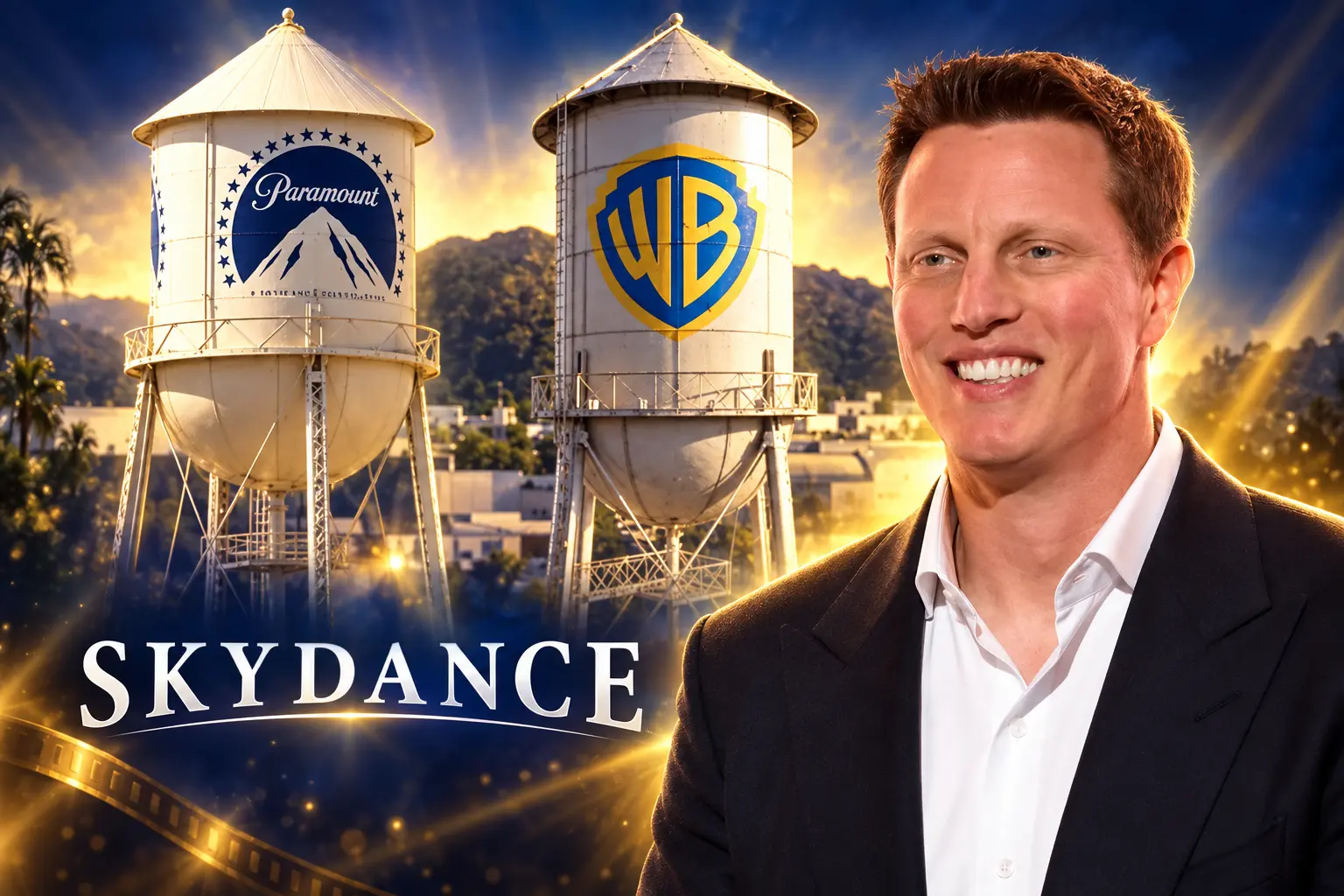
Paramount completed its acquisition of Warner Bros. Discovery on October 6, folding both studios into a company now named Skydance. WBD shareholders received $31.01666668 a share in cash, and Class B shares began trading on the New York Stock Exchange as SKYD.
The same morning, chairman and CEO David Ellison and co-CEO Ynon Kreiz told staff that combining the two companies would mean difficult decisions that affect the workforce. Skydance is targeting $6 billion-plus in run-rate synergies over three years while carrying about $80 billion of debt and a court order to keep feeding movie theaters.
Skydance Starts Already Owing the Cut
Skydance Corporation, formerly Paramount Skydance, completed its acquisition of Warner Bros. Discovery after clearing the last court fights, and it did so as one of the largest media groups on earth. The company put the combination at nearly $70 billion in revenue, with more than 200 million streaming subscribers across its platforms and a content bill of more than $30 billion over the last twelve months.
The close statement also set the operating math. Savings are supposed to come first from technology, integration, procurement, marketing, and real estate, not from a public headcount target. Net leverage is supposed to fall to 3.0 times by the end of 2029, and free cash flow is supposed to top $10 billion by 2030. Those are the numbers Ellison is now on the hook to hit.
THE COMBINED SHELF
- Studios: Paramount Pictures and Warner Bros. Pictures sit under one motion picture group, with DC Studios still run by James Gunn and Peter Safran.
- Streaming: HBO Max and Paramount+ remain separate brands for now, with a plan to unify them into a single service over time, plus Pluto TV as a free stream.
- Television: CBS, HBO, and more than 50 cable networks, including CNN, MTV, Nickelodeon, TBS, TNT, Food Network, and HGTV.
- Sports and news: CBS Sports and TNT Sports, with CBS News and CNN kept in separate newsrooms under a new editorial board.
Ellison, who founded Skydance in 2006 to finance films and later took control of Paramount, called the close a historic day for the industry and said the point was a stronger competitor with the reach to tell stories on every platform. He posted the same message as trading began.
Today is a new day for @Skydance, and I'm incredibly grateful to everyone who helped get us here. It's a big day, and we're just getting started. Let's go! https://t.co/89jxDrzVGU pic.twitter.com/e6P28HkRto
— David Ellison (@davidellison) October 6, 2026
The $111 billion pact, counted with debt, is the scale he wanted after beating Netflix for the whole of WBD. The first internal product is still the cut.
Thirty Films a Year, or Miramax Goes
Twelve state attorneys general, led by California Attorney General Rob Bonta, sued in July on the claim that a combined Paramount and Warner Bros. would shrink film output and raise prices. They settled on September 21. The five-year decree does not force a studio sale. It forces a slate.
THE FIVE-YEAR FILM FLOOR
| Period | Theatrical films | Wide releases | Independent films |
|---|---|---|---|
| First two years | 30 a year | 20 a year | 4 a year |
| Years three to five | 32 a year | 21 a year | 4 a year |
Wide release, as the Washington attorney general’s office defined it, means a national opening on at least 2,000 screens nationwide. Over 100 of the films across the five years have to clear that bar. At least 20 percent of the slate has to sit in the tentpole band. Each title also carries a minimum 45-day theatrical window before it can go to a subscription streamer, and the company said it will not open an SVOD window until at least 90 days.
Miss the annual count, fail to catch up in a six-month cure period, and two penalties fire. Skydance must pay $30 million for each missing film, with the money directed to Hollywood union health and retirement funds and to a national attorneys general antitrust account. It must also sell its entire interest in Miramax, the label sitting inside the combined group, to a buyer the states approve.
That floor is now the creative business plan. A company hunting $6 billion-plus of synergies still has to put 30 pictures into theaters in each of the first two years, then 32. Paramount already has a 2028 Days of Thunder tentpole on the calendar, and early Skydance-Warner theatrical invoices are already moving through the combined system. The decree turns those slates from a promise into a monitored quota.
Kreiz Takes the Knife, Ellison Keeps the Script
Kreiz left Mattel and joined as co-CEO on close. Ellison said he will keep long-term strategy, creative direction, talent relationships, technology, and capital allocation. Kreiz will run day-to-day management and the integration. That split is the tell. The owner still picks the movies. The operator has to make the $6 billion-plus show up.
At Mattel, Kreiz ran a turnaround that took more than $1.5 billion out of costs through thousands of job cuts and a simpler manufacturing map. Skydance has said most of the new savings should come from non-labor items, shared streaming technology, and property. It has not published a layoff number. In a Day 1 staff memo, Ellison and Kreiz wrote that integrating two companies will bring change, including difficult decisions that affect the workforce, and that they would handle the process with thought and respect.
Ellison said the same thing in plainer language at the first town hall. Bringing together two companies of this size and complexity will require difficult decisions, he told employees. There will be changes, and there will be impacts, and he was not going to pretend otherwise. He promised to move through those calls as quickly and thoughtfully as the company could, and to say what it knew when it knew it.
The Los Angeles Department of Economic Opportunity has estimated that the merger could put 4,500 film and television jobs in the county at risk over three years, plus more at related small businesses. That is a local forecast, not a company plan. It is also the number hanging over a lot that just promised not to be sold.
Warner Picture Chiefs Are Out on Day One
The org chart landed on October 5, the day before close. Former HBO programming chief Casey Bloys is co-chair and chief content officer of Skydance’s direct-to-consumer arm, with HBO Max and Paramount+ both in his shop, and he signed a new multiyear extension as the deal closed. George Cheeks, who ran TV media at Paramount, is co-chair and chief content officer of Skydance TV, which now holds Warner Bros. Television, CBS Studios, Paramount Television Studios, the CBS network, local stations, and the cable stack.
Dana Goldberg and Josh Greenstein, already the Paramount Pictures chiefs, are co-chairs of the Skydance Motion Picture Group. Warner Bros. Pictures chiefs Michael De Luca and Pamela Abdy had their last day on Tuesday, the close date. James Gunn and Peter Safran stay on DC. JB Perrette, who ran global streaming and games at WBD, is co-chair and chief business officer across TV and streaming. Cindy Holland is out of the streaming line.
WHO REPORTS TO THE CO-CEOS
- Streaming: Casey Bloys runs original programming, strategy, and performance for HBO Max and Paramount+.
- Television: George Cheeks runs the broadcast, studio, sports, and cable bundle that now includes CBS and the Discovery channels.
- Film: Goldberg and Greenstein run the combined theatrical group; Gunn and Safran keep DC as its own shop.
- News: Mark Thompson remains chairman and editor-in-chief of CNN Worldwide; Bari Weiss remains editor-in-chief of CBS News, with no CNN overlay.
- Corporate: Andy Gordon is president, Dennis Cinelli is chief financial officer, and Makan Delrahim is chief legal officer and president of global corporate affairs.
Thompson and Weiss report straight to Ellison and Kreiz, outside Cheeks’s television line. The company also named a board that adds Kreiz, Laurene Powell Jobs, and Bobby Kotick as directors, with Tony Blair listed as an advisor. Gerry Cardinale of RedBird Capital, already a director, said the owner-operator model is how the group intends to work the libraries, the sports rights, and the original shows.
Twelve States Wrote the Operating Rules
Bonta was careful not to bless the merger. He said the deal on the table was the best way to lock in output, domestic production, and worker protections after a suit that never went to trial.
Let me be clear: This settlement is not a vote of support for this merger. But we believe this settlement, which resolves our antitrust concerns in every market alleged in our case, protects competition and consumer choice, and puts workers’ needs, concerns, and futures first, is the best course of action.
Rob Bonta, California Attorney General, September 21 settlement announcement
The production money is the other half of the bargain. Skydance must spend an additional $1.5 billion in U.S. production over five years above 2025 domestic levels, a $300 million-a-year floor. Bonta’s office said about 5 percent of Paramount’s production is in the United States now. If Congress passes a federal film tax credit of at least 20 percent, the U.S. share has to rise to 20 percent of all film production in years one and two and 30 percent in years three through five. If California or New York then passes a broader uncapped credit, that share rises to 40 percent.
The company also has to put $5 million a year, $25 million in total, into a fund that buys independent films, and $47.5 million over five years into a workforce fund for training and career development for people displaced by the merger. It must honor existing union contracts, keep the Paramount and Warner lots in Los Angeles unsold for the commitment period, keep a free streaming service in Pluto TV’s class, and negotiate Paramount basic-cable channels separately from Warner basic-cable channels for five years. An independent monitor watches the file.
THE PATH TO CLOSING
- February 27, 2026: Paramount, WBD, and Prince Sub Inc. sign the merger agreement after Paramount outbids Netflix for the whole company.
- July 2026: Bonta and 11 other attorneys general sue to block the combination on output and price grounds.
- September 21, 2026: The 12 states settle. The five-year film, production, cable, and worker terms are filed as a consent decree.
- September 30, 2026: U.S. District Judge Araceli Martinez-Olguin approves the settlement and allows the deal to close. The companies set October 6 as the date. Kreiz is named co-CEO.
- October 5, 2026: Supreme Court Justice Elena Kagan denies, without comment, an emergency bid by five consumers to freeze integration. Paramount Skydance Class B shares stop trading on Nasdaq as PSKY.
- October 6, 2026: The acquisition closes. WBD leaves Nasdaq. SKYD opens on the NYSE.
Washington Attorney General Nick Brown said federal regulators had ignored the consumer and labor effects and that the states had extracted the concessions instead. The last-minute Supreme Court filing argued that the settlement’s lot, rehire, and editorial-board terms proved how deep the integration would run, and still did not preserve competition between the two studios. Kagan left that argument on the paper.
SKYD Closed Below the Issue Price
New Class B equity in the transaction was $47 billion, led by the Ellison Family, RedBird, Saudi Arabia’s Public Investment Fund, L’IMAD, the Qatar Investment Authority, and LionTree, and it was priced at $12.00 a share. Bank of America, Citigroup, and Apollo led the debt financing. The Ellison Family holds the largest equity stake. The Ellison Family and RedBird together hold all of the Class A common stock, including 100 percent of the voting shares.
On the first NYSE session, SKYD closed at $9.51, down 2.7 percent, after trading as low as a 6 percent drop and as high as $9.84. That close is a different number from the $12.00 issue price on the new Class B, and it sat $2.49 under that raise. Investors who funded the cash-out of WBD at $31.01666668 a share now own a ticker that opened below the recap price.
Ellison still has the libraries, the sports, the broadcast network, and two newsrooms. He also has a co-CEO hired to take costs out, a five-year monitor on the movie count, and a stock that started life cheaper than the paper sold to buy Warner Bros. The streaming brands are supposed to become one service later. The film quota starts now.
Frequently Asked Questions
What Ticker Does the New Skydance Stock Use?
Class B common stock trades on the New York Stock Exchange as SKYD. Paramount Skydance’s previous Class B listing, PSKY on the Nasdaq Global Select Market, stopped at the close on Monday, October 5, the session before the acquisition closed.
How Was the $31.01666668 Cash Price Calculated?
The merger agreement set a base of $31.00 a share plus $0.00277778 for each calendar day after September 30, 2026, through the closing date. Closing on October 6 added six days, or $0.01666668, which is how WBD holders arrived at $31.01666668 in cash, without interest.
What Happens If Skydance Misses the Annual Film Quota?
After a six-month period to make up the shortfall, the company must pay $30 million for each missing title and divest its entire direct and indirect interest in Miramax on commercially reasonable terms to a buyer approved by the state committee, with that sale due within 12 months after the cure period ends.
Who Holds the Voting Shares in Skydance?
The Ellison Family and RedBird Capital Partners are the sole holders of Paramount Class A common stock and own 100 percent of the combined company’s voting shares. The $47 billion of new Class B equity, priced at $12.00 a share, does not break that vote lock.
Skydance now has to cut toward a 3.0 times leverage target by the end of 2029 without dropping below 30 theatrical films in each of the next two years. The monitor, the Miramax clause, and the $9.51 first close are the terms that closed with the deal.

Saks Kept 15 Stores While Rivals Took the Shoppers

Fallout Season 3 Spend Hits California’s $42 Million Cap

Ebola Outran Congo’s Contact Lists and Reached Nairobi

Jagex Builds RuneScape 4 Beside the Games Players Already Have

SimpL Bets €1.2 Million on Meetings Paid When Held

Boston Scientific Cyberattack Leaves Hospitals Waiting on Implants

Guizhou Cave Cafes Spread When Each Cavern Fills

The Second Ned Stark Kit Lands When a Banner Dies

Satellites Saw Nepal’s Ice Slope Move Before the Flood

OpenAI’s Jalapeño Chip Turns Watts Into Faster Agent Steps
-
 NEWS1 month ago
Boston Scientific Cyberattack Leaves Hospitals Waiting on Implants
-
 NEWS2 months ago
Guizhou Cave Cafes Spread When Each Cavern Fills
-
 GAMING1 month ago
The Second Ned Stark Kit Lands When a Banner Dies
-
 NEWS4 weeks ago
Satellites Saw Nepal’s Ice Slope Move Before the Flood
-
 NEWS1 month ago
OpenAI’s Jalapeño Chip Turns Watts Into Faster Agent Steps
-

 NEWS1 month ago
Roman Space Telescope Launches After a Decade-Long Budget Bet
-

 NEWS1 month ago
MLB Quiet Periods Copy a Freeze Other Leagues Use
-

 NEWS2 months ago
Pere Marquette Freezes Data Centers on a Power-Rich Shore