
LIFESTYLE
Healey Puts $2 Million Behind a Two-Year-Old Visit Law
Eleven days after the Clancy mistrial, Healey seeks $2 million to expand Welcome Family, a 2024 home-visit promise that still reaches about 3,000 births.

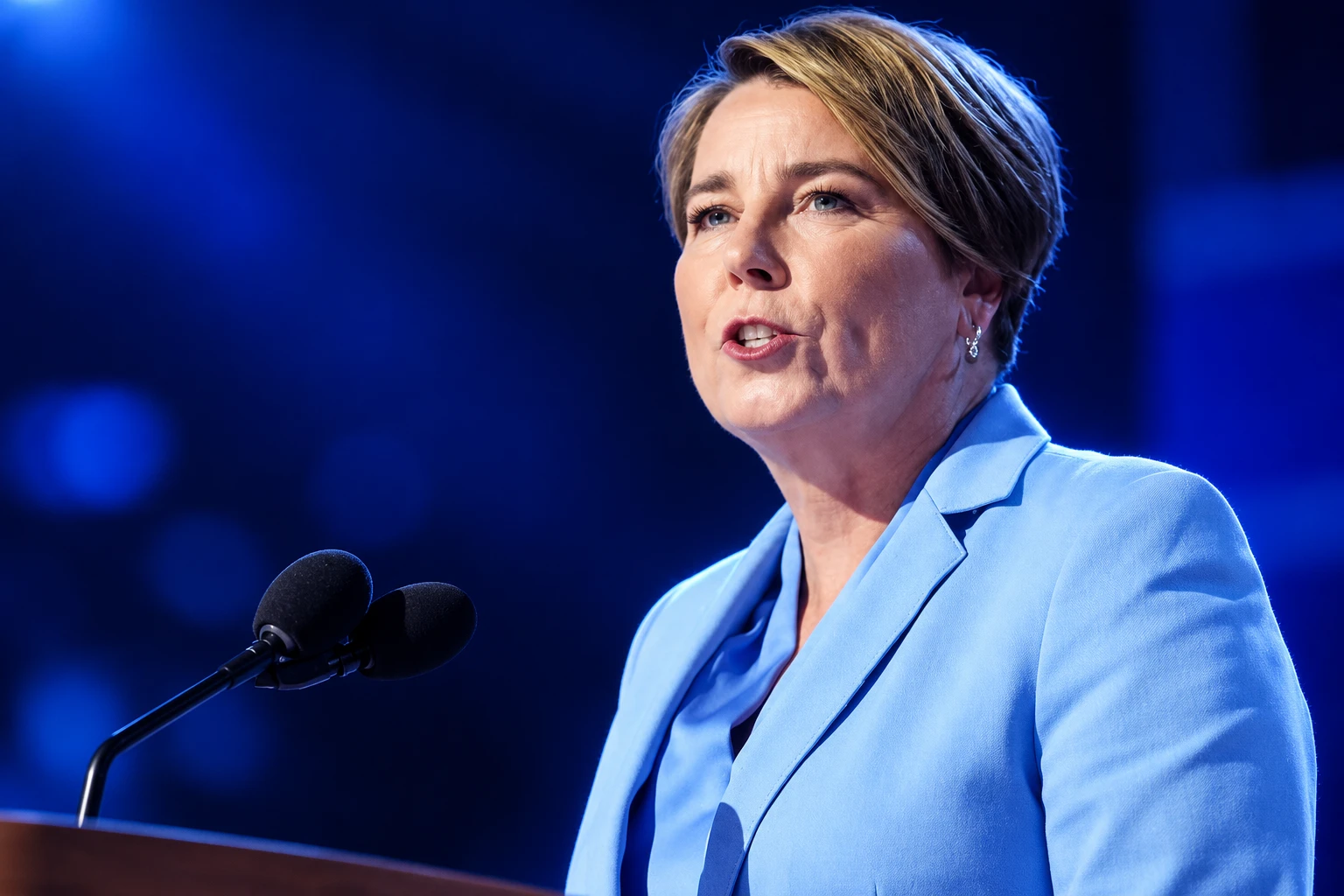
Gov. Maura Healey asked Massachusetts lawmakers on September 15, 2026, for $2 million to offer a free nurse home visit after every birth. The request landed 11 days after a Plymouth jury deadlocked in the Lindsay Clancy murder trial, and two years after a state law already ordered a statewide visiting system.
Healey spoke at Beth Israel Deaconess Medical Center in Boston. She tied the money to postpartum mental health, a subject the Clancy case had just dragged into national view, and said the cash would sit in an upcoming supplemental budget that still needs a legislative vote.
Healey Asks for $2 Million After the Clancy Mistrial
The governor is proposing $2 million to expand Welcome Family, a Department of Public Health program that sends a maternal and child health nurse to a home in the weeks after a baby is born. She also asked for $250,000 to strengthen the Department of Mental Health’s Massachusetts Child Psychiatry Access Program for Moms, known as MCPAP for Moms. Together the two items total $2.25 million.
Welcome Family now serves about 3,000 births a year. Massachusetts records about 68,000 births a year. Healey said this would be the first state investment in a program that has run on federal dollars, and that no family would be required to take the visit.
THE ASK ON PAPER
- Welcome Family: $2 million to offer a voluntary nurse visit after about 68,000 annual births, up from about 3,000 now.
- MCPAP for Moms: $250,000 for psychosis data tracking, a clinical education team, and warning-sign training.
- Screening rules: The Department of Public Health will rewrite regulations that now focus mainly on postpartum depression.
- The vote: Both dollar figures go into a supplemental budget that lawmakers have not yet passed.
Clancy, 36, a former labor and delivery nurse from Duxbury, did not dispute that she killed her three children, Cora, 5, Dawson, 3, and Callan, 8 months, on January 24, 2023, then jumped from a second-floor window. She is paralyzed from the waist down. Her lawyers said postpartum psychosis left her not criminally responsible. Prosecutors said she knew the acts were wrong. Judge William Sullivan declared a mistrial on September 4, 2026, after seven days of deliberations.
Public argument around that hung jury has stayed on guilt and illness. The funding gap Healey is now asking the legislature to close is older than the trial, and it is sitting in the state’s own death reviews.
Mental Illness Caused 38% of Pregnancy-Related Deaths
The Maternal Mortality and Morbidity Review Committee examined deaths during pregnancy or within one year after pregnancy ended. For 2019 through 2024, mental health conditions accounted for 38 percent of pregnancy-related deaths in Massachusetts, the largest share of any cause. Substance use disorder made up 34 percentage points of that total; other mental health conditions made up 4.
The same reviewers found that 85% of those deaths were preventable. That is 70 deaths they judged preventable and 12 they did not, or 82 pregnancy-related deaths in the six-year window. The state’s pregnancy-related mortality ratio was 20.3 deaths per 100,000 live births.
LEADING CAUSES, 2019 THROUGH 2024
| Underlying cause | Share of pregnancy-related deaths |
|---|---|
| Mental health conditions | 38% (34% substance use disorder, 4% other) |
| Hemorrhage | 14% |
| Infection | 9% |
| Embolism | 9% |
The burden is not even. Black non-Hispanic birthing people died at a rate of 38.7 per 100,000 live births, compared with 16.4 for White non-Hispanic people, 16.8 for Hispanic people, and 2.7 for Asian non-Hispanic people. Hemorrhage was the leading cause among Black non-Hispanic patients, at 40%. Mental health was the leading cause among White non-Hispanic patients, at 52%.
National review data cited on the same state page put preventable U.S. pregnancy-related deaths at 87%. Massachusetts is not an outlier on the preventable share. It is a high-coverage state that still loses most of these patients to causes its own committee says did not have to kill them.
The 2024 Law Already Promised a Nurse at the Door
Healey signed Chapter 186 of the Acts of 2024 on August 23, 2024. The statute told the Department of Public Health to establish and administer a statewide system of universal postpartum home visiting services. It also required insured health plans to provide coverage for universal postpartum home visiting with no copay, coinsurance, or deductible, except where a federal tax rule would strip a plan of its status.
The law says at least one visit shall occur at home or at a mutually agreed place within 8 weeks after birth, delivered by a qualified health professional with maternal and pediatric training. Insurer coverage under the new section took effect November 21, 2024. Welcome Family is the public program meant to carry that duty, and in September 2026 it still reached about 3,000 births.
HOW THE PROMISE SAT ON THE CALENDAR
- January 24, 2023: Three children are killed in Duxbury; their mother later raises a postpartum psychosis defense.
- August 23, 2024: Healey signs Chapter 186, ordering a statewide visiting system and insurer coverage for the visits.
- November 21, 2024: Insurance coverage for the visits takes effect under the new statute.
- 2025: Welcome Family records 1,620 postpartum depression screenings; 208 screen positive, and each of those 208 people gets a referral.
- September 4, 2026: A mistrial is declared after the Clancy jury cannot agree.
- September 15, 2026: Healey asks for the first $2 million of state money to offer Welcome Family after every birth.
The 2024 package also expanded doula and midwifery access, required postpartum depression screening coverage, and built on a MassHealth change that already extends coverage through 12 months postpartum. The visiting system was not a new idea on September 15. It was an unfunded public half of a law the governor had already signed.
What a Welcome Family Visit Covers
Welcome Family is free and open regardless of age, income, or other eligibility rules. An experienced maternal and child health nurse checks the caregiver and the baby, answers questions, and connects the household to more help if needed. The state’s program listings put current sites in Boston, Fall River, Lowell, Holyoke, and Springfield, not in every city and town.
Nurses can help with feeding and newborn care, screen for mental health concerns and substance use, and make referrals for domestic violence, food, and other community needs. They call back two to three weeks later to see whether the family reached those services. In 2025 the program logged 1,620 postpartum depression screenings, with 208 positive results and a referral in every positive case.
WHAT THE NURSE IS THERE TO DO
- The health check: The nurse looks at both the caregiver and the newborn in the first weeks after birth.
- The questions: Feeding, sleep, bathing, and the caregiver’s mood are on the table in the same visit.
- The screens: Depression and substance use are part of the stop; other perinatal mood and anxiety conditions are what the new rules are supposed to add.
- The follow-up: A phone call two to three weeks later checks whether referrals actually landed.
Some coverage of the announcement treated the visits as a required stop at every door. They are not. Healey’s office described a voluntary offer, and Chapter 186 uses the same word. A family that does not ask, or that lives far from a current site until the $2 million is voted and spent, does not get the nurse.
MCPAP for Moms Gets a Psychosis Data Team
The smaller line in the package is aimed at clinicians, not at front doors. MCPAP for Moms gives obstetricians, pediatricians, primary care doctors, psychiatrists, and other clinicians a same-day line to perinatal mental health specialists, plus care coordination and training. The program’s own materials say at least one in five women experience a mental health or substance use disorder during pregnancy or in the first year after birth, and that depression in that window is twice as common as gestational diabetes. Providers reach the line at 855-666-6272.
The extra $250,000 would pay for three things the Clancy trial made politically urgent: statewide tracking of postpartum psychosis, a clinical education team for mental health providers, and more teaching for families and clinicians on early warning signs and when to get help. Current DPH screening rules, Healey’s office said, are largely written around postpartum depression. The department is supposed to widen them to anxiety and other serious conditions and to create more chances to ask a parent how she is doing, whether she is in an obstetric office, a pediatric visit, or primary care.
Postpartum depression, anxiety and other maternal mental health conditions are real medical conditions, and no mother should feel ashamed to ask for help or feel like she has to navigate this journey alone.
Gov. Maura Healey, September 15, 2026, Beth Israel Deaconess Medical Center
Lt. Gov. Kim Driscoll said the point was to put someone who knows what to look for at whatever door a new parent already uses. Blair J. Wylie, chair of obstetrics and gynecology at Beth Israel Deaconess, thanked the administration for putting weight behind postpartum support. Those lines match the trial’s public aftertaste. They do not, by themselves, stretch a one-time visit across the year when the state’s own death clock runs longest.
More Than Half of Deaths Come After Day 7
Massachusetts reviewers timed pregnancy-related deaths from 2019 through 2024 as follows: 16% during pregnancy, 12% on the day of delivery, 16% in the first six days after pregnancy ended, 21% from day 7 through day 42, and 35% from day 43 onward. Add the last two windows and 56% of the deaths fall from day 7 through the end of the first year, which is the stretch the committee summarized as more than half.
Chapter 186 sets the first required visit inside 8 weeks. Welcome Family is built as a one-time stop in those early weeks, with a phone call two to three weeks later. That design can catch a hard first month. It is a thin net for the 35% of deaths that come after day 43, and it would already have closed before an infant reached 8 months, the age of the youngest child in the Clancy case.
The death reviews also cut against a story that treats postpartum psychosis as the whole problem. Substance use disorder is the bulk of the mental health share. Continuity of care, not a missing single screen, is a theme in earlier committee write-ups of these cases. A nurse who comes once, then calls once, can open a door. She cannot be the year of care the timing table implies these patients needed.
Healey has already extended MassHealth through 12 months postpartum and, in 2024, forced plans to cover depression screens for a parent, an adoptive or foster parent, or someone who lost a pregnancy in the prior year. The September 15 package adds a psychosis tracker and a wider screening rule on top of that. The visit still happens up front.
Lawmakers Still Have to Vote the Money
None of the new dollars exist as spending until the legislature passes the supplemental budget Healey said she would file. DPH can start on the screening regulations without that vote. The statewide Welcome Family offer cannot. Until the check clears, the program remains a federally backed service in a short list of cities, sitting beside a 2024 statute that already told the department to run it everywhere.
The Clancy mistrial did not invent the 38% figure, the 85% preventable share, or the eight-week visit written into Chapter 186. It did put a governor in a Boston hospital 11 days later asking for $2 million and a psychosis data team. Families who want a nurse still have to say yes, and the nurse still comes in the first weeks, not across the year when more than half of these deaths occur.
If you or someone you know is in crisis, call or text 988. In Massachusetts, the Behavioral Health Help Line is 833-773-2445.
Disclaimer: This article is news reporting on a state budget request and on published maternal-health figures. It is for information only and is not medical, mental-health, or legal advice, and it is not a guide to diagnosis, screening, or treatment of postpartum depression, anxiety, psychosis, or substance use. Readers who are pregnant, postpartum, or caring for a new baby should talk with a licensed obstetric, primary-care, or mental-health clinician before making care decisions, and anyone in immediate danger should use 988 or local emergency services. Dollar amounts, caseloads, and program rules reflect official statements and committee data as published around September 15, 2026, and they can change if lawmakers amend the request or if later reviews revise the death counts.

Saks Kept 15 Stores While Rivals Took the Shoppers

Fallout Season 3 Spend Hits California’s $42 Million Cap

Ebola Outran Congo’s Contact Lists and Reached Nairobi

Jagex Builds RuneScape 4 Beside the Games Players Already Have

SimpL Bets €1.2 Million on Meetings Paid When Held

Boston Scientific Cyberattack Leaves Hospitals Waiting on Implants

Guizhou Cave Cafes Spread When Each Cavern Fills

The Second Ned Stark Kit Lands When a Banner Dies

OpenAI’s Jalapeño Chip Turns Watts Into Faster Agent Steps

Satellites Saw Nepal’s Ice Slope Move Before the Flood
-
 NEWS2 months ago
Boston Scientific Cyberattack Leaves Hospitals Waiting on Implants
-
 NEWS2 months ago
Guizhou Cave Cafes Spread When Each Cavern Fills
-
 GAMING2 months ago
The Second Ned Stark Kit Lands When a Banner Dies
-
 NEWS2 months ago
OpenAI’s Jalapeño Chip Turns Watts Into Faster Agent Steps
-
 NEWS1 month ago
Satellites Saw Nepal’s Ice Slope Move Before the Flood
-

 NEWS2 months ago
MLB Quiet Periods Copy a Freeze Other Leagues Use
-

 NEWS2 months ago
Roman Space Telescope Launches After a Decade-Long Budget Bet
-

 NEWS2 months ago
Pere Marquette Freezes Data Centers on a Power-Rich Shore