
BUSINESS
S&P 500 Hits a Record as Oil and Yields Pause
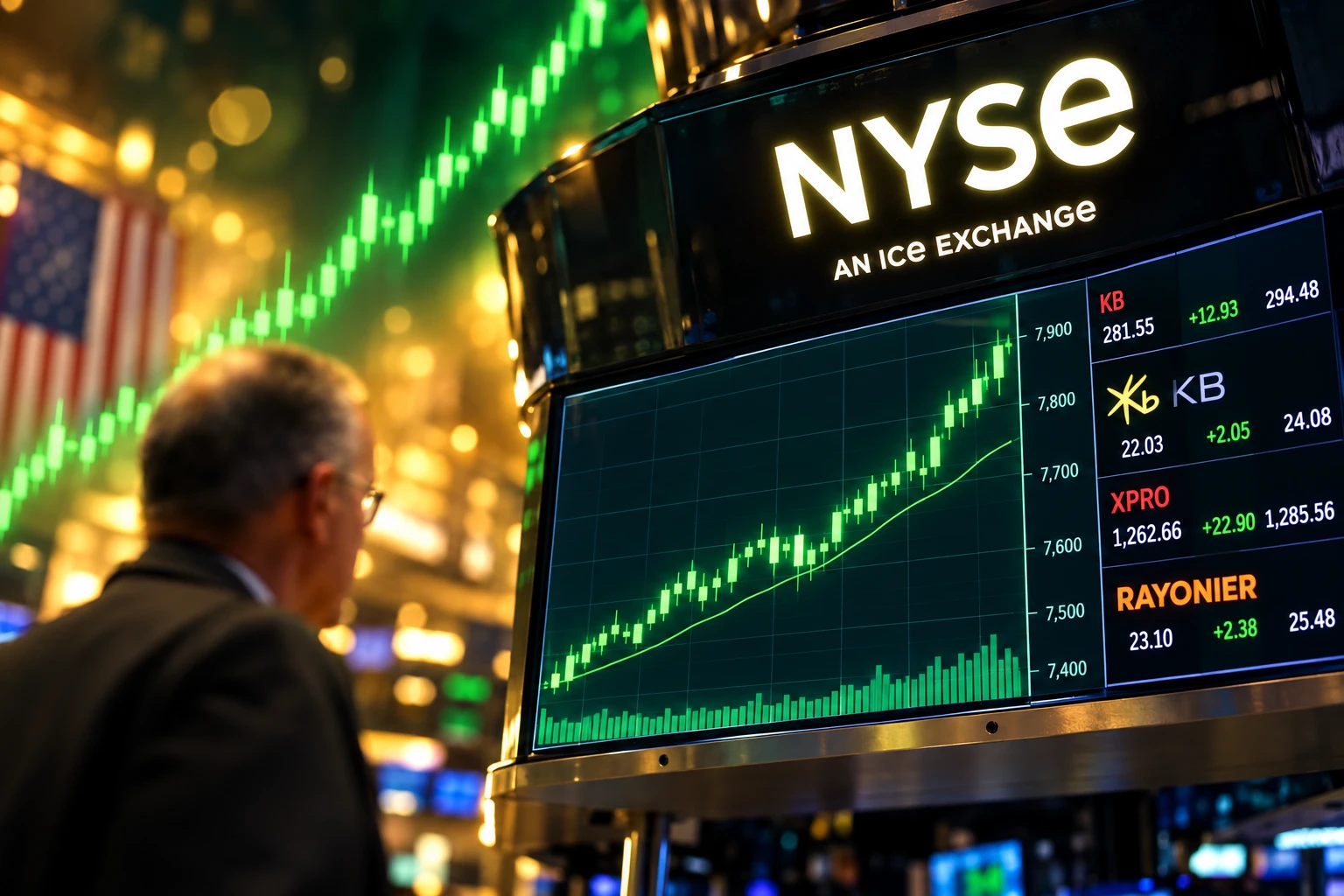
S&P 500 and Nasdaq records on October 6 rode a pause in oil and a 4.2 basis-point dip in the 10-year, not cheaper money.

The S&P 500 closed at a record 7,818.93 on October 6, up 44.98 points or 0.58%, its first finish above 7,800 and its first record close since August 13. The Nasdaq Composite added 0.45% to 27,599.79, a second straight record after Monday’s close at 27,477.31. The Dow Jones Industrial Average rose 0.49% to 51,521.28.
WTI crude, the U.S. oil benchmark, did not confirm the advance as a broad risk-on tape. It settled at $89.44 a barrel, one cent above Monday, after trading as low as $86.86 on a G7 plan to release 100 million barrels from emergency stores.
A Record Close Above 7,800
Monday had already lifted the Nasdaq to a closing high, with the S&P 500 up 0.66% to 7,773.95 and the Dow up 0.18% to 51,267.90. Tuesday extended that run. It did not end a three-session losing streak. Chip hardware, cloud names and power producers carried the S&P 500 through its first close above 7,800, even as the index faded 25.59 points from an intraday high of 7,844.52.
Breadth under the large-cap line was weaker. The Russell 2000 dropped 0.59% to 2,830.30. The VIX fell 3.29% to 15.01, and the dollar index slipped 0.30% to 101.86. Ten of eleven S&P 500 sectors finished higher, with health care the only group lower, down 0.17%.
TUESDAY CLOSING BOARD
| Index | Close | Change |
|---|---|---|
| S&P 500 | 7,818.93 | +0.58% (+44.98) |
| Nasdaq Composite | 27,599.79 | +0.45% (+122.48) |
| Dow Jones Industrial Average | 51,521.28 | +0.49% (+253.38) |
| Russell 2000 | 2,830.30 | -0.59% (-16.84) |
| VIX | 15.01 | -3.29% |
The Commerce Department said the August goods and services trade deficit widened 13.7% to $105.6 billion from a revised $92.8 billion in July, with imports up 4.3% to $420.8 billion. Capital-goods imports rose $6.2 billion, including $2.4 billion more of semiconductors. That is the kind of goods flow the AI build-out keeps pulling through the ports even as long rates stay high.
Oil Settled Flat After an $86.86 Low
Front-month NYMEX WTI opened at $89.27, traded between $86.86 and $90.05, and settled at $89.44. Monday’s settlement was $89.43. The one-cent gain is a pause, not a breakout. On September 10 the same contract had printed a high of $104.04, so Tuesday’s tape was closer to a five-week low than a five-week high.
Gulf export volumes recovered and the Group of Seven last week agreed to release 100 million barrels of diesel and crude from emergency reserves, with the International Energy Agency due to work out details at an October 14-15 meeting. Those two supply stories took heat out of crude during the New York day. They did not rewrite the war premium that has kept WTI in the high $80s and low $90s since the Strait of Hormuz closed to commercial shipping on February 28.
WTI ON OCTOBER 6
- Settlement: $89.44 a barrel, up $0.01 from Monday.
- Session low: $86.86, the weakest print of the day and near recent lows.
- Session high: $90.05, well below the September 10 peak of $104.04.
- Policy overlay: a G7 release of 100 million barrels, with IEA details due October 14-15.
Energy shares in the S&P 500 still finished up 0.47%. Producers can live with $89 oil. The rest of the economy still pays the refined-product bill that crude’s pause has not yet cut.
What a 4-Point Dip in the 10-Year Bought
The 10-year Treasury yield eased 4.2 basis points to 5.269% from Monday’s close of 5.311%. Monday’s session high of 5.349% was the most since April 3, 2002. That small dip is what let duration-heavy technology print a record. It is not cheap money. A 4.2 basis-point dip does not unwind the damage from the 10-year yield already above 5 percent.
Oliver Pursche, senior vice president at Wealthspire Advisors, put the cross-asset link in one line: when oil steadies or moves lower, “that causes yields to move down because there’s less anxiety about energy-driven inflation, which in turn is helping lift stocks higher.” He called that the market’s narrative for the past couple of weeks. Tuesday was a clean example. Crude went nowhere on the close, the 10-year backed off a 24-year peak, and mega-cap growth caught a bid.
The catch for anyone treating the record as a regime change is the level, not the one-day change. Cash flows from chip and cloud companies are still being discounted off 5.269% on the 10-year. Rate-sensitive groups such as utilities and real estate rallied on the dip, with utilities up 2.98% and real estate up 1.06%, because a few basis points of relief still move those books. The Russell 2000, which funds more of its growth with floating-rate debt, did not join them.
Broadcom, Marvell and the Nuclear Bid
Chip and cloud names plus utilities supplied more than half of the S&P 500’s 0.58% gain. Broadcom rose 3.67% to $375.81 and added about 10 basis points to the index. Amazon.com gained 1.95% and about 7 basis points. Advanced Micro Devices rose 2.80% to $649.42 and Microsoft 0.78%, together about 9 basis points. Nvidia, at $239.24, added 0.14% and a market value near $6 trillion, worth about 1 basis point.
Marvell Technology jumped 5.81% to $287.01 after its investor day guided fiscal 2031 revenue to $70 billion to $90 billion, against a FactSet consensus of $47.04 billion. That is a hardware-cycle bet, not a broad industrial recovery. Storage names went the other way, with Seagate down 9.18% and Western Digital down 6.93%.
WHO ADDED THE POINTS
| Driver | Move | About the index |
|---|---|---|
| Broadcom | +3.67% to $375.81 | about +10 bps |
| Amazon.com | +1.95% | about +7 bps |
| AMD and Microsoft | +2.80% and +0.78% | about +9 bps combined |
| Utilities (XLU) | +2.98% | about +7 bps |
| Nvidia | +0.14% to $239.24 | about +1 bp |
Independent power producers filled the rest of the leader board. Constellation Energy gained 12.25% to $300.40 after Google’s offtake news. Vistra rose 10.77% to $160.50 after the Energy Department unveiled a $4.2 billion nuclear investment in Pennsylvania and Ohio. Talen Energy added 12.43%. The utilities sector’s 2.98% gain was the day’s best, and it was a nuclear-and-power-plant move, not a sleepy-defensive bid.
How Google Is Paying for Reactor Uprates
Google and Constellation Energy announced a 20-year power purchase deal for 890 megawatts of new nuclear capacity on the PJM grid, plus a separate 15-year supply contract for 2,700 megawatts from Constellation’s existing fleet, 3,590 megawatts in all. Constellation will put more than $4.3 billion into upgrades at 11 reactors across six sites in Illinois, Pennsylvania and New Jersey. The first extra output is due in 2028, with the rest scheduled before the end of 2032. The companies said the work helps sustain about 4,400 existing jobs and about 7,200 construction jobs.
We’re committed to meeting our growth responsibly by actively investing in clean, reliable power that brings new capacity to our nation’s grids. Our agreement with Constellation to fund nuclear reactor uprates will strengthen the PJM grid, which serves 67 million people, all while protecting energy affordability and supporting local union jobs.
Amanda Peterson Corio, global head of energy and power at Google, in the companies’ announcement
Joe Dominguez, Constellation’s chairman, president and chief executive, said the collaboration “can serve as a model for how technology companies and the energy industry can work together to responsibly develop the digital economy.” The U.S. still has 94 commercial nuclear reactors, which generate nearly 20% of U.S. electricity. Uprates squeeze more megawatts from machines that already run, rather than waiting on a new plant.
THE GOOGLE-CONSTELLATION PACKAGE
- New watts: 890 megawatts of uprates on a 20-year purchase deal, first delivery in 2028.
- Existing fleet: 2,700 megawatts on a 15-year supply contract that keeps current plants on the grid.
- Capital: more than $4.3 billion from Constellation for turbines, steam generators and digital controls.
- Software overlay: a five-year alliance to put Google Cloud and Gemini Enterprise into plant operations.
Google said the Constellation deal lifts the new nuclear capacity it has enabled from uprates and restarts to more than 1.5 gigawatts of nuclear uprates, nearly a quarter of the Energy Department’s 5 gigawatt goal for the legacy fleet by 2030. Chip stocks can print records on earnings hopes. They still need around-the-clock power, and that bill now shows up as 20-year nuclear contracts and a 12.25% jump in the plant owner.
The Russell Gap and the Jet-Fuel Bill
Small-cap health care did the opposite of Constellation. Twist Bioscience fell 18.55%, 10x Genomics 17.47%, and the SPDR S&P Biotech ETF 3.39%. Only a thin slice of Russell 2000 health-care names were higher by mid-afternoon. That is the other tape: the index that needs cheaper credit sold off on a day the mega-cap index made a high.
Airlines and shippers remain on the refined-product side of the same energy shock. The International Air Transport Association’s June outlook found that jet fuel prices have essentially doubled since late February, after Hormuz closed and cut about 10 million barrels a day of crude, about 10% of global use. The jet crack spread hit $80 a barrel in April. IATA cut its 2026 industry net profit view to $23 billion and a 2% margin, even as revenue was still projected to rise 9.4%.
A one-cent move in WTI does not repair that. Jet fuel is a crack-spread story as much as a crude story, and diesel and jet have stayed tight even when tanker flows out of the Gulf improved. Households will see that in airfares and freight long after a single equity session has been filed away. Energy producers can book $89 oil. Carriers still fly on a wartime distillate market.
Minutes Meet a 5.27% Discount Rate
Traders have spent the past week cutting the odds of another Federal Reserve increase at the October meeting after a soft September jobs report. The minutes of the September meeting are scheduled for 2 p.m. Eastern on October 7. Those notes will be read against a 10-year still at 5.269% and WTI still near $89, not against a market that has been given cheaper money.
THE THREE-SESSION STRETCH
- October 5, 2026: Nasdaq closes at a record 27,477.31; the 10-year yield closes at 5.311% after a 5.349% high, the most since April 3, 2002; WTI settles at $89.43.
- October 6, 2026: S&P 500 closes at 7,818.93, first finish above 7,800; Nasdaq adds a second record at 27,599.79; WTI settles at $89.44 after an $86.86 low; Constellation jumps 12.25% on the Google nuclear deal.
- October 7, 2026: September FOMC minutes due at 2 p.m. Eastern, with PepsiCo results and weekly jobless claims still ahead on October 8.
The record is real. So is the price of the money that produced it. Chip makers and nuclear plant owners took the points, the Russell 2000 did not, and oil’s pause left jet fuel and a 5.269% 10-year right where they were.
Disclaimer: This article is news reporting and market analysis for information only. It is not investment advice, a recommendation to buy or sell any security, commodity, or index, or a forecast of future returns. Readers should consult a licensed financial adviser or broker about their own holdings and risk tolerance before making any trade. Index levels, yields, oil settlements, and company figures reflect the sources cited for the October 6, 2026 session and can change in later trading.

Saks Kept 15 Stores While Rivals Took the Shoppers

Fallout Season 3 Spend Hits California’s $42 Million Cap

Ebola Outran Congo’s Contact Lists and Reached Nairobi

Jagex Builds RuneScape 4 Beside the Games Players Already Have

SimpL Bets €1.2 Million on Meetings Paid When Held

Boston Scientific Cyberattack Leaves Hospitals Waiting on Implants

Guizhou Cave Cafes Spread When Each Cavern Fills

The Second Ned Stark Kit Lands When a Banner Dies

Satellites Saw Nepal’s Ice Slope Move Before the Flood

OpenAI’s Jalapeño Chip Turns Watts Into Faster Agent Steps
-
 NEWS1 month ago
Boston Scientific Cyberattack Leaves Hospitals Waiting on Implants
-
 NEWS2 months ago
Guizhou Cave Cafes Spread When Each Cavern Fills
-
 GAMING1 month ago
The Second Ned Stark Kit Lands When a Banner Dies
-
 NEWS4 weeks ago
Satellites Saw Nepal’s Ice Slope Move Before the Flood
-
 NEWS1 month ago
OpenAI’s Jalapeño Chip Turns Watts Into Faster Agent Steps
-

 NEWS1 month ago
Roman Space Telescope Launches After a Decade-Long Budget Bet
-

 NEWS1 month ago
MLB Quiet Periods Copy a Freeze Other Leagues Use
-

 NEWS2 months ago
Pere Marquette Freezes Data Centers on a Power-Rich Shore