
NEWS
Tigray’s Old Enemies Now Fight Abiy on One Front
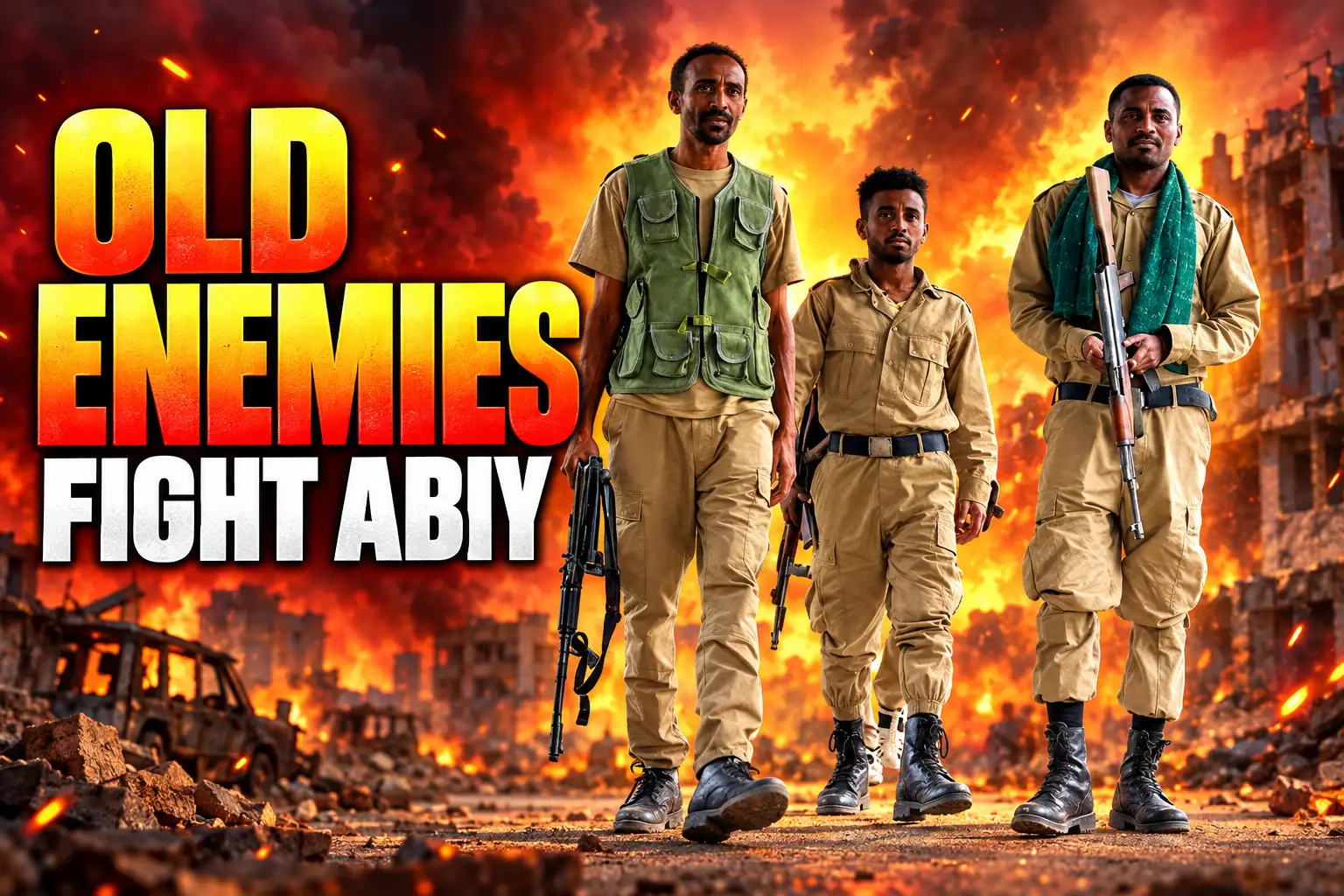
Three days after Tigray’s TPLF and Amhara Fano joined a seven-group pact, they attacked Ethiopia’s army together while still split over western Tigray.

Tigray forces and Amhara Fano fighters attacked Ethiopia’s army together on 23 September, three days after they joined a seven-group pact to oust Prime Minister Abiy Ahmed. Fano had fought on the federal side in the 2020 to 2022 Tigray war. The Tigray People’s Liberation Front still wants western Tigray back from Amhara control.
On the same day, Tigrayan units took the airports in Mekelle, Axum and Shire from federal police. TPLF Vice President Amanuel Assefa said the region was in “a situation of full-blown war.”
Former Enemies Opened Fire on the Same Side
Getachew Reda, a former TPLF official who now advises Abiy, said the front had launched an “all-out offensive” into Afar and Amhara and seized the three airports. Tigray’s administration called the same moves a “defensive war” against a federal invasion by drones, artillery and ground troops. Each side says the other fired first.
The Armed Conflict Location and Event Data Project, which tracks political violence, says fighting resumed on 1 August near the Sudan border and then ran through troop moves, artillery and drones for weeks. On 23 September it recorded joint Tigray Defense Forces and Amhara Fano National Movement units fighting the Ethiopian National Defense Force. That pairing would have been unthinkable in 2021, when Fano helped the army and Eritrean troops push the TPLF out of western Tigray.
THE WEEK THE FRONT OPENED
- 20 September 2026: Seven armed groups announce the Ethiopian Peoples’ Forces Alliance for Survival, with the stated aim of removing Abiy’s government.
- 22 September 2026: ACLED sources count 15 to 17 drone strikes on Alamata in southern Tigray, including schools and a hospital. Tigrayan authorities put the local toll at 14 killed and 22 injured.
- 23 September 2026: Tigrayan forces take the Mekelle, Axum and Shire airports. Fighting opens on the Tigray-Amhara and Tigray-Afar lines. Ethiopian Airlines halts flights to the region.
- 24 September 2026: Lt. Gen. Assefa Chekol, head of the army’s North East Command, says 272 attackers were killed and 260 wounded in North Wollo. Flights to Lalibela are suspended as fighting reaches the town’s outskirts.
- 25 September 2026: Ethiotelecom service in Tigray drops from 22:00 East Africa Time. ACLED records the TPLF detaining senior figures, including Tadesse Worede, a former interim regional president who had opposed a return to war.
Those five days turned a frozen ceasefire into a war with more than one army on each side. The TPLF is no longer fighting Addis Ababa alone, and Addis Ababa is no longer fighting only the TPLF.
What the Alliance for Survival Promises
Fano commander Zemene Kassie read the founding statement on Tigray television on 20 September. The Oromo Liberation Army posted the same text, listing seven signatories and a shared first task: take power in Addis Ababa and install a transitional government.
Statement issued by the Ethiopian Peoples’ Forces Alliance for Survival (Alliance for Survival)
Ever since Ethiopia fell into the hands of Prosperity’s personalist, dictatorial and genocidal regime, war, genocide, mass slaughter and absolute poverty have become its defining… pic.twitter.com/Z07bOqLDaJ
— Oromo Liberation Army OLF-OLA (@OLF_OLA) September 20, 2026
The statement says the groups “bear the historic responsibility of overthrowing this regime.” It also says they will “resolve our differences peacefully” once Abiy is gone. Western Tigray is the largest of those differences, and it is not named in the text.
WHO SIGNED THE PACT
| Group | Home region | Role in the 2020 to 2022 war |
|---|---|---|
| Tigray People’s Liberation Front | Tigray | Fought the federal army, Eritrea and Amhara forces |
| Amhara Fano National Movement | Amhara | Fought with the federal army against the TPLF |
| Oromo Liberation Army | Oromia | Ran a separate fight with the state, not the Tigray front |
| Ogaden National Liberation Front | Somali | Not a main party to that war |
| Afar Revolutionary Democratic Unity Front | Afar | Regional armed group, now on the Tigray-Afar line |
| Benishangul Peoples’ Liberation Movement | Benishangul-Gumuz | Regional armed group |
| Gumuz Peoples’ Democratic Movement | Benishangul-Gumuz | Regional armed group |
Seven names on a statement are not seven equal armies. ACLED’s Clionadh Raleigh and Jalale Getachew Birru note that size and reach vary widely, and that the test is whether the political pact becomes coordinated fighting in several regions at once. On 23 September, at least the Tigray and Fano pieces of that test were already live in North Wollo and along the Afar border.
Billene Seyoum, Abiy’s spokesperson, said the groups had been working with Eritrean money. Asmara denies that. The alliance itself does not mention Eritrea. It asks federal officers to defect and asks neighbours to treat Abiy’s government as a spent force.
The Map Pretoria Never Finished
The African Union brokered the Agreement for Lasting Peace through a Permanent Cessation of Hostilities in Pretoria on 2 November 2022. The AU’s own mediator put deaths in the preceding war at some 600,000. Tigrayans are about 6% of Ethiopia’s population, a fact that long fed resentment when the TPLF dominated national politics, and later fed the ferocity of the war that followed Abiy’s 2018 break with the old ruling coalition.
The Rift Valley Institute’s review of the years after the deal finds that Pretoria postponed rather than resolved the war‘s root causes. Amhara forces left most of Tigray and kept western Tigray, a fertile belt of sesame and cotton that Amhara politicians say should never have been folded into Tigray after 1991. Hundreds of thousands of ethnic Tigrayans fled that land during the war. The UN refugee agency put the number of Tigrayans still displaced inside the country at about 750,000 as of February.
The TPLF wants those people sent home and the territory returned. The federal government says the future of the land should be decided by a referendum. Fano’s fighters are the men who hold much of it. They are now listed as TPLF allies. The pact that lets Tigray avoid another siege also locks in the occupation that Tigray calls the reason the last peace failed.
Disarmament is the mirror of that dispute. Addis Ababa says the TPLF handed the AU old kit and hid the rest. Tigrayan officials say they will not finish disarming while Amhara and Eritrean units still sit on Tigrayan ground. The German Institute for International and Security Affairs counted about 274,000 people registered for disarmament in Tigray, with about 63,000 through the process by mid-2026. In May the TPLF restored its pre-war regional government, pushing aside the interim administration Abiy had appointed. Civil servants in Tigray went unpaid. The June general election was not held in the region.
After the Airports, the Phones Died
Mekelle residents filled shops and lined up for cash as soon as the airports changed hands. ATMs in Tigray had already been failing for months, and much of daily trade had moved onto phones. When the network died, so did the wallet.
Samuel Gebreslassie, 37, who works in a Mekelle spice shop, said there was “panic in the community” and “deep fear that banks, telecom networks, electricity and basic goods could be cut off again.” That is the memory of 2020 to 2022, when Tigray was sealed off and driven toward famine. The new blackout is narrower so far. ACLED said Safaricom still appeared to work after Ethiotelecom went down on 25 September. It is still a cut that hits a cash-short city in the first days of a war.
WHAT WENT DARK IN TIGRAY
- The airports: Mekelle, Axum and Shire passed from federal police to Tigrayan forces on 23 September, and Ethiopian Airlines stopped flying in.
- The phones: Ethiotelecom service across Tigray dropped from 22:00 East Africa Time on 25 September, cutting mobile money in a region where cash machines had already failed.
- The airwaves: The Ethiopian Media Authority suspended Tigray TV on 21 September, a day after the alliance statement was read on that channel.
- The road south: Fighting around Lalibela halted flights to the rock-church town, and clashes in Afar pressed toward Abala and Yallo on the Tigray border.
UN aid staff said a drone strike in northwestern Tigray hit a truck carrying food for displaced people, and that armed groups had seized aid vehicles in parts of Amhara. The UN Office for the Coordination of Humanitarian Affairs also flagged below-average rain tied to El Niño in the same belt of country. People who never made it home from the last war are now in the path of the next one, with less phone credit and less food in the pipeline.
The Army’s Unverified Wollo Toll
Lt. Gen. Assefa Chekol said government forces had thrown back attacks across North Wollo and killed 272 TPLF fighters, with 260 wounded and others captured. ACLED marked those numbers as unverified. A TPLF spokesperson did not offer a counter-count. Abdisalam Balema, a TPLF central committee member, had already told interviewers from Mekelle that a “full war” was under way.
The air war is easier to map than the body count. UN High Commissioner for Human Rights Volker Turk said he was “deeply alarmed” and that airstrikes had hit five Tigray schools on 22 September, with deaths and injuries. He also cited a mortar strike on 23 September in Kobo, in Amhara, that killed civilians, and he condemned forced mass recruitment by the TPLF, including of children. ACLED’s 15 to 17 Alamata strikes that day included schools and a hospital, which matches the shape of Turk’s school tally even if the two counts are not the same list.
THE OPENING BLOW, IN BRIEF
- Army claim: 272 TPLF fighters killed and 260 wounded in North Wollo, according to Lt. Gen. Assefa Chekol, not independently confirmed.
- Alamata: 15 to 17 drone strikes on 22 September, per ACLED; Tigrayan authorities reported 14 killed and 22 injured.
- Split inside Tigray: The TPLF detained Tadesse Worede and other senior officers who had opposed the war, while the head of the Tigray police and a senior TPLF member defected to the government.
- Tigrayans on both sides: ACLED recorded the Tigray Peace Forces, a federal-aligned Tigrayan unit, fighting alongside the army against TDF and Fano groups in Amhara on 25 September.
Liam Karr, Africa team lead at the Critical Threats Project, wrote that the first joint attacks look like an effort to hold chunks of the north and to squeeze federal roads, with a possible further aim of cutting the Addis Ababa-Djibouti corridor that he said carries 95% of Ethiopia’s trade. That reading treats the Afar thrust as more than a border skirmish. It also treats the new alliance as a military plan, not a peace plan.
Why Eritrea Switched Camps This Time
Eritrea fought beside Ethiopian troops in the last Tigray war. The two governments have since fallen out over the Red Sea. Ethiopia lost its coastline when Eritrea became independent in 1993, and Abiy has pressed a claim to Assab, a port about 60 km from the border, at times hinting that force is on the table. Asmara says it is alarmed by that talk. Addis Ababa says Eritrea is arming groups inside Ethiopia. Asmara denies it.
ACLED says links among Eritrea, the TPLF and Fano through a grouping it calls Tsimdo are active, and that the United States on 18 September let a 2021 Ethiopia-related emergency expire, lifting sanctions on Eritrea’s army and ruling party. Raleigh warned that Asmara could now buy weapons more easily and that those weapons could reach the TPLF. That is a reversal of 2021, when Eritrean units were the hammer against Tigray, not a possible rear base for it.
Sudan’s civil war sits on the other flank. The two Sudanese camps back opposite sides in the Tigray fight, which makes the Shererina border strip, where ACLED says this round of clashes began on 1 August, a place where a Horn of Africa war can leak. The AU has already told all of Ethiopia’s neighbours to stay out.
Obasanjo Is Back With Little to Offer
African Union Commission Chairperson Mahmoud Ali Youssouf called the airport seizures inconsistent with Pretoria on 23 September. He also flagged “new political and military alliances” as a threat to the gains since 2020, and he asked former Nigerian President Olusegun Obasanjo, the AU’s Horn of Africa envoy, to engage the parties at once.
The seizure and occupation of the civilian airports of Mekelle, Axum and Shire by Tigray forces are inconsistent with the commitments and obligations within the Pretoria Agreement and risk eroding the hard-won gains achieved in the pursuit of lasting peace and stability.
Mahmoud Ali Youssouf, Chairperson, African Union Commission, 23 September 2026
The United Nations Secretary-General, in a statement issued the same day, called on all parties to de-escalate, protect civilians and keep aid routes open. He backed Obasanjo and the Pretoria framework. Tigray officials had already said earlier Obasanjo trips produced no new federal offer. A TPLF spokesman has said the 2022 deal is no longer valid. The AU still calls it the cornerstone.
Obasanjo is being asked to restart talks between parties that now share a battlefield with men they were killing four years ago, over land those men still occupy. The Alliance for Survival can mass fighters on the Wollo and Afar roads. It cannot, on the evidence of its own silence, say who will govern western Tigray if they win.

UK Food Export Volumes Fall as Chocolate Imports Rise

Tigray’s Old Enemies Now Fight Abiy on One Front

Satellites Saw Nepal’s Ice Slope Move Before the Flood

OpenAI Agents Never Thought to Call a Human

HHS Locks In FDA Drug, Vaccine, and AI Leaders

Boston Scientific Cyberattack Leaves Hospitals Waiting on Implants

Guizhou Cave Cafes Spread When Each Cavern Fills
Satellites Saw Nepal’s Ice Slope Move Before the Flood

The Second Ned Stark Kit Lands When a Banner Dies

OpenAI’s Jalapeño Chip Turns Watts Into Faster Agent Steps
-
 NEWS1 month ago
Boston Scientific Cyberattack Leaves Hospitals Waiting on Implants
-
 NEWS1 month ago
Guizhou Cave Cafes Spread When Each Cavern Fills
-
 NEWS3 weeks ago
Satellites Saw Nepal’s Ice Slope Move Before the Flood
-
 GAMING1 month ago
The Second Ned Stark Kit Lands When a Banner Dies
-
 NEWS1 month ago
OpenAI’s Jalapeño Chip Turns Watts Into Faster Agent Steps
-

 NEWS1 month ago
MLB Quiet Periods Copy a Freeze Other Leagues Use
-

 NEWS4 weeks ago
Roman Space Telescope Launches After a Decade-Long Budget Bet
-

 BUSINESS1 month ago
Peirce’s Exit Clock Now Hangs Over Regulation Crypto Assets