
NEWS
HHS Locks In FDA Drug, Vaccine, and AI Leaders
HHS made three acting FDA center directors permanent and created a first AI deputy 20 days after nominating Heidi Overton, who still needs the Senate.

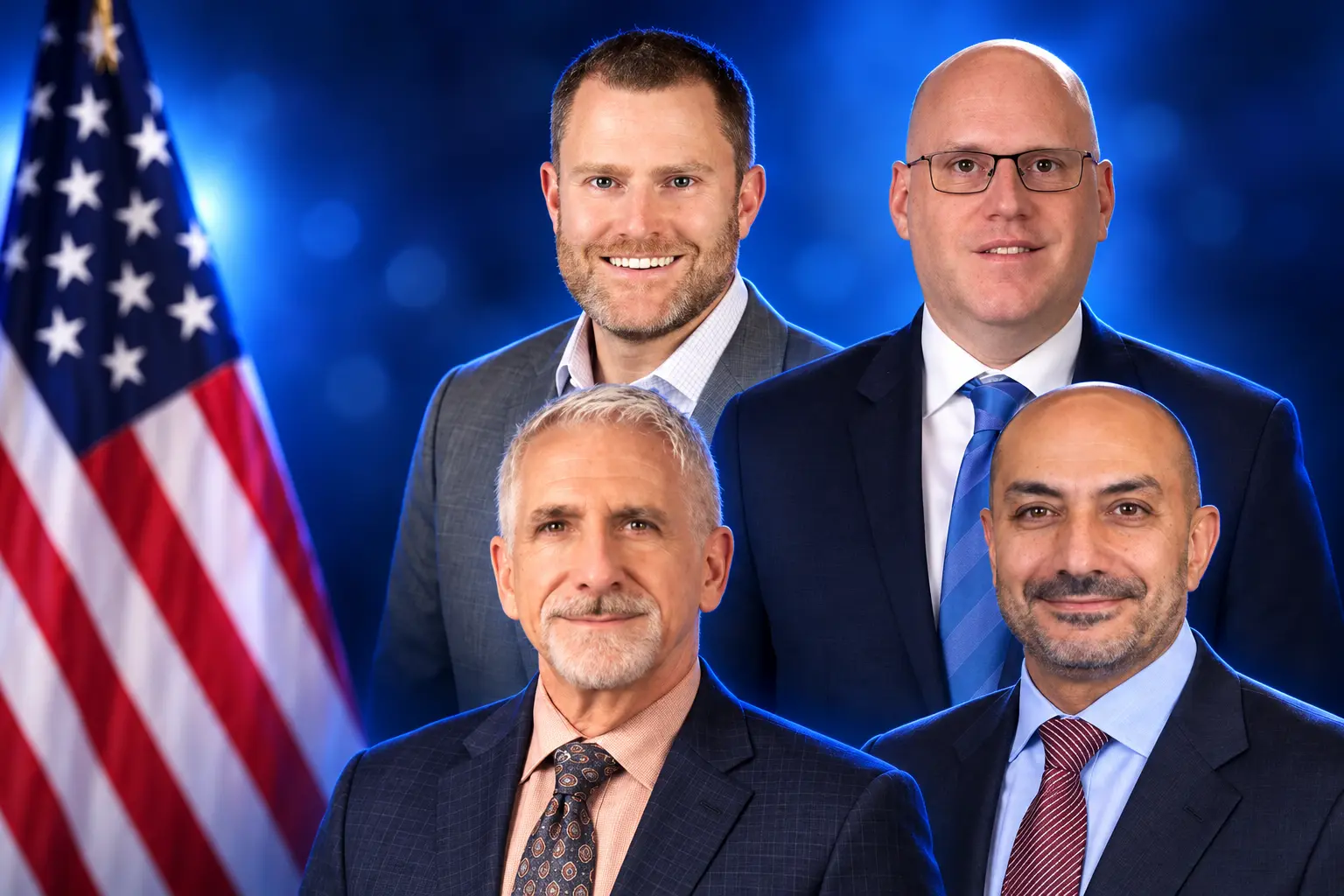
HHS on September 8 made three acting FDA center directors permanent and named the agency’s first deputy commissioner for technology and AI. Michael Davis will run the drug center, Karim Mikhail the biologics and vaccine center, and Bret Koplow the tobacco center. Jared Seehafer takes the new technology post.
That step came 20 days after President Donald Trump nominated White House aide Heidi Overton to run the agency, a pick that still requires Senate confirmation.
Four Permanent Jobs Land Ahead of a Commissioner
The U.S. Department of Health and Human Services announced four senior FDA leadership selections as completed personnel actions, not as names sent to the Senate. Three of the four had already been doing the jobs in an acting capacity. Seehafer’s title did not exist until Tuesday.
Health and Human Services Secretary Robert F. Kennedy, Jr. tied the slate to speed.
We are building an FDA that moves faster, demands excellence, and delivers results for the American people.
Robert F. Kennedy, Jr., HHS secretary, September 8 announcement
Acting Commissioner Kyle Diamantas said the four would help the agency hold talent and build the systems used across centers. He remains in the commissioner’s chair until the Senate acts on Overton. Center directors are seated by HHS. The commissioner is not.
The agency posted the slate the same afternoon.
FDA is strengthening its leadership team to drive innovation, reform, and results for the American people. Together, these leaders will help advance FDA’s Public Health Pillars, strengthen our workforce, accelerate innovation, and ensure FDA remains a global leader in science…
— U.S. FDA (@FDA) September 8, 2026
THE FOUR FDA SELECTIONS
| Official | Role | Path |
|---|---|---|
| Michael Davis, M.D., Ph.D. | Director, Center for Drug Evaluation and Research | Acting director since May 2026; former deputy director; board-certified psychiatrist |
| Karim Mikhail, B.Pharm, MSc | Director, Center for Biologics Evaluation and Research | Acting director after Vinay Prasad left in April 2026; former Merck official |
| Bret Koplow, Ph.D., J.D. | Director, Center for Tobacco Products | Acting director; FDA lawyer and policy official since 2011 |
| Jared Seehafer, M.S. | Deputy commissioner for technology and artificial intelligence | New post; FDA adviser since 2025; software-company founder |
Those four jobs cover prescription and over-the-counter drugs, vaccines and gene therapies, tobacco and nicotine products, and the software the rest of the agency now uses to move files. Three of the FDA’s six centers now have permanent directors.
A Psychiatrist With a Psychedelics Resume Runs CDER
Davis is a board-certified psychiatrist with an M.D. and a Ph.D. in pharmacology from Case Western Reserve University. Davis’s official CDER director biography lists psychiatric residency at UCLA’s Semel Institute and a clinical research fellowship at the West Los Angeles VA, followed by staff psychiatry at the Michael E. DeBakey VA Medical Center in Houston and a faculty post at Baylor.
From 2016 to 2022 he was a clinical team leader in CDER’s Division of Psychiatry, where he ran reviews of psychiatric drugs and spoke on estimands, digital health tools, and psychedelic-based therapies. He left in 2022 and spent 2022 to 2025 as chief medical officer of a nonprofit developing psychedelic drugs for major depressive disorder and post-traumatic stress disorder. He returned to the FDA in 2025 as CDER’s deputy director and became acting director in May 2026 after Tracy Beth Hoeg left the job. Hoeg has said she was fired.
As CDER director he will run the center that decides whether pills, injections, and many other drugs may be sold, and HHS said his brief is access to cheaper medicines, better review science, and a stronger drug supply chain. That docket includes the psychedelic file the White House has already tried to speed up.
On April 18, Trump ordered HHS to move faster on treatments for serious mental illness. On April 24 the FDA issued national priority vouchers for psychedelic studies of psilocybin in treatment-resistant depression, psilocybin in major depressive disorder, and methylone in PTSD, and it allowed an early noribogaine hydrochloride study to proceed. Kennedy named ibogaine in his remarks that day. Davis now owns the reviews that follow those vouchers.
Vaccines and Cell Therapy Land With Karim Mikhail
Mikhail, a pharmacist, takes CBER after serving as acting director. HHS said he brings more than two decades of leadership in pharmaceutical and biotechnology companies and at the FDA, and that he is a former Merck official. Since joining the agency he has worked on faster clinical development, U.S. manufacturing, and what HHS calls national competitiveness.
CBER regulates vaccines, blood products, and cellular and gene therapies. HHS said Mikhail will modernize those rules for rare-disease products, keep review standards in place, and tighten vaccine safety surveillance with more public detail. That is a different brief from the one Vinay Prasad left at the end of April 2026, when the hematologist-oncologist departed CBER a second time after fights with gene-therapy sponsors and a brief ouster in 2025.
Companies that file cell and gene therapies have been writing development plans in a center that changed acting directors twice in a matter of weeks. A permanent name does not freeze every guidance document, but it does tell sponsors who will sign the letters. Mikhail’s industry years are the part of the resume HHS chose to lead with, and that is the tradeoff CBER staff will live with: a director who has sat on the company side of the table, now running the shop that reviews that table’s products.
Tobacco Policy Now Pairs Adult Alternatives With Youth Limits
Koplow has been at the FDA since 2011, a 15-year run through the Office of the Chief Counsel, the Office of Legislation, and a senior counselor post to the commissioner that focused on tobacco files. He became acting CTP director after Brian King was removed in April 2025, during the administration’s early personnel purge, and Makary named him acting director in May 2025. HHS has now dropped the acting label.
HHS gave him two jobs at once.
CTP’S WRITTEN BRIEF
- Adult smokers: Expand innovation and access to products the agency treats as less harmful than cigarettes for adults who already smoke.
- Youth and minors: Take what HHS called decisive action to keep tobacco and nicotine away from children.
- Legal marketplace: Koplow has told industry audiences the center wants authorized products on the market, backed by enforcement against illegal ones, rather than an endless gray inventory of flavored disposables.
While he has been acting director, the center has cleared additional nicotine pouches and e-cigarettes, a shift from the slower authorization pace that defined King’s tenure. Koplow has called device features that restrict youth access “a potential game changer,” language that leaves room for flavored products sold with age gates. The dual brief is the policy, and it is now attached to a permanent director instead of a caretaker.
Seehafer Will Run Elsa and the Agency’s AI Rules
Seehafer is the FDA’s first deputy commissioner for technology and artificial intelligence. HHS said he will be the senior official for technology, software, and AI and will set agency-wide strategy in those areas. The department credited him with two decades of work at the intersection of software, AI, and FDA-regulated medical technology.
Before he joined the FDA as an adviser in 2025, he co-founded a life science software firm that helped companies manage regulatory files. His company biography says he led spinal-cord stimulator programs at St. Jude Neuromodulation, later Abbott; worked on the interface for Medtronic’s first hybrid closed-loop insulin pump; and handled regulatory strategy for combination products including Amgen’s Neulasta Onpro and Repatha Pushtronex. It also says he has represented more than two dozen companies in meetings with the FDA and peer regulators, and that he holds an M.S. in medical device engineering from USC and a Regulatory Affairs Certification.
That resume is why the new office matters more than a courtesy title. Seehafer has filed from the company side, sold software that sits on top of those filings, and now sits over the FDA’s own tools. The agency already pushed reviewers toward AI to shorten the time they spend hunting through submissions.
In June 2025 it launched Elsa 1.0 for staff. On May 6, 2026, still under Makary, it rolled out Elsa 4.0 and the HALO data platform, folding more than 40 application and submission systems into one store. Jeremy Walsh, the chief AI officer, said staff used to bring documents to Elsa and that Elsa now sits on top of the agency’s data. He called integrating AI into workflows an urgent priority so reviewers can move treatments faster. The FDA said Elsa runs in a FedRAMP High Google Cloud environment, is not trained on industry submissions, and is not connected to the open internet, and that human reviewers must check every output.
WHAT ELSA 4.0 ADDS FOR STAFF
- Custom agents: Reviewers can build task-specific helpers inside the agency system rather than pasting the same prompt by hand.
- Document tools: The upgrade adds document generation, voice-to-text, and optical character recognition for scanned files.
- Data work: Elsa 4.0 can run quantitative analysis and draw charts from the merged HALO stores.
- Search: Staff get a secure web-search feature and stronger search across large document sets, with people still required to verify the answers.
Walsh has also said large language models can hallucinate, which is why the May 6 notice keeps a human in every step. Seehafer now owns both that internal stack and the separate job of writing rules for AI-enabled medical products that companies want to sell. Those two tasks pull in opposite directions: one asks the agency to trust software inside its own walls, and the other asks it to police software in devices and drugs.
Why HHS Named Center Directors Before a Commissioner
The order of operations is the news. Trump named Overton on August 19. She is a physician, deputy director of the White House Domestic Policy Council, and a former official at the America First Policy Institute. She stood with Trump on August 10 when he signed an order to cut back the childhood vaccine schedule and split the measles, mumps, and rubella shot into three doses. She still has no confirmed date to sit before the Senate Health, Education, Labor, and Pensions Committee.
Sen. Bill Cassidy, a Louisiana Republican and physician who chairs that committee, objected the day she was named.
Dr. Overton’s active role in last week’s nonsensical vaccine executive order calls into question her commitment to standing up for sound science and protecting children’s health. That alone is almost disqualifying.
Bill Cassidy, U.S. senator from Louisiana and Senate health committee chair, August 19 statement
Cassidy also said she lacks the management record to run a large agency already dealing with staffing and morale trouble. White House spokesman Kush Desai said Overton had spent a year and a half coordinating health policy across HHS, FDA, CDC, and USDA. Democrats on the committee oppose her. The Senate fight is not finished, and it does not have to finish for Davis, Mikhail, Koplow, and Seehafer to come to work.
THE YEAR THAT EMPTIED THE TOP FLOOR
- April 2025: Brian King is removed as director of the Center for Tobacco Products during early administration personnel cuts.
- May 2025: Bret Koplow becomes acting CTP director. Seehafer later joins the FDA as an adviser.
- June 2025: The agency launches Elsa 1.0 for staff.
- April 18, 2026: Trump orders faster work on treatments for serious mental illness, including psychedelic drugs.
- April 24, 2026: FDA issues three national priority vouchers for psychedelic programs and allows a noribogaine study to proceed.
- End of April 2026: Vinay Prasad leaves CBER a second time.
- May 6, 2026: FDA launches Elsa 4.0 and consolidates more than 40 data systems into HALO.
- May 12, 2026: Marty Makary resigns as commissioner; Kyle Diamantas becomes acting commissioner.
- May 2026: Tracy Beth Hoeg leaves acting CDER leadership and Davis takes the acting director job; Mikhail becomes acting CBER director.
- August 19, 2026: Trump nominates Heidi Overton as commissioner.
- September 8, 2026: HHS makes Davis, Mikhail, and Koplow permanent and creates Seehafer’s AI deputy post.
That sequence is why the Tuesday announcement reads as a lock on the operating layer. CDER, CBER, and CTP had been running on acting titles through a commissioner resignation, a biologics-center exit, a drug-center firing, and a tobacco-center ouster. Davis and Mikhail had already been the people walking some of the most contested Makary and Prasad decisions back toward career-staff recommendations. Making them permanent tells reviewers, and the companies who file with them, that those names are no longer temporary.
The open question on advisory committees is still staffing. Rare-disease groups want panels filled with physicians who treat the disease under review, not a rotating cast of generalists. That demand sits with Davis and Mikhail now, not with a nominee who has yet to have a hearing.
WHAT WE KNOW
- The four jobs: HHS named Davis, Mikhail, Koplow, and Seehafer on September 8 as completed selections.
- The commissioner seat: Overton was nominated on August 19 and still needs Senate confirmation; Diamantas remains acting commissioner.
- The tools already live: Elsa 4.0 and HALO are in use, and the psychedelic voucher program is already attached to named products.
WHAT IS UNCONFIRMED
- Hearing date: Cassidy has not announced when, or whether, the health committee will hold an Overton confirmation hearing.
- The next overlay: It is not public how Overton, if confirmed, would divide work with a seated AI deputy and three permanent center directors she did not name herself.
Diamantas is still the acting commissioner. Overton is still a nominee. Davis already runs CDER, Mikhail already runs CBER, Koplow already runs tobacco, and Seehafer already holds the first AI deputy title, which is the part of the FDA that no longer waits on the Senate.
Disclaimer: This article is news reporting on FDA personnel actions and related health-agency policy. It is for information only and is not medical, legal, or investment advice. It does not recommend any drug, vaccine, tobacco product, or security, and it should not be used to make treatment, filing, or trading decisions. Readers who need guidance on a medicine, a regulatory submission, or a financial position should consult a licensed physician, a qualified regulatory attorney, or a registered financial adviser. Titles, duties, and pending nominations can change as HHS, the FDA, and the Senate issue further notices.

Xbox Sells Cloud Playtime Packs Ahead of November Caps

Xbox Puts a $1,800 Helix Behind a 2027 Handheld

Brussels Asks If Bio-Based Plastic Can Replace Recycled Content

EU Organic Deal Gates the Leaf and Doubles Exemptions

Barilla Strike Exposes Who Gains the Italian Plants

Boston Scientific Cyberattack Leaves Hospitals Waiting on Implants

Guizhou Cave Cafes Spread When Each Cavern Fills

The Second Ned Stark Kit Lands When a Banner Dies

OpenAI’s Jalapeño Chip Turns Watts Into Faster Agent Steps

Satellites Saw Nepal’s Ice Slope Move Before the Flood
-
 NEWS2 months ago
Boston Scientific Cyberattack Leaves Hospitals Waiting on Implants
-
 NEWS2 months ago
Guizhou Cave Cafes Spread When Each Cavern Fills
-
 GAMING2 months ago
The Second Ned Stark Kit Lands When a Banner Dies
-
 NEWS2 months ago
OpenAI’s Jalapeño Chip Turns Watts Into Faster Agent Steps
-
 NEWS2 months ago
Satellites Saw Nepal’s Ice Slope Move Before the Flood
-

 NEWS2 months ago
MLB Quiet Periods Copy a Freeze Other Leagues Use
-

 NEWS2 months ago
Roman Space Telescope Launches After a Decade-Long Budget Bet
-

 BUSINESS2 weeks ago
Saks Kept 15 Stores While Rivals Took the Shoppers