
NEWS
Physicians Sue to Pull Protein-First Dietary Guidelines From Schools
A physicians group sued to freeze the 2025-2030 Dietary Guidelines, targeting school lunches and other federal food programs already shifting toward more protein.

The Physicians Committee for Responsible Medicine sued the U.S. government on Aug. 19, 2026, asking a Washington court to withdraw the 2025-2030 Dietary Guidelines for Americans.
The group says a nine-person panel with meat, dairy and low-carb ties replaced two years of public science. The filing also asks the court to bar HHS and USDA from using the guidelines in later decisions, a request that reaches school lunches, WIC and SNAP.
A D.C. Filing Seeks a Full Withdrawal
The lawsuit filed in the District of Columbia names the Department of Health and Human Services and the U.S. Department of Agriculture. It is docketed as 1:26-cv-02911 and assigned to Judge Amit Priyavadan Mehta. The complaint alleges a “procedural bait and switch” under the Federal Advisory Committee Act and the Administrative Procedure Act.
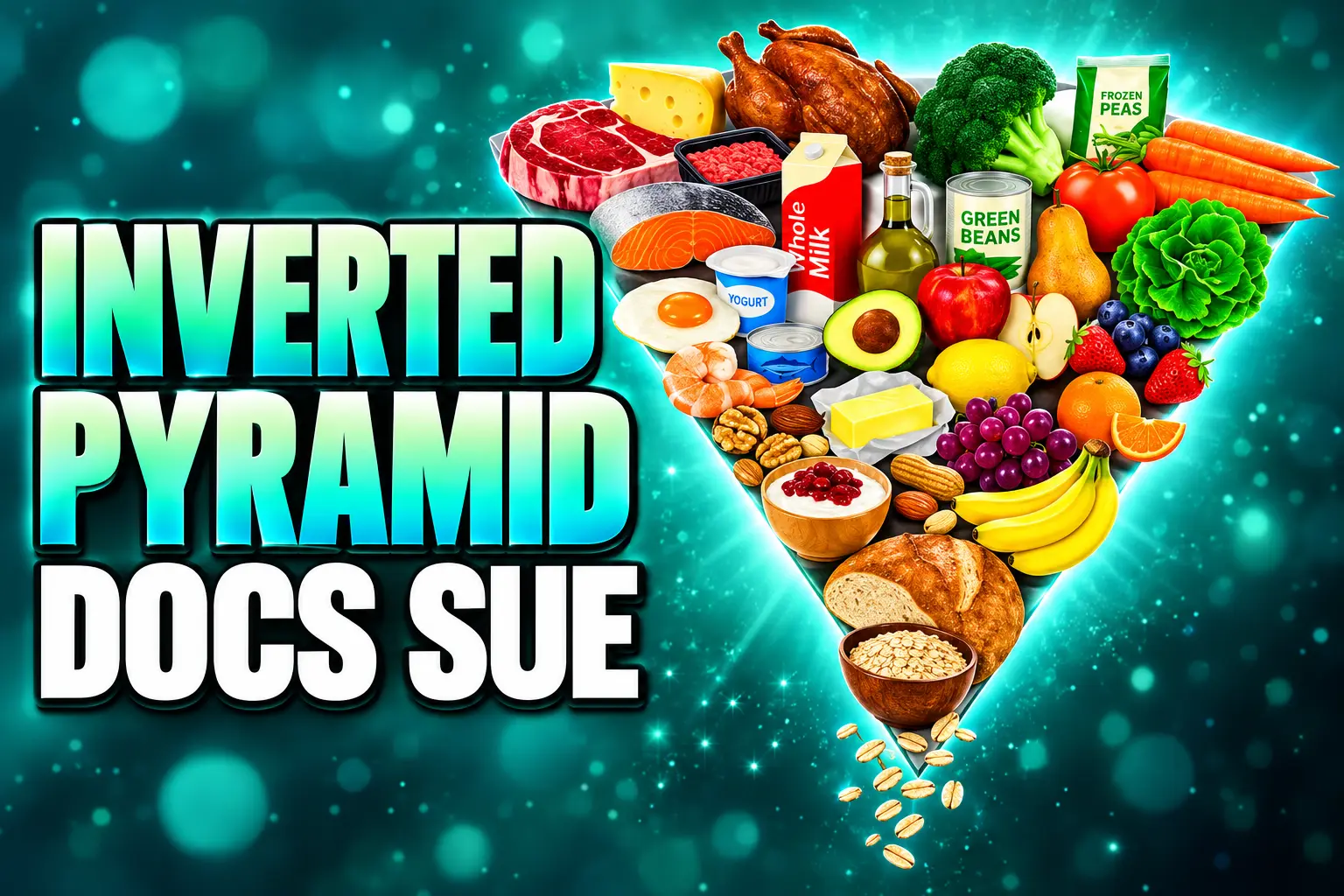
Guidelines dropped on Jan. 7, 2026, under HHS Secretary Robert F. Kennedy, Jr. and Agriculture Secretary Brooke Rollins. They flipped the old pyramid, put protein, dairy and “healthy fats” at the wide top, and told households to cut highly processed food. The Physicians Committee, a Washington nonprofit founded in 1985 that pushes plant-based diets, had petitioned both departments’ inspectors general the next day. Seven months later it went to court.
The government allowed the meat and dairy industries to ghostwrite the Dietary Guidelines. They put money in industry’s pocket and cholesterol in Americans’ arteries.
Neal D. Barnard, MD, president, Physicians Committee for Responsible Medicine
Barnard added that industry-shaped advice “destroy[s] any semblance of healthfulness in federal food programs like the National School Lunch Program, WIC, and SNAP.” That line is the part of the case that does not live on a poster. The group wants the document pulled and locked out of later agency choices while a new FACA-compliant version is written.
On Aug. 28 the committee posted its own recap, tying the science fight to what children eat at school.
We filed a lawsuit against the U.S. government over the 2025-2030 Dietary Guidelines for Americans.
A secret panel, assembled without public oversight, with eight of nine members tied to the meat, dairy, or low-carb diet industries, replaced two years of independent science with… pic.twitter.com/imqWbyQOJl
— Physicians Committee (@PCRM) August 28, 2026
Why School Trays Follow These Guidelines
Shoppers can ignore a pyramid. School food authorities cannot treat it as optional art. Federal child-nutrition law says participating schools shall serve lunches and breakfasts that are consistent with the most recent Dietary Guidelines. A separate statute, 7 U.S.C. 5341, says the report shall be promoted by each Federal agency that runs a food, nutrition or health program.
USDA figures current through June 12, 2026, put average National School Lunch Program participation at 29,986,704 children in fiscal 2025. About 21.3 million of those lunches were free, 0.8 million were reduced-price, and 8.1 million were paid, or 73 percent free or reduced. The program served 4,870.5 million lunches that year. Child nutrition programs as a group ran about $32 billion in fiscal 2024. SNAP, which is a grocery benefit rather than a locked menu, still sat at 38,729,397 people in preliminary fiscal 2026 data.
The Center for Science in the Public Interest has said the guidelines shape programs, food standards and nutrition education that reach at least one in four Americans. SNAP does not force a protein ounce count at checkout. School meal patterns do have to move when USDA rewrites them to match a new edition, and USDA commodity specs for those kitchens are supposed to reflect the same document.
WHERE THE GUIDELINES BITE
| Program | Scale | Legal hook |
|---|---|---|
| National School Lunch Program | 29,986,704 average children, FY 2025 | Meals must be consistent with the goals of the latest Dietary Guidelines |
| School Breakfast Program | Same child-nutrition statute as lunch | Breakfasts face the same “consistent with the goals” duty |
| WIC | Pregnant and postpartum women, infants, and young children | Food packages and education sit inside the federal promotion duty |
| SNAP | 38,729,397 people, FY 2026 preliminary | Promotion and nutrition education, not a locked cafeteria pattern |
If a court later bars HHS and USDA from using the 2025-2030 edition in “any future agency decisions,” the first collision is not a grocery-aisle graphic. It is the next school-meal rule, the next WIC package tweak, and the next round of commodity buys.
The Last Advisory Report Put Beans First
In December 2024, after a two-year public process, the Dietary Guidelines Advisory Committee’s 20 nutrition experts issued their scientific report. They wanted more plant-based meals, beans and other plant proteins ranked ahead of animal protein, and water rather than milk as the main drink. They proposed moving beans, peas and lentils from the vegetable group into protein foods and listing that subgroup first, ahead of nuts, seafood, then meats, poultry and eggs. They also wrote that replacing butter, red and processed meat, and dairy with plant proteins, whole grains, vegetables and unsaturated oils is tied to lower cardiovascular risk.
The final policy did not follow that map. Kennedy and Rollins told the country to prioritize protein at every meal, drink full-fat dairy with no added sugars, and eat “healthy fats” from meats, seafood, eggs, nuts, seeds, olives and avocados. Protein targets moved from 0.8 grams per kilogram of body weight to 1.2 to 1.6 grams. For a 150-pound person that is 81.6 to 109 grams a day, up from 54.4 grams. The 2020 edition had used 5.5 ounces of protein a day on a 2,000-calorie diet. The new pattern allows three to four 3-ounce servings, or up to 12 ounces a day, which CSPI tallied as 84 ounces a week against 26 ounces in the prior pattern if someone filled the slot with animal protein.
CSPI counted the break in hard votes: the administration rejected 30 of 56 advisory-committee recommendations, especially the plant-forward ones and the caution on saturated fat. Saturated fat still sits at 10 percent of calories. Full-fat dairy, butter and beef tallow sit in the “eat this” column anyway.
TWO SCIENCE TRACKS, ONE POLICY
| Question | December 2024 advisory report | January 2026 final guidelines |
|---|---|---|
| Protein ranking | Beans, peas and lentils first, then nuts and soy, then seafood, then meats | Animal sources listed first, then beans, nuts, seeds and soy |
| Protein amount | Did not adopt the 1.2 to 1.6 g/kg target | 1.2 to 1.6 grams per kilogram per day |
| Dairy and drinks | Water first; unsweetened fat-free or low-fat milk second | Three servings of full-fat dairy a day, no added sugars |
| Red meat | Reduce red and processed meat; swap toward plants | Red meat kept in the protein mix; “variety from animal sources” |
| Saturated fat | Replace butter, red meat and dairy with plants and unsaturated oils | 10 percent cap kept, while full-fat dairy and tallow are promoted |
Kennedy framed the reset as a chronic-disease emergency: nearly 90 percent of health spending goes to treating chronic illness, more than 70 percent of adults are overweight or obese, and nearly 1 in 3 adolescents has prediabetes. Rollins said the same document would “realign our food system to support American farmers, ranchers, and companies that grow and produce real food.” Those two sentences, health and livestock, are now in the same 10-page pamphlet.
Nine Consultants Worked Behind Closed Doors
The complaint says HHS and USDA did not build the new science on the advisory committee. They used a second group of nine, assembled without public meetings, and disclosed the names only on the day the guidelines went out. That group, the suit says, took three months to produce a 90-page report and a 418-page appendix. FACA says an advisory committee “will not be inappropriately influenced by the appointing authority or any special interest.” The Physicians Committee says this panel never got that treatment.
The complaint puts the conflict count at eight of nine members. On release day the same group named seven authors and their payers. CSPI independently counted seven of nine. Two of the nine were not named in that January list.
AUTHORS NAMED ON RELEASE DAY
- J. Thomas Brenna: Declared ties to the Global Dairy Platform, National Cattlemen’s Beef Association, Texas Beef Council, General Mills and the American Dairy Science Association.
- Donald Layman: Declared ties to the National Cattlemen’s Beef Association and the National Dairy Council.
- Heather Leidy: Declared ties to the National Cattlemen’s Beef Association, National Pork Board, General Mills and Novo Nordisk.
- Ameer Taha: Declared a relationship with California Dairy and Dairy Management Inc.
- Jeff Volek: Scientific advisor to Simply Good Foods, owner of Atkins and Quest Nutrition low-carb brands.
- Ty Beal: Sat on a livestock project billed as a global assessment of animal agriculture, food security and diets.
- Michael Goran: Declared financial relationships with infant-formula companies.
Anna Herby, a Physicians Committee nutrition specialist, said the administration had been “hoodwinked by scientists working for the dairy and meat industries.” Kennedy had run against captured health agencies. The replacement review was then staffed with people whose disclosed funders include beef boards, dairy councils and low-carb brands. That is the capture argument turned inward, and it is why some of his own backers now treat the pyramid as a livestock win dressed up as MAHA.
The 2023 Dismissal Still Blocks the Door
This is not the committee’s first guidelines case. Before the 2000 edition it sued under FACA and the Freedom of Information Act, arguing that six of 11 advisory members had meat, dairy or egg money. A federal court found both laws had been broken. The group later went to court over the 2010, 2015 and 2020 editions.
The last round ended badly for it. In 2023, in Physicians Committee for Responsible Medicine v. Vilsack, Judge Richard Seeborg of the Northern District of California dismissed the case. He held the plaintiffs lacked standing and that the Dietary Guidelines are not “final agency action” under the APA, so leave to amend would be futile. The new complaint tries to walk around that wall by pleading FACA secrecy and by asking the court to stop the agencies from using the document, not only to edit the text.
HOW PCRM HAS FOUGHT THE GUIDELINES
- 2000: Sues under FACA and FOIA over industry ties on the advisory committee; a federal court finds both laws were violated.
- 2010, 2015, 2020: Challenges those editions in federal court.
- 2023: Northern District of California dismisses PCRM v. Vilsack for lack of standing and because the guidelines are not final agency action.
- January 8, 2026: Petitions the HHS and USDA inspectors general to withdraw the new edition.
- August 19, 2026: Files 1:26-cv-02911 in the District of Columbia, adding a FACA “secret panel” claim and a request to bar future use.
The public docket as of Aug. 28 showed the complaint, the civil cover sheet and summonses. It did not show an agency brief on the merits. Whether Mehta treats the 2025-2030 edition as reviewable, after Seeborg said the opposite about an earlier edition, is the first legal question that actually matters.
WHAT WE KNOW
- The ask: Withdraw the 2025-2030 Dietary Guidelines and bar HHS and USDA from using them in later decisions.
- The forum: U.S. District Court for the District of Columbia, 1:26-cv-02911, Judge Amit Priyavadan Mehta.
- The process claim: A nine-person panel, names out on release day, three months of work, no public meetings.
WHAT IS UNCONFIRMED
- Reviewability: Whether this court will treat the guidelines as final agency action after the 2023 dismissal.
- The school-meal rule: How far USDA will go, and how fast, in rewriting cafeteria patterns around the new pyramid while the case is pending.
- The agencies’ defense: No merits response was on the public docket as of Aug. 28.
Cafeteria workers already know what is on the tray, and a lot of it is processed. That is why a protein-and-whole-milk shift can look like an upgrade even to people who will never join a plant-based lawsuit. The science fight is still about saturated fat, beans versus beef, and who sat in the room.
School Meal Grants Are Already Flowing
The court clock is slow. The cafeteria clock is not. On Aug. 24, five days after the complaint, Kennedy and Rollins announced Harvest to Hallways: up to $70 million for school kitchen equipment and up to $25 million more in fiscal 2026 Farm to School grants. Kennedy said upcoming school-meal nutrition rules would cut added sugars and highly processed foods, move children toward whole grains, and “put high-quality protein back in the center of the plate.”
Two days later, in Tampa, HHS posted a $32.5 million DEPEND school nutrition initiative to help schools replace highly processed foods with “nutrient-dense, real food.” Awards are expected to run from $75,000 to $2.5 million. First money is due in October, seven months after the pyramid launch and seven days after the suit, if you count from the filing. Kennedy said, “Millions of American children depend on school meals every day, and we will not spend taxpayer dollars on food that undermines their health.”
DEPEND will give schools the tools to replace highly processed foods with real, nutrient-dense food, and use rigorous science to prove what works.
Robert F. Kennedy, Jr., HHS secretary, Tampa announcement, Aug. 26, 2026
That processed-food cut is the one slice of the new advice the Physicians Committee does not fight. The clash is what replaces the nuggets: beans and water, as the 2024 advisory report wanted, or meat, cheese and whole milk, as the inverted pyramid shows. October’s first DEPEND awards will go out while the complaint is still young. School districts writing grant applications are not waiting for Mehta.
The Saturated Fat Contradiction Inside the Pyramid
The new document still tells Americans to keep saturated fat under 10 percent of calories. It also tells them to drink three servings of full-fat dairy, cook with butter and tallow, and eat more red meat. CSPI called that mix “at best, confusing, and, at worst, harmful.” The advisory committee had said the cardiovascular evidence runs the other way when butter, red meat and dairy are swapped for plants and unsaturated oils. The final pyramid still prints steak, ground beef, chicken, salmon, whole milk, cheese and yogurt across the wide top, with whole grains at the point.
MyPlate, which had replaced the pyramid in 2011, is gone from the consumer graphic. Whole-grain servings are still 2 to 4 a day. Vegetables are 3 servings and fruit 2, on a 2,000-calorie pattern. The picture does more work than the serving counts. That is a problem for a food-service director who has to turn a poster into a reimbursable lunch, because the 10 percent saturated-fat cap did not move when the milk fat did.
Kennedy’s own health case for the reset is the chronic-disease load, the obesity share, and the prediabetes figure in teenagers. Barnard’s case is that the same document puts “cholesterol in Americans’ arteries” and locks that pattern into the programs that feed children who do not pack a lunch. Both men are talking about the tray. Only one of them is asking a judge to take the tray’s rulebook off the wall.
The October grant round will test which story the agencies are already living in. The complaint asks the court to make them live in a different one.
Disclaimer: This article is news reporting and analysis of a pending federal lawsuit and of nutrition policy. It is not medical advice, legal advice, or a recommendation about what anyone should eat, feed a child, or file in court. Readers who need personal diet or health guidance should consult a physician or a registered dietitian, and anyone with a legal question about the case should consult a licensed attorney. Figures, docket entries and program rules reflect the agency, court and party materials available as of Sept. 2, 2026, and may change as the court and the departments act.

Saks Kept 15 Stores While Rivals Took the Shoppers

Fallout Season 3 Spend Hits California’s $42 Million Cap

Ebola Outran Congo’s Contact Lists and Reached Nairobi

Jagex Builds RuneScape 4 Beside the Games Players Already Have

SimpL Bets €1.2 Million on Meetings Paid When Held

Boston Scientific Cyberattack Leaves Hospitals Waiting on Implants

Guizhou Cave Cafes Spread When Each Cavern Fills

The Second Ned Stark Kit Lands When a Banner Dies

Satellites Saw Nepal’s Ice Slope Move Before the Flood

OpenAI’s Jalapeño Chip Turns Watts Into Faster Agent Steps
-
 NEWS2 months ago
Boston Scientific Cyberattack Leaves Hospitals Waiting on Implants
-
 NEWS2 months ago
Guizhou Cave Cafes Spread When Each Cavern Fills
-
 GAMING2 months ago
The Second Ned Stark Kit Lands When a Banner Dies
-
 NEWS1 month ago
Satellites Saw Nepal’s Ice Slope Move Before the Flood
-
 NEWS2 months ago
OpenAI’s Jalapeño Chip Turns Watts Into Faster Agent Steps
-

 NEWS2 months ago
Roman Space Telescope Launches After a Decade-Long Budget Bet
-

 NEWS2 months ago
MLB Quiet Periods Copy a Freeze Other Leagues Use
-

 NEWS2 months ago
Pere Marquette Freezes Data Centers on a Power-Rich Shore