
BUSINESS
Unilever’s Food Split Now Faces a UK Phase 1 Clock
The UK CMA has until 11 November 2026 to rule on Unilever’s reverse merger of Foods into McCormick.

Britain’s Competition and Markets Authority opened a Phase 1 inquiry on 16 September 2026 into McCormick’s planned takeover of most of Unilever’s foods business. The probe covers a combination that values Unilever Foods at $44.8 billion and sets a Phase 1 decision on 11 November 2026.
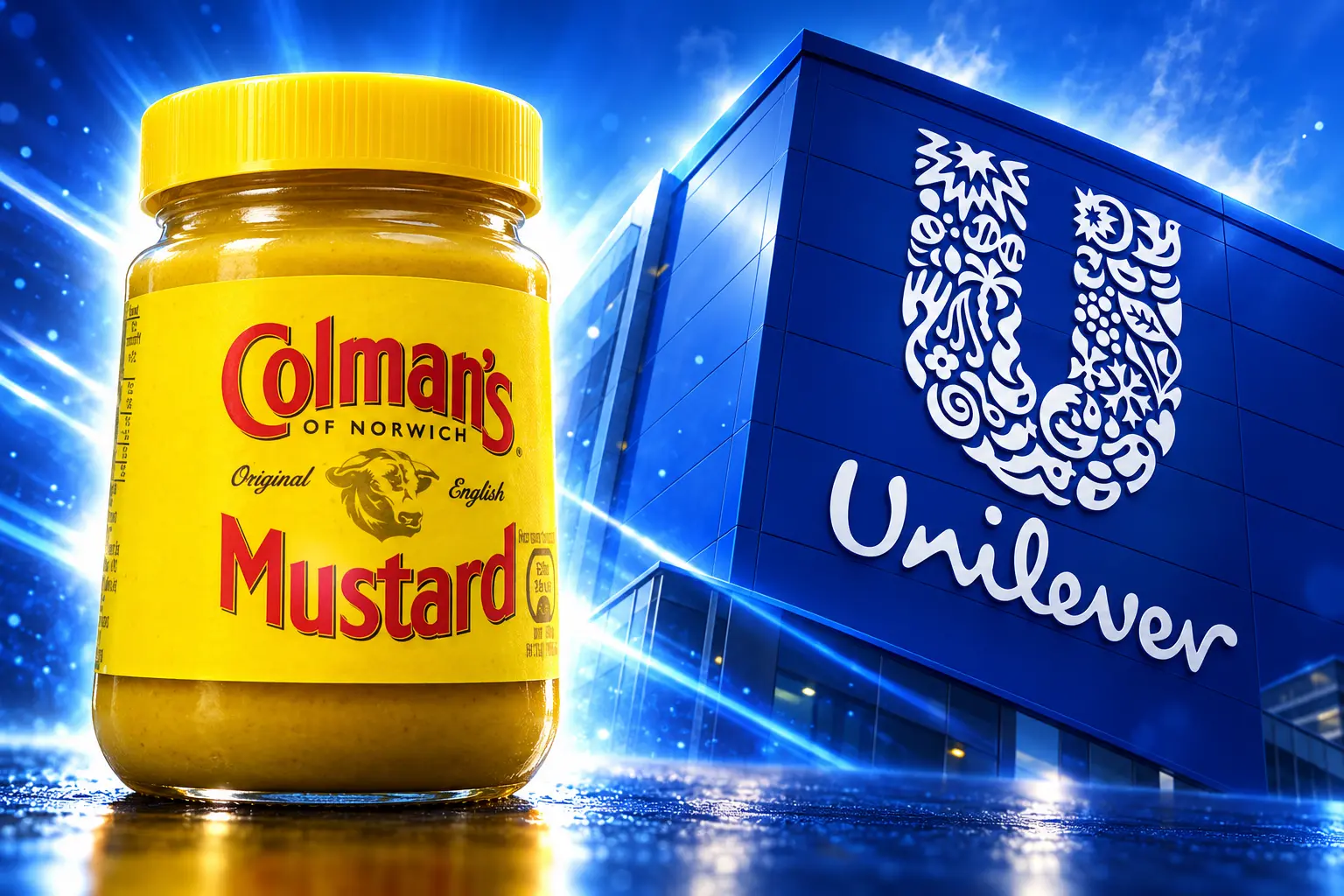
Unilever already put Colman’s mustard up for sale in August to ease UK overlap with McCormick’s French’s brand. The formal clock started anyway, and that clock now sits on a deal that is less a simple sale than a reverse merger.
The CMA Has Until 11 November
The CMA is investigating the anticipated acquisition by McCormick & Company of the majority of Unilever’s foods business. It listed the case as open in food manufacturing after a pre-notification period in which the parties had already given it the information needed to start.
An invitation to comment ran from 21 July 2026 to 5 August 2026. Interested parties were asked for views on the impact the transaction could have on competition in the UK. The regulator then launched the merger inquiry by notice to the parties on 16 September. Neither company put out a fresh public comment on that step.
Phase 1 is the screening stage. By 11 November the CMA must clear the deal, accept undertakings, or send it to a deeper Phase 2 inquiry. The statutory deadline can be extended only in limited cases. A Phase 2 would push well past the companies’ aim of closing by mid-2027.
THE REGULATORY CLOCK
- 21 July 2026: The CMA opens the case and invites comment on UK competition effects.
- 5 August 2026: The comment window closes.
- 16 September 2026: Phase 1 launches by notice to McCormick and Unilever.
- 11 November 2026: Deadline for the Phase 1 decision.
The CMA has not published the comments it received, and it has not said which UK product markets it is testing. Mustard is the overlap the companies have already tried to cut out. It is not the only aisle where the two portfolios meet.
Unilever Shareholders Would Own Most of McCormick
The 31 March 2026 agreement is built as a Reverse Morris Trust, a US tax structure in which Unilever spins Foods and merges it into McCormick. McCormick keeps its name, its Hunt Valley, Maryland headquarters and its New York listing. Unilever and its shareholders, taken together, receive 65.0% of the fully diluted equity, valued at $29.1 billion on McCormick’s one-month volume-weighted average price of $57.84. Unilever also receives $15.7 billion in cash, subject to closing adjustments.
At close, Unilever shareholders are expected to hold 55.1% of the combined company, McCormick shareholders 35.0%, and Unilever itself 9.9%. The 9.9% is meant as a vote of confidence. Unilever says it will not sell that stake earlier than one year after closing, and then only in an orderly way. McCormick’s implied enterprise value in the same terms is $21.0 billion, also at 13.8 times fiscal 2025 earnings before interest, tax, depreciation and amortisation. Unilever Foods is struck at 3.6 times sales.
EQUITY AT CLOSE
| Holder | Share of combined equity | Notes |
|---|---|---|
| Unilever shareholders | 55.1% | Voting and non-voting McCormick stock |
| McCormick shareholders | 35.0% | Retained stake in the surviving company |
| Unilever | 9.9% | Held at least one year, then sold down |
Cash to Unilever is separate from that table. The $15.7 billion is earmarked to cover separation and tax costs, hold Unilever’s net debt at about 2.0 times EBITDA, and support €6 billion of share buy-backs from 2026 to 2029. The companies expect about $600 million of annual run-rate cost synergies, net of money put back into growth, with full value by the end of year three and about two-thirds by year two. A further $100 million of cost and revenue synergies is to be reinvested rather than taken as profit.
McCormick chief executive Brendan Foley, who will run the combined group with chief financial officer Marcos Gabriel, framed the deal as a flavour business folding in a portfolio McCormick had watched for years.
This transformative combination accelerates McCormick’s strategy and reinforces our continued focus on flavour. The Unilever Foods business is one we have long admired, with a portfolio that complements our existing business, capabilities and long-term vision.
Brendan Foley, Chief Executive Officer, McCormick, 31 March 2026 announcement
For Unilever shareholders the economic picture is the reverse of the brand story that travels well in Britain. The surviving listed vehicle is American. The majority owners, if the deal closes on the stated terms, are the people who today own Unilever.
Colman’s Went on the Block in August
Colman’s is the UK problem the companies chose to name. McCormick already owns French’s, a global mustard brand. Adding Colman’s to the same house would have given one owner two of the names British grocers put on the mustard shelf. In late August Unilever said the brand and its assets would be marketed to other buyers.
A decision has been taken to market the Colman’s brand and assets to potential buyers in order to proactively seek to address potential competition concerns from the planned combination of Unilever Foods and McCormick.
Unilever spokesperson, August 2026
Jeremiah Colman started the firm at Stoke Holy Cross in 1814. Production moved to Carrow in Norwich in 1858 and stayed there for generations. Unilever bought the brand in 1995. The last jar left Carrow in 2019 and the factory shut in 2020. Making then shifted to Burton-on-Trent and Germany. The empty 42-acre Carrow site has been lined up for housing. The brand itself is 212 years old in 2026, which is why a sale made for merger hygiene still reads, in Norfolk, like another cut in a long withdrawal.
That reading often gets the mechanics backwards. Colman’s is being sold so it does not travel into McCormick beside French’s. Marmite, Knorr, Hellmann’s and Pot Noodle are still in the perimeter that would move. Heritage talk that treats the whole food split as America taking the cupboard misses both the equity split and the reason Colman’s was pulled out.
No buyer or price has been named. Unilever said discussions were ongoing and operations were continuing as usual. A sale that is still on the market in November will not, on its own, tell the CMA the UK mustard question is closed.
Schwartz, Hellmann’s and the Rest of the Aisle
The combination the companies announced would put McCormick spices, French’s mustard, Frank’s RedHot, Cholula and Lawry’s in the same group as Knorr and Hellmann’s, which together make about 70% of Unilever Foods sales. Knorr is sold in more than 90 countries. Hellmann’s is in more than 65. McCormick’s UK spice brand is Schwartz. Unilever’s cooking aids and seasonings sit in the same kitchen as that range.
McCormick also sells mayonnaise under its own name in some markets, and it owns Cattleman’s barbecue sauces. Unilever is keeping Maille, the Dijon mustard and condiment line, inside the deal even as it tries to sell Colman’s. English mustard and Dijon are not the same jar, but they are not far apart on a British condiment fixture.
BRANDS THE COMBINED COMPANY WOULD HOUSE
- From Unilever Foods: Knorr, Hellmann’s, Marmite, Pot Noodle and Maille, among other cooking and condiment names.
- From McCormick: McCormick spices, Schwartz in the UK, French’s mustard, Frank’s RedHot, Cholula, Stubb’s, OLD BAY and Lawry’s.
- Pulled out in August: Colman’s mustard, now being offered to other buyers.
The combined company is pitched as a flavour group with $20 billion in combined fiscal 2025 revenue across retail and foodservice. That scale is the industrial logic. It is also why a UK Phase 1 cannot be waved through on a single brand disposal. Stock cubes, mayonnaise, spices and wet sauces are separate product markets in merger review, and the CMA can open more than one of them.
What Unilever Keeps After Foods Leaves
Strip Foods out on the announced perimeter and Unilever says it becomes a home, beauty and personal care company with €39 billion of fiscal 2025 revenue. Chief executive Fernando Fernandez called the deal another step toward high-growth categories in that smaller group. Beauty, wellbeing and personal care would be about 67% of turnover, against 51% in fiscal 2025. About 90% of leftover revenue would sit in number one or number two positions in Unilever’s category-and-country cells.
UNILEVER AFTER THE SPLIT
- Leftover sales: €39 billion in fiscal 2025, focused on beauty, wellbeing, personal care and home care.
- Buy-backs: €6 billion planned between 2026 and 2029, funded in part by the McCormick cash.
- Three-year record on the leftover: 5.4% compound underlying sales growth, 48% gross margin, 18% brand investment, 19% underlying operating margin.
Some food stays. The deal excludes Unilever’s food operations in India, Nepal and Portugal, the Lifestyle & Nutrition business, Buavita, and Lipton ready-to-drink, which is tied to a PepsiCo joint venture. Colman’s now sits on that exclusion list too. India remains an anchor market in the leftover company, with the United States and India together expected to be 38% of group turnover against 33% in fiscal 2025. Emerging markets would be 62%, against 59%.
Separation is not free. Unilever expects €400 million to €500 million of stranded costs, and €500 million of one-off restructuring from 2027 to 2029 to offset them. A transitional services agreement of about two years would cover information technology and distribution for the combined foods company. Unilever says it expects no revenue loss from taking Foods out. Works council consultation still has to finish before closing.
European Food Staff Got Two Years of Cover
About 4,800 people work in Unilever’s food business in Europe and Britain, roughly a third of the regional headcount. In July Unilever agreed with its European Works Council to protect existing pay and terms for those staff for two years after completion, which, if the deal closes in mid-2027, would run to about mid-2029. EU and UK transfer rules normally lock terms for one year. The Magnum ice cream separation had carried a three-year promise, so food staff got less than ice cream and more than the legal floor.
That cover was not rolled out as a global blanket. The International Union of Food workers said Unilever would talk country by country outside Europe rather than match the two-year term everywhere. Sarah Meyer, assistant general secretary of the IUF, said the union wanted the same two-year guarantee globally so workers outside Europe were not treated as worth less. A Unilever spokesperson said the company was engaging with works councils and other employee representatives and had made good progress. IUF acting general secretary Kristjan Bragason said Unilever and McCormick should grant all workers the same protections and rights.
The $600 million synergy target is where those talks will get tested. The companies have said savings would come from manufacturing, distribution and buying, and they have not said how many jobs would go, or where. Foley said he would need Unilever’s team to run the business. A two-year European freeze delays that question in one region. It does not answer it in the plants that would actually be combined.
Hunt Valley Stays in Charge Through Mid-2027
McCormick remains the legal survivor. Foley stays chief executive. The four Unilever designees on a 12-member board are the main formal check from the larger economic owner. One of those four may be a Unilever manager, employee or director. McCormick will add an international headquarters in the Netherlands and has said it plans a secondary listing in Europe. Completion still needs McCormick shareholder approval, regulatory clearances and the works council process, and is expected by mid-2027.
WHAT WE KNOW
- The UK clock: Phase 1 is open, with a decision due on 11 November 2026.
- The structure: Reverse Morris Trust, McCormick name and NYSE listing, Unilever shareholders 55.1%, Unilever 9.9%, McCormick holders 35.0%, plus $15.7 billion cash to Unilever.
- The named fix: Colman’s is being marketed because of overlap with French’s.
WHAT IS UNCONFIRMED
- Phase 2: The CMA has not said whether it will refer the case.
- A Colman’s buyer: No purchaser or price has been disclosed.
- Other clearances: No parallel EU or US decision has been published with this inquiry.
- Jobs from synergies: The $600 million net cost target has no public headcount attached.
The 11 November decision is the first date that can actually change the path. A clearance with the Colman’s sale as a remedy would keep mid-2027 in reach. A Phase 2 reference would test whether British mustard was ever the whole UK problem, and whether a reverse merger this large can close on the timetable the two boards set in March.
Disclaimer: This article is news reporting and analysis of a proposed merger and a live competition inquiry. It is for information only and is not investment advice, legal advice, or a recommendation to buy, sell or hold Unilever, McCormick or any other security. Readers who may act on deal terms, shareholdings or regulatory outcomes should consult a qualified financial adviser or competition lawyer about their own position. Figures, case status and brand lists reflect company statements, the CMA case page and filings as of the dates cited and can change as the inquiry and the Colman’s sale proceed.

Saks Kept 15 Stores While Rivals Took the Shoppers

Fallout Season 3 Spend Hits California’s $42 Million Cap

Ebola Outran Congo’s Contact Lists and Reached Nairobi

Jagex Builds RuneScape 4 Beside the Games Players Already Have

SimpL Bets €1.2 Million on Meetings Paid When Held

Boston Scientific Cyberattack Leaves Hospitals Waiting on Implants

Guizhou Cave Cafes Spread When Each Cavern Fills

The Second Ned Stark Kit Lands When a Banner Dies

OpenAI’s Jalapeño Chip Turns Watts Into Faster Agent Steps

Satellites Saw Nepal’s Ice Slope Move Before the Flood
-
 NEWS2 months ago
Boston Scientific Cyberattack Leaves Hospitals Waiting on Implants
-
 NEWS2 months ago
Guizhou Cave Cafes Spread When Each Cavern Fills
-
 GAMING2 months ago
The Second Ned Stark Kit Lands When a Banner Dies
-
 NEWS2 months ago
OpenAI’s Jalapeño Chip Turns Watts Into Faster Agent Steps
-
 NEWS1 month ago
Satellites Saw Nepal’s Ice Slope Move Before the Flood
-
 NEWS2 months ago
MLB Quiet Periods Copy a Freeze Other Leagues Use
-
 NEWS2 months ago
Roman Space Telescope Launches After a Decade-Long Budget Bet
-
 NEWS2 months ago
Pere Marquette Freezes Data Centers on a Power-Rich Shore