
NEWS
Apple’s Two-Unit iPhone Duo Cap Arrives After the Rush
Apple now blocks a third iPhone Duo at checkout after its own store slipped to January 22, handing earlier phones to first-wave and retailer buyers.

Apple now blocks any cart with more than two iPhone Duo units, after new orders on its own store slipped to January 22, 2027. The phone is the first foldable iPhone, and Apple is still taking orders. It will not let a third unit sit in the bag.
The gate went up after some shoppers had already checked out four phones. The big-box path that still quoted November then dropped some of those pickup promises the night before launch.
The Two-Unit Gate Shows Up Only at Checkout
Try to add a third iPhone Duo on Apple’s site or in the Apple Store app, and checkout stops. The same wall appears no matter which color or storage size you pick. Checks of the stores in the United States, the United Kingdom, Japan, and Spain all returned one notice.
A maximum of 2 iPhone Duo can be purchased per customer. Please adjust the total quantity of iPhone Duo in your order before checking out.
Apple Store checkout notice
China, Singapore, and Hong Kong print a two-per-customer line on the product page, under the pre-order heading. The U.S. page does not. American shoppers only see the rule when a third phone hits the cart. That split is the whole policy in miniature. Asia was told the limit in the open. The U.S. store hid it until the last click.
Apple has used a two-phone cap before, including on the original iPhone in 2007. The Duo version is specific to this model in the countries where the cart warning names it. Mix a Duo with another iPhone in those carts and the third handset still gets blocked.
Some Buyers Already Cleared Four Phones
Pre-orders opened on October 16, 2026, at 5:00 a.m. Pacific. For a short window the digital gates were open. People in Reddit’s iPhone Duo community say they placed orders for more than two units right as the window went live. Others say they were held to two from the first cart.
It is still unclear exactly when the U.S. cap switched on. The two-unit warning in the United States was widely confirmed on October 19, three days after that 5:00 a.m. start. A cap that arrives after weekend one does not unwind the orders that already went through. It only changes who can buy next.
Apple never said how it stops someone from opening a second account or cycling cards. The cart rule is a per-customer check at checkout, not a proof of identity. Dedicated resellers can still split orders. Families who actually need three phones cannot do it in one bag on apple.com.
January 22 Is Apple’s Date for New Orders
The wait on Apple’s own store was set before the cap. By 5:30 a.m. Pacific on October 16, thirty minutes after pre-orders opened, every U.S. Duo listing showed January 25, 2027. Star White and Night Sky. 256GB through 2TB. Later checks of the same store, on October 20, showed January 22, 2027. That is the date new Apple.com orders still carry.
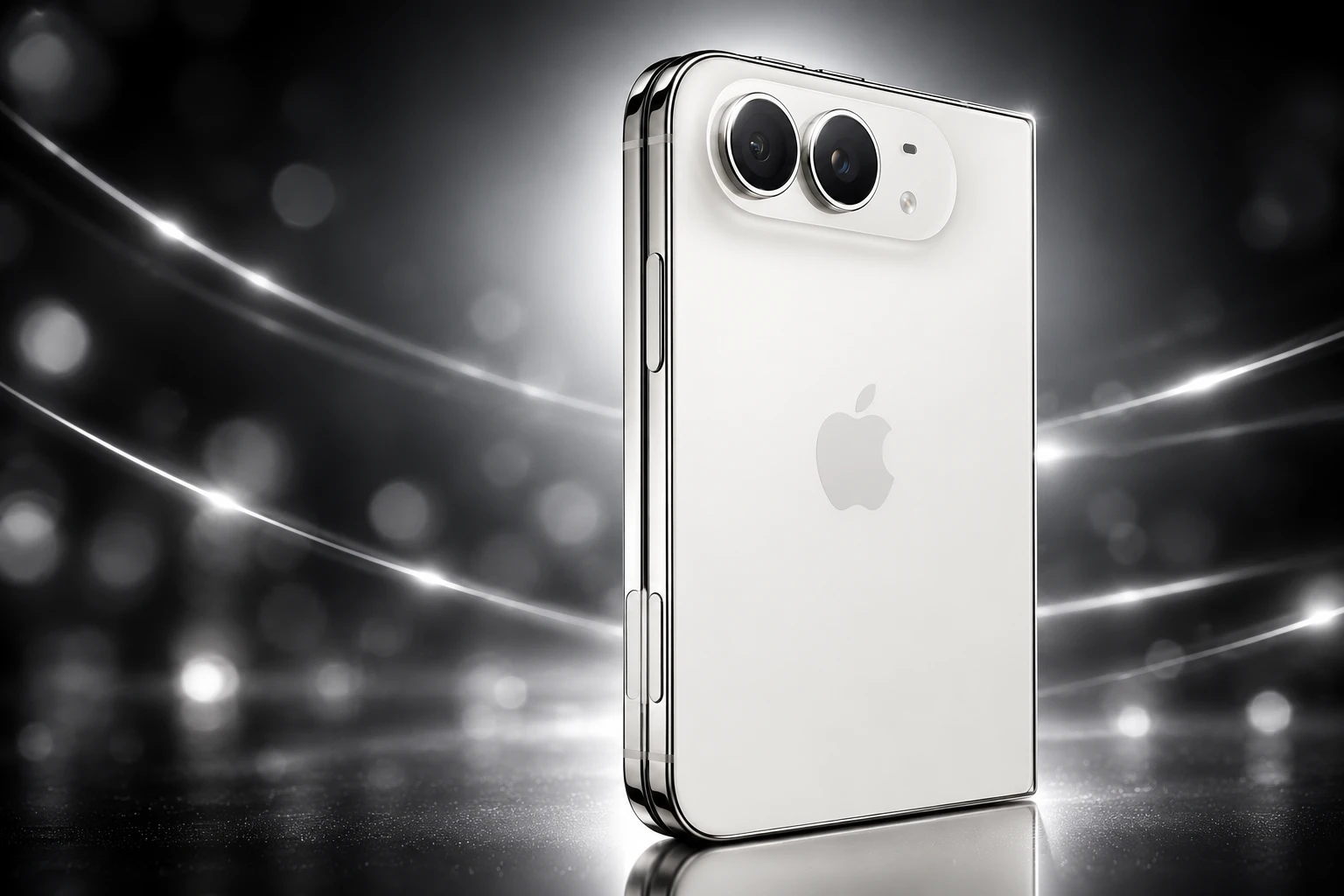
The phone itself is a book-style foldable with a 7.6-inch inner Super Retina XDR display, which Apple says is 50 percent larger than iPhone 18 Pro Max. Storage starts at $1,999 for 256GB and reaches $3,199 for 2TB. Colors are Star White and Night Sky. Apple put the foldable on a September stage as a new top of the line, then opened a global pre-order that ran out of launch-day slots in minutes.
APPLE VERSUS BEST BUY ON OCTOBER 20
| Seller | Model | Listed date |
|---|---|---|
| Apple online, United States | All colors and storage | January 22, 2027 |
| Best Buy | 512GB | November 10, 2026 |
| Best Buy | 256GB | December 14, 2026 |
Those Best Buy dates were the escape hatch from Apple.com. A 512GB order still pointed to November 10. A listing showed December 14 for the 256GB. Anyone who wanted a Duo before Christmas had already been pushed off Apple’s site. The remaining hope sat at carriers and big-box stores that still showed autumn windows.
Some Apple customers who ordered early then saw their own dates move forward. A 512GB Star White that had sat in December was pulled into November 20 to November 30. Other U.S. orders jumped from December 1-8 to November 16-23. A Japan order that had been dated December 3-10 was pulled to October 24. The queue can move. It has not brought new Apple.com orders back into 2026.
Best Buy Looked Faster Until Launch Night
Launch day was October 23. The night before, some Best Buy shoppers who had been promised that date watched the confirmation go blank. Order pages that still said October 23 earlier in the week no longer did. One reviews editor described a guaranteed in-store pickup that vanished overnight. Replies to that complaint were blunt: this chain oversells shipments, and a missing pickup email is an old trick.
That does not mean every Best Buy order died. Some shoppers cancelled both an Apple pre-order and a Best Buy order after they got lucky with in-store pickup. Others collected a unit the next day even after the scary email. A 512GB Verizon and AT&T path at Best Buy still showed shipping by October 24 on launch morning. The retailer was never a clean win. It was a different lottery, with better advertised dates and a habit of writing checks its stock could not cash.
WHAT HAPPENED TO THE FASTER CHECKOUT
- The listing: On October 20, Best Buy still showed November 10 for 512GB and December 14 for 256GB, weeks ahead of Apple’s January 22.
- The promise: Some pre-order pages kept an October 23 pickup date into the week of launch.
- The drop: On the night of October 22, part of those confirmations disappeared, leaving shoppers with no launch-morning slot.
- The split: A share of buyers still picked up a phone in store or saw it ship by October 24; others were told to wait.
Carrier windows sat in between. Late November and December dates showed up on Verizon, AT&T, and T-Mobile depending on color and storage. Walmart listed the Duo as out of stock. That does not help a shopper who only wants an unlocked phone from Apple in time for the holidays. Apple.com had already spent that window on the people who tapped buy before 5:30 a.m. Pacific on October 16.
Foxconn’s 12-Month Target Jumped to 14 Million
Apple called pre-order demand nothing short of extraordinary and said it would keep taking orders online. It also said it was working to get the product into customers’ hands as quickly as possible. The company did not publish a unit count next to that line.
Supply-chain reporting did. DigiTimes, citing people at Foxconn and component makers, said Apple lifted a 12-month Duo target from 9.7 million to 14 million devices, a rise of 44 percent. That figure is a full-year ask, not a promise that January dates will snap back. Output still depends on assembly, displays, and hinges, the same parts that made the phone hard to build in volume.
THE SUPPLY APPLE IS CHASING
- 12-month target: 14 million units, raised from 9.7 million after the pre-order rush.
- Assembly yield: A little above 60 percent at Foxconn around early October, so a large share of phones still failed the quality bar.
- Launch map: More than 70 countries and regions on October 23, with 28 more due on October 30.
- Starting price: $1,999 for 256GB, then $2,199, $2,599, and $3,199 as storage climbs.
Apple analyst Mark Gurman wrote that the company knew the phone would face severe supply limits and opened pre-orders anyway. The original plan, he said, was a start in the United States and China. The final call was a simultaneous open in more than 70 countries, which carved one thin pool into dozens of queues.
Let me cut to the chase: Apple made a major mistake here. The company knew there would be severe supply constraints but went ahead with the launch anyway, apparently prioritizing a desire to get the device on the market early in its fiscal first quarter over satisfying demand.
Mark Gurman, Apple analyst, Power On newsletter
That reading is Gurman’s, not Apple’s. Apple has not said it chose speed over stock. The calendar still matches a holiday-quarter launch. The Duo was unveiled by new chief executive John Ternus after he took the job in September, so the first foldable is also an early public test of that handover. Spreading a constrained run across 70-plus markets made the January date almost inevitable the morning pre-orders opened.
Does the Two-Unit Cap Stop Scalpers?
Dozens of iPhone Duo listings were already up on eBay before launch, some priced above $5,000 against a $1,999 floor. A two-unit cart cap does not delete those ads. It does not cancel the four-packs that Reddit users say they submitted on October 16. It only trims how many extra phones a single Apple ID can pull from the remaining queue.
The people who lose on apple.com are the ones who wait. A parent buying for two kids and themselves. An office that wants three demo units. Anyone who did not treat 5:00 a.m. Pacific as a standing date. Scalpers who already have stock keep it. Scalpers who are willing to open more accounts still have a path. The cap is real. It is also late, and it is leaky.
Apple Store staff were told, before launch, to warn people without a pre-order not to count on walking in. Apple then said stores in the United States, the United Kingdom, Canada, Australia, Mexico, and several European countries would have a limited number of units for walk-in buyers, and that those would sell quickly. In France, China, Hong Kong, India, Japan, Malaysia, South Korea, Taiwan, Thailand, and the UAE, launch-day sales were tied to a pickup reservation. There was no casual walk-up in those markets at all.
Launch Morning Left Walk-In Stock Thin
October 23 still put the phone on sale. Pre-order deliveries went out. Lines formed before dawn at stores that had any chance of a spare unit. In Las Vegas, a Town Square queue of about 40 people at 4:15 a.m. grew past 150. Downtown Chicago had a line an hour and a half before opening. Workers told disappointed shoppers to check the Apple Store app the next morning for pickup stock.
Pickup itself had been switched off during the pre-order crush, with Apple telling people to look again on October 24. Some pickup slots later returned in the United States and Canada, in very small numbers. That is a drip, not a second launch. On October 30, 28 more countries are due to get the phone, and they will draw from the same constrained build.
FROM PRE-ORDER MORNING TO LAUNCH DAY
- October 16, 2026: Pre-orders open at 5:00 a.m. Pacific. By 5:30 a.m., the U.S. store shows January 25, 2027 for every Duo.
- October 18, 2026: Gurman calls the wide pre-order a major mistake, saying Apple knew supply would be tight.
- October 19, 2026: The U.S. two-unit cap is confirmed at checkout. Some early orders see dates pulled forward.
- October 20, 2026: The same cart warning hits the United Kingdom, Japan, and Spain. Apple’s listed date is January 22, 2027. Best Buy still shows November 10 and December 14.
- October 22, 2026: Supply-chain sources describe a 12-month target of 14 million units. Some Best Buy October 23 pickup pages go blank overnight.
- October 23, 2026: Launch day. Limited walk-in stock, long lines, and a split at retail between people who leave with a phone and people who do not.
You can still order an iPhone Duo from Apple. The cart will take two, and the date it shows is January 22, 2027. The phones that exist this fall already belong to the people who bought in the first minutes, walked into a store that had one, or got a retailer to honor a pickup.

Duffy Pins the FAA Ground Stop on a Contractor-Owned Network

Microsoft Tested Its Gateway Fix on the Wrong Machines

Firaxis Cuts a Third of Its Staff as XCOM Slips

The New Chip Rule Favors US Cloud Parents in Asia

European Unions Ask Players to Police GenAI They Cannot See

Boston Scientific Cyberattack Leaves Hospitals Waiting on Implants

Xbox Sells Cloud Playtime Packs Ahead of November Caps

Guizhou Cave Cafes Spread When Each Cavern Fills

The Second Ned Stark Kit Lands When a Banner Dies

Satellites Saw Nepal’s Ice Slope Move Before the Flood
-
 NEWS3 months ago
Boston Scientific Cyberattack Leaves Hospitals Waiting on Implants
-
 GAMING4 weeks ago
Xbox Sells Cloud Playtime Packs Ahead of November Caps
-
 NEWS3 months ago
Guizhou Cave Cafes Spread When Each Cavern Fills
-
 GAMING3 months ago
The Second Ned Stark Kit Lands When a Banner Dies
-
 NEWS2 months ago
Satellites Saw Nepal’s Ice Slope Move Before the Flood
-

 NEWS3 months ago
OpenAI’s Jalapeño Chip Turns Watts Into Faster Agent Steps
-

 NEWS3 months ago
MLB Quiet Periods Copy a Freeze Other Leagues Use
-

 NEWS3 months ago
Roman Space Telescope Launches After a Decade-Long Budget Bet