
GAMING
Bandai Namco Liquidates the Studio Behind Unknown 9
Bandai Namco will liquidate Reflector Entertainment and book about €21 million, closing the Montreal studio after Unknown 9 never became a universe.

Bandai Namco Holdings voted on November 10, 2026 to dissolve Reflector Entertainment, the Montreal studio behind Unknown 9: Awakening, and book about €21 million in extraordinary losses. The parent said it had weighed future plans, extra funding, and whether the studio could still make money.
The write-off lands just over two years after launch, and after Bandai had already stripped the studio down. This is the invoice for a transmedia original that was supposed to run for a decade.
Bandai Namco Takes a €21 Million Hit
The board of Bandai Namco Holdings Inc. met on November 10, 2026 and resolved to discontinue, dissolve, and liquidate Reflector Entertainment Ltd. President Yuji Asako signed the notice. Reflector sits at 1100 Avenue des Canadiens de Montréal and is wholly owned by Bandai Namco Entertainment Europe S.A.S. Hervé Hoerdt is listed as director and CEO. Share capital is CAD 46.0 million. The company was established on December 29, 2015.
The group said it reviews its portfolio and internal development setup for medium- and long-term growth. After that review, it chose to stop Reflector’s business. Liquidation follows local law, and the notice says a concrete schedule is undecided.
On the parent’s books, the company expects an extraordinary loss of approximately 21 million euros (about 3.5 billion yen) in the third quarter, covering the nine months of the fiscal year ending March 31, 2027, and thereafter. The figure is an estimate. The actual amount and the posting date are under review and may move with tax and accounting treatment.
REFLECTOR’S LAST THREE FISCAL YEARS
| Year ended | Net sales | Operating profit | Net profit | Net assets |
|---|---|---|---|---|
| March 31, 2024 | CAD 1.6 million | CAD 8.3 million loss | CAD 14.2 million loss | CAD 38.5 million deficit |
| March 31, 2025 | CAD 47.8 million | CAD 18.5 million loss | CAD 28.4 million loss | CAD 87.6 million deficit |
| March 31, 2026 | CAD 14.7 million | CAD 2.6 million profit | CAD 1.98 million loss | CAD 89.5 million deficit |
Those lines are in thousands of Canadian dollars in the filing, converted here to millions. Launch-year sales in the year ended March 31, 2025 reached CAD 47.8 million and still produced an operating loss of CAD 18.5 million. Net losses across the three years add up to CAD 44.5 million. Total assets fell from CAD 82.3 million to CAD 13.5 million.
A 285-Player Peak on Steam
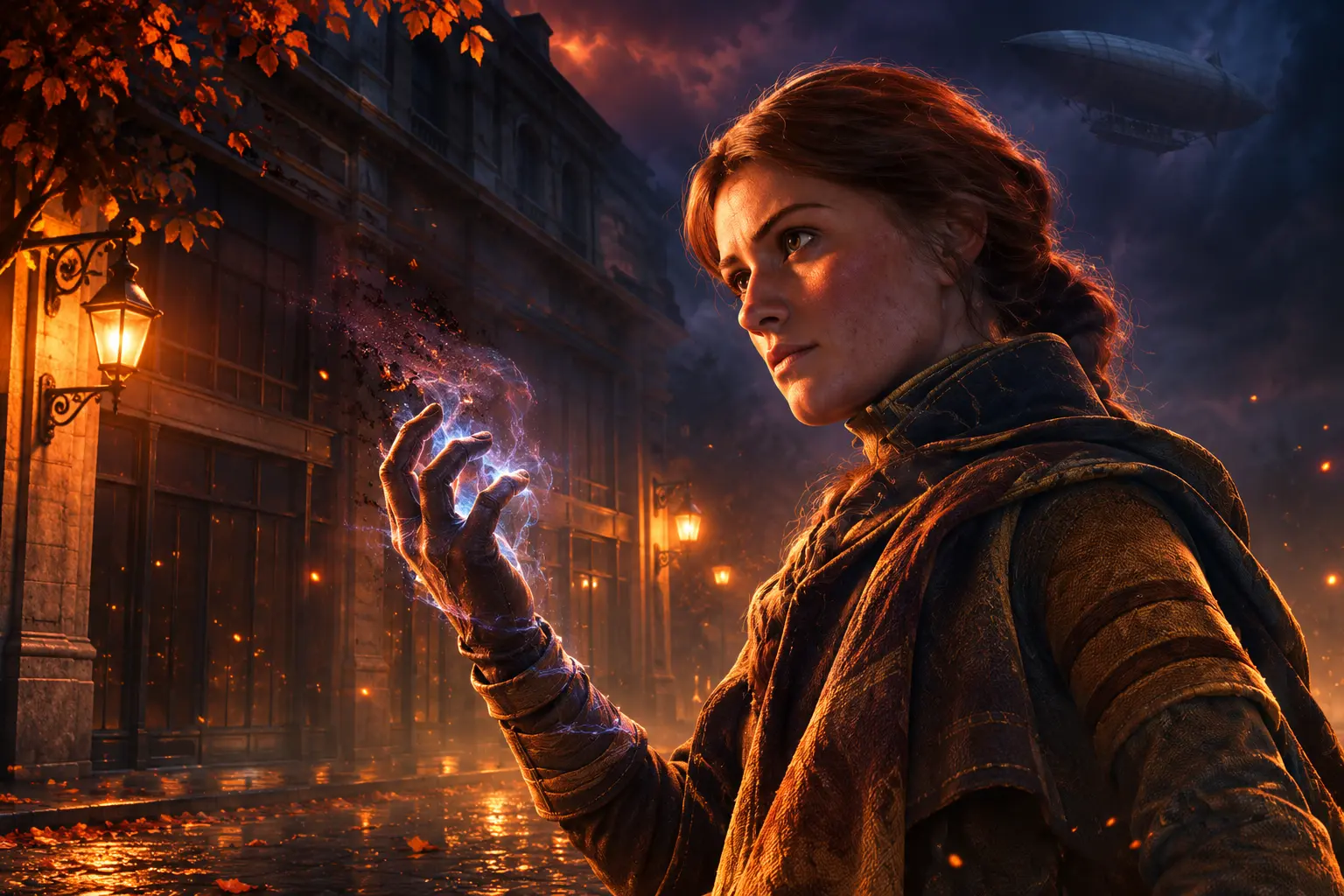
Unknown 9: Awakening shipped on October 18, 2024 for PlayStation 5, Xbox Series, PlayStation 4, Xbox One, and PC. You play as Haroona, a Quaestor who steps into a parallel layer called the Fold. Anya Chalotra of The Witcher performed the role. Critics landed in the low 60s. Steam users were harsher.
SteamDB logged an all-time peak of 285 concurrent players on launch day. Of 960 Steam reviews, 360 are positive, or 37.5%. Some of those reviews came from people who got the game free with an AMD graphics card, which made an already thin PC launch look thinner.
THE GAP BETWEEN THE PITCH AND THE LAUNCH
- Steam peak: 285 concurrent players on October 18, 2024.
- Steam score: 37.5% positive, 360 of 960 reviews.
- Stated target: 3.5 million players, not buyers, for the universe.
- Closing cost: about €21 million, still an estimate.
In March 2024, Hoerdt, who is also Bandai Namco Europe’s chief content officer, said the aim was to engage 3.5 million players in the Unknown 9 universe. He separated that number from people who pay. The Steam peak never left the low hundreds. Third-party estimates of copies sold disagree with each other, so they are not a fair single total. The concurrent count is public, and it already read as a commercial miss in October 2024.
The Studio Was Cut Down in Stages
Bandai Namco Entertainment Europe bought Reflector in September 2020 from Lune Rouge Innovation. Alexandre Amancio had founded the studio with Lune Rouge. About 120 people worked there at the time of the deal, including veterans from other Canadian AAA teams. Bandai presented the purchase as part of a plan to make more of its catalogue outside Japan. Reflector became the first Bandai-owned studio in North America.
The unwind started a month after the game shipped, not on the day of the board vote.
HOW REFLECTOR WAS WOUND DOWN
- September 2020: Bandai Namco Entertainment Europe acquires Reflector and its transmedia slate.
- October 18, 2024: Unknown 9: Awakening launches across consoles and PC.
- November 18, 2024: General manager Marc-André Séguin tells staff the studio is cutting approximately 18% of Reflector’s total workforce.
- January 21, 2025: Hoerdt cancels a project in conceptualization, ends the Unknown 9 line, and warns of more redundancies.
- November 10, 2026: The holdings board votes to dissolve and liquidate the subsidiary.
Séguin wrote that the November 2024 cut was not driven by commercial success or outside pressure. He said the studio could not guarantee tangible work for everyone after Unknown 9 shipped and two production lines moved into early development. People without roles those projects needed were let go. Art, narrative, marketing, and quality assurance were among the groups hit.
The January 2025 note was blunter. Hoerdt wrote that he had told teams he would not greenlight further work on a future project in the conceptualization phase, “thus terminating this development line.” Continuing it, he said, would not have been sustainable. He tied the decision directly to Unknown 9.
This decision correlates directly with the failure of the studio’s ambitious and courageous first project, a new IP with a rich transmedia universe. The performance of the release didn’t come near the company expectations, after numerous timeline adjustments and investments, both financially and other, and didn’t warrant any further exploration in this universe.
Hervé Hoerdt, Reflector Entertainment CEO, January 21, 2025 statement
Staff who could be moved would go onto a single remaining project, “based on an existing Bandai Namco IP, which is shaping up very well.” Back-office roles would shrink to match that one-project plan. He promised severance, extended health cover, counselling, and career support. He did not say how many jobs would go. In 2022 the studio had already said it would build a popular Bandai Namco IP in Montreal. That game was never announced by name, and it never shipped.
Why the Studio Died After Turning a Profit
The last full year in the filing is the one the wire copy barely used. For the year ended March 31, 2026, Reflector posted an operating profit of CAD 2.6 million on CAD 14.7 million in sales. That is not the same as a healthy business. Ordinary profit was still a CAD 1.94 million loss. Net profit was a CAD 1.98 million loss. Equity was a CAD 89.5 million deficit.
Bandai did not liquidate a studio that was still burning cash at the operating line. It liquidated a shrunken shop whose balance sheet was wrecked and whose next game needed money Tokyo would not put in. The notice names three tests: future business plans, necessary additional investment, and the possibility of profitability and business continuation. The last year cleared only the narrowest of those tests, and only on operating profit.
Sales in that year were less than a third of the launch year. Assets had already been written down. Negative equity of CAD 89.5 million against CAD 13.5 million in assets left no room for another four-year production cycle without a parent cheque. The €21 million line is how the parent books the end of that cheque.
By late 2025 the studio’s public site was still teasing a new Bandai-branded game behind an NDA joke. The product never appeared. Gematsu later put it plainly: the studio was supposed to work on existing Bandai Namco intellectual property, and the results of those plans never materialized. The January 2025 lifeline was a project that did not reach a shelf.
Five Games in Ten Years Was the Pitch
Unknown 9 was never sold as a single 15-hour adventure. Reflector called itself a builder of “Storyworlds.” Before the acquisition it had already put out a novel trilogy by Layton Green, a scripted podcast, and a comic. The game, set in 1912, was meant to be the money-making pillar of a lore that ran from the 19th century to the present, with two secret societies hunting nine immortals and a parallel dimension called the Fold.
Hoerdt described a universe and a meta narrative spanning a century, with output across nine media and codes that linked a book to a comic to a podcast. Bandai paused extra transmedia drops until the game was ready. Development, he said, had been rebooted after the 2020 purchase. Covid and a “talent war in Montreal” stretched the wait. The game itself, in his telling, was about 15 hours. Count the other media and players could spend 80 to 100 hours in the world. Most of that extra material was supposed to be free. The game would pay for it.
Buying a company is not just a one-off, it’s not just about their first game. It’s about our plan for the next ten years with five games.
Hervé Hoerdt, Reflector Entertainment CEO and Bandai Namco Europe chief content officer, March 2024
He later clarified that the five games included another original IP on a second team, not five Unknown 9 sequels. Each game was sketched on a four-year cycle. Six weeks after launch, the plan was to run focus groups and decide how far to push the next story cycle. Those groups would have been meeting in late 2024. By January 2025 the universe did not “warrant any further exploration.”
The novels, comic, and podcast did exist. What did not arrive was the decade of games that was supposed to fund and center them. Bandai wanted Unknown 9 to plant a flag in action-adventure, a segment Hoerdt called the biggest one the company still wanted to contest, without spending like a hardware-seller sequel. Reflector was the vehicle. The vehicle is now in liquidation, and Unknown 9: Awakening remains listed on Steam as a live product with no sequel behind it.
The Western Content Bet Stops in Montreal
Reflector was not a random indie that missed a launch window. It was a named piece of Bandai Namco Europe’s long attempt to source more of its catalogue in the West. From 2018 onward, executives talked about putting 50% of new titles or Western content outside Japan. Little Nightmares, work with Supermassive, Limbic in Germany, and Reflector in Canada were the examples they gave. In 2023, Bandai Namco Europe CEO Arnaud Muller said the company would not drop $150 million on the next AAA Bandai IP in the West. It would build on smaller, safer bets.
Unknown 9 was that bet in action-adventure, with a transmedia wrapper that was supposed to spread cost and attention. Muller had listed Reflector beside Limbic as a studio doing that work. Closing it does not end Bandai’s Western publishing. It does end the only Bandai-owned development floor in North America, and it ends the idea that Montreal would grow a new original alongside a house brand.
The €21 million charge is small next to a group that also publishes Tekken, Pac-Man, Gundam games, and FromSoftware’s work. It is not small as a verdict on this particular experiment. Bandai is not exiting the West. It is exiting a studio that was hired to invent a universe from scratch and then, after that failed, to service a house IP it never put out.
News of the vote did not revive the game. It landed as confirmation of a 2024 no-show. The joke that follows these shutdowns is that the studio is “coming home,” as if the audience had already left. For Unknown 9, that joke fits the Steam chart. The board vote is the paperwork.
Quebec Law Leaves the End Date Open
The notice is careful on timing. Liquidation is expected to finish once the steps required by local law are done. Until then, the date is open. Canada is not France, and this is not the Arkane Lyon process, but the same point holds: a parent can vote to close a studio and still have to walk through local procedure before the lights are actually off.
WHAT WE KNOW
- The vote: Bandai Namco Holdings resolved on November 10, 2026 to dissolve and liquidate Reflector Entertainment Ltd.
- The charge: About €21 million, or about 3.5 billion yen, is expected as an extraordinary loss from the third quarter of the year ending March 31, 2027, and the number may change.
- The earlier cuts: About 18% of staff in November 2024, then further redundancies after the January 2025 cancellation.
WHAT IS UNCONFIRMED
- Headcount now: Bandai has not said how many people remain in Montreal or how many will be paid through the wind-down.
- The unnamed IP: The Bandai-branded follow-up Hoerdt called “shaping up very well” in January 2025 has no public title and no release.
- The storefronts: The filing does not say whether Unknown 9 stays on sale, goes delisted, or keeps servers and patches.
Hoerdt is still named as CEO on the dissolution notice, which means the same executive who sold a ten-year, five-game plan in 2024 is the one listed on the paperwork that ends the company. The Fold was a hidden layer over ordinary streets. The studio’s own hidden layer was the balance sheet, and once Tokyo published it, there was no second cycle to fund.

Duffy Pins the FAA Ground Stop on a Contractor-Owned Network

Microsoft Tested Its Gateway Fix on the Wrong Machines

Firaxis Cuts a Third of Its Staff as XCOM Slips

The New Chip Rule Favors US Cloud Parents in Asia

European Unions Ask Players to Police GenAI They Cannot See

Boston Scientific Cyberattack Leaves Hospitals Waiting on Implants

Xbox Sells Cloud Playtime Packs Ahead of November Caps

Guizhou Cave Cafes Spread When Each Cavern Fills

The Second Ned Stark Kit Lands When a Banner Dies

Satellites Saw Nepal’s Ice Slope Move Before the Flood
-
 NEWS3 months ago
Boston Scientific Cyberattack Leaves Hospitals Waiting on Implants
-
 GAMING4 weeks ago
Xbox Sells Cloud Playtime Packs Ahead of November Caps
-
 NEWS3 months ago
Guizhou Cave Cafes Spread When Each Cavern Fills
-
 GAMING3 months ago
The Second Ned Stark Kit Lands When a Banner Dies
-
 NEWS2 months ago
Satellites Saw Nepal’s Ice Slope Move Before the Flood
-
 NEWS3 months ago
OpenAI’s Jalapeño Chip Turns Watts Into Faster Agent Steps
-

 NEWS3 months ago
MLB Quiet Periods Copy a Freeze Other Leagues Use
-

 NEWS3 months ago
Roman Space Telescope Launches After a Decade-Long Budget Bet