
NEWS
Riyadh Airport Stays Shut as Airlines Look Past Saturday
King Khalid Airport stays shut until 17 October, but Europe’s air-safety bulletin runs to 16 November, which is why airlines keep cancelling Riyadh flights.

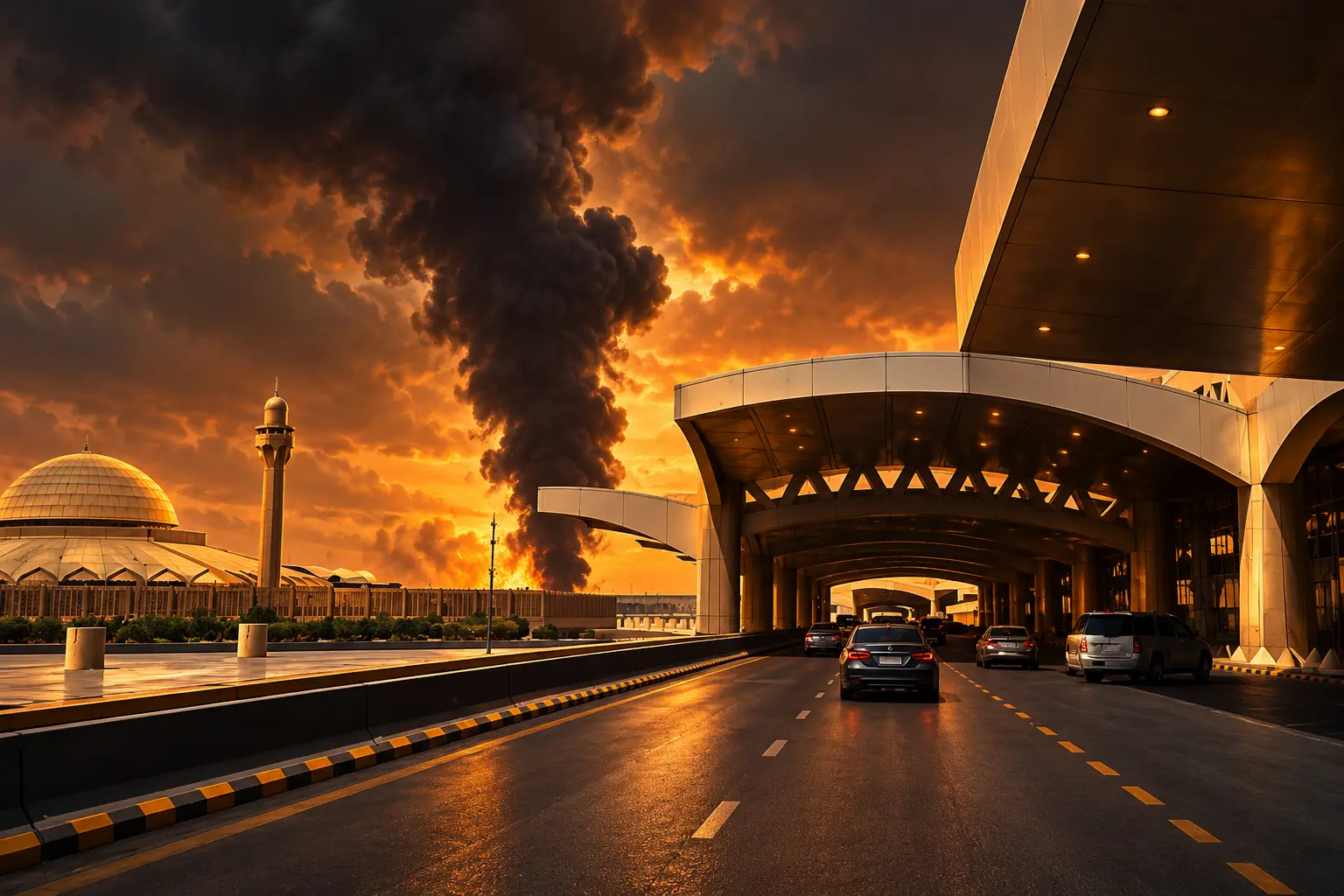
King Khalid International Airport in Riyadh remains closed until 17 October after a Houthi strike killed 12 people in a passenger terminal. The Saudi General Authority of Civil Aviation said 309 people were hurt, some of them critically, in the 10 October attack.
Airlines are not treating Saturday as a restart date. Europe’s aviation safety agency already tells carriers to stay out of defined parts of Saudi airspace, and that notice runs until 16 November.
The Saturday Strike on Terminal 3 Killed 12 People
The missile hit in the mid-afternoon, at about 3 p.m. local time, and tore into the domestic terminal complex. GACA, in a follow-up issued through the Saudi Press Agency on 11 October, put the toll at 12 fatalities and 309 others injured, with some of the wounded in critical condition and all of them in hospital.
Eight of the 12 dead were not Saudi. The list is the passenger mix of a Gulf hub, not a battlefield roll.
WHO WAS KILLED
- Saudi citizens: Four of the dead were Saudi, GACA said.
- Bangladesh: Two Bangladeshi residents were killed; one group of Bangladeshi travellers had been heading onward toward Mecca.
- Other nationalities: One American, one Egyptian, one Jordanian, one Syrian, one Palestinian and one Sudanese.
Property damage is still being measured. A later projectile on 11 October struck the same airport again, and GACA reported a Pakistani resident killed and 11 more people hurt in that second hit. UN Secretary-General António Guterres, condemning the Saturday strike, said these attacks must cease immediately and that attacks on civilians and civilian facilities violate international law.
The attack also left 309 others injured, including individuals in critical condition. All injured individuals are receiving the necessary medical care at several hospitals.
General Authority of Civil Aviation, follow-up statement via the Saudi Press Agency, 11 October 2026
The Saudi-led coalition fighting in Yemen called the strike a full-fledged war crime. Coalition spokesman Major General Turki al-Malki said the attack hit civilian passengers and airport staff and vowed a response under customary international humanitarian law.
Two Earlier Hits on the Same Airport
Saturday was not a one-off. Houthi missiles and drones had already been aimed at King Khalid and at other Saudi civil airports through the first week of October, and GACA had already buried a Saudia captain, Hamoud Ali Alkalthami, after an earlier strike damaged a parked Airbus A320. The group’s military spokesman, Yahya Saree, told airlines to treat Saudi airspace as a military zone and said the kingdom would bear the cost of any failed interception.
Britain’s Foreign, Commonwealth and Development Office dates the wider campaign to 13 July, when the Houthis began firing missiles and drones at Saudi airports, bases, ports and energy sites. The 10 October strike was the blow that emptied the capital’s airport and kept it empty.
THE STRIKES ON KING KHALID
- 13 July 2026: The FCDO says Houthi missiles and drones begin hitting sites across Saudi Arabia, including airports.
- 30 September 2026: The EU Aviation Safety Agency issues a conflict-zone bulletin covering Saudi airspace.
- 8 to 9 October 2026: Attacks on King Khalid kill three Saudis, including Captain Alkalthami, and damage a Saudia A320; EASA revises its bulletin on 9 October.
- 10 October 2026: A strike on the terminal complex kills 12 people and injures 309. GACA suspends all operations.
- 11 October 2026: Another projectile hits the airport, killing a Pakistani resident and injuring 11. The FCDO widens its travel advice.
- 12 October 2026: GACA extends the halt. A Notice to Airmen keeps the field closed until 21:00 UTC on 17 October.
On 12 October GACA extended the suspension of operations so inspectors could finish checks on the safety and readiness of the airport’s facilities. The statement did not name a calendar date, which is why passengers kept asking when the field would open. The 17 October time everyone is using sits in a NOTAM, not in that GACA text, and the notice itself does not promise that commercial flights will resume the minute it expires.
#Statement | Extending suspension of operations at King Khalid International Airport in Riyadh. pic.twitter.com/O6Ua5y9un5
— هيئة الطيران المدني (@ksagaca) October 12, 2026
EASA’s Conflict Bulletin Runs Until Mid-November
The reason Riyadh stays a hard cancel on European schedules is not only cracked concrete. On 30 September, EASA issued Conflict Zone Information Bulletin CZIB-2026-09-R1 for the airspace of Saudi Arabia. It revised the text on 9 October, after the first wave of airport attacks, and set the bulletin to remain valid until 16 November unless it is reviewed sooner.
The agency frames the risk as a spillover from the military conflict between the United States and Iran. In September, it says, the Houthis stepped up attacks on Saudi maritime, energy and aviation targets. Southern and south-western airspace was already exposed because it sits next to Houthi-held Yemen. The new fact, for a dispatcher in Frankfurt or Paris, is reach.
Recent attacks have demonstrated the ability and intent of the Houthis to strike targets deeper inside Saudi territory, including in the Riyadh, Tabuk, Medina and Yanbu areas.
European Union Aviation Safety Agency, CZIB-2026-09-R1, revised 9 October 2026
EASA also says the strikes have put more weight on aviation sites than before, raising the danger to aircraft on the ground and during take-off and landing. Recurrent missiles and drones, plus Saudi air-defence fire, raise the chance that a civil aircraft is misidentified, and they add the risk of falling debris. Operators under EU rules are told to not operate in defined Saudi airspace inside the Jeddah flight information region, at any altitude, and to treat the rest of that region with caution, fresh risk assessments and plans for short-notice orders.
That is a month-long mark, not a weekend repair job. A field can pass a safety inspection on 17 October and still sit inside a conflict-zone map that European carriers are expected to honour until 16 November. Overflights have not stopped. Flight-tracking data after the Saturday strike showed jets still crossing Saudi airspace and landing at Jeddah, the kingdom’s busiest airport, while avoiding the capital. The split is brutal for a city that has spent years selling itself as a business and transit hub: the west-coast gateway still works, and Riyadh does not.
Which Airlines Have Stopped Flying to Riyadh?
Lufthansa Group has cancelled Riyadh flights through 16 October, a date that already sits inside the NOTAM window. Air France-KLM has pushed its halt to the end of October, past any Saturday restart. Gulf and Asian carriers have done the same in pieces, some matching the closure, some running well beyond it.
HOW LONG THE CANCELLATIONS RUN
| Airline | Riyadh action | Stated through |
|---|---|---|
| Lufthansa Group | All Riyadh flights cancelled | 16 October 2026 |
| Air France-KLM | Services to and from Riyadh suspended | End of October 2026 |
| Etihad Airways | Abu Dhabi-Riyadh flights cancelled | 19 October 2026 |
| Gulf Air | Flights to and from Riyadh cancelled | 17 October 2026 |
| Philippine Airlines | Riyadh services suspended | 29 November 2026 |
| Delta Air Lines | Atlanta-Riyadh launch postponed | March 2027 |
Philippine Airlines has now written Riyadh off until 29 November, past EASA’s 16 November validity date. Delta has postponed the Atlanta-Riyadh route that was due to start on 23 October, which would have been its first regular passenger service to Saudi Arabia, until March 2027. Cathay Pacific has put Hong Kong-Riyadh (and Hong Kong-Dubai) back to 31 January 2027. Those are not weather delays. They are risk-committee dates.
Emirates, Qatar Airways, flydubai and Air Arabia all cancelled Riyadh sectors around the strikes, and several of those notices have been rolled forward as the field stayed shut. IndiGo, Air India, Air India Express, Akasa Air and SriLankan Airlines cut Riyadh, and in some cases Jeddah and Dammam, on similar short-then-extended notices. There is no single Saudi plan to bus stranded passengers from the capital to another airport, so each ticket is a separate argument with the airline that sold it.
Monday Wiped Out Almost Half of Saudi Departures
King Khalid normally handles about 700 flights a day. With the field closed, that volume does not move to Jeddah one-for-one. Cirium’s Monday count, taken at 4 p.m. local time on 12 October, showed 486 of 1,048 scheduled departures from Saudi airports cancelled or not flown, about 46 percent of the day’s plan. Flightradar24 put cancellations at King Khalid itself around 78 percent that Monday, and logged 572 cancelled Riyadh flights on Tuesday.
THE DISRUPTION IN FIGURES
- Daily Riyadh capacity: About 700 flights on a normal day, now sitting on the ground until at least 17 October.
- Monday, 12 October: Cirium recorded 486 of 1,048 Saudi departures cancelled or not operated, about 46 percent.
- Tuesday, 13 October: Flightradar24 counted 572 cancelled flights at King Khalid.
- 8 to 14 October: Cirium’s week-long run put cancellations across the kingdom above 3,100.
Abha, Tabuk, Taif and a string of smaller fields also lost large shares of their schedules, and some desert airports had every departure marked cancelled on the worst days, including NEOM Bay. Riyadh Air, the new carrier that uses King Khalid as its home field, lost a higher share of its own plan than the older Saudi brands during the shutdown. The new airline was built to sell the capital as a hub. It cannot do that from a closed terminal.
The Medina Exception in British Travel Advice
The UK government updated its Saudi advice on 11 October and was still holding the same line on 15 October. The FCDO now advises against all but essential travel to Saudi airports except Medina International Airport, and against all but essential travel to Riyadh province, Aseer, Najran, Jizan, and the cities of Taif, Jeddah and Dammam. All travel is advised against within 10 kilometres of the Yemen border.
WHAT BRITAIN IS TELLING TRAVELLERS
- The airport rule: Stay away from King Khalid until it is secure, and treat every other Saudi airport except Medina as all-but-essential only.
- The land option: People who need to leave are told to consider going by road to a neighbouring country and flying from there, after checking that country’s own entry rules.
- The insurance line: Travel against FCDO advice can void a policy, which is how a safety notice becomes a commercial one.
- The threat language: Further attacks on airports, plus more cancellations, are described as very likely, with a separate residual risk of Iranian strikes even after a 17 June memorandum between the United States and Iran.
Medina is a narrow hole in that net. The exception is the airport, not the city, and it exists because it is the air gate for the Prophet’s Mosque. Umrah traffic is the quiet second market under this story. October through January is a busy pilgrim season, and agents in the Gulf have already seen people hold back bookings rather than risk a cancelled return. Jeddah, the main Hajj and Umrah gateway, has kept taking aircraft, which is why some travellers are being pointed west by road. That journey is longer and only works if the border in front of them is actually open.
Houthi messaging has been aimed at that same pilgrim and guest-worker traffic. Iranian television panels circulated footage of Umrah pilgrims in ihram inside Terminal 3 and argued that Saudi authorities had kept the airport open because the religious visit is an income stream. The people who died on Saturday, including a Sudanese resident and Bangladeshi travellers, were the ones standing in that bet.
Why a Saturday Reopening Would Not Restore Riyadh
A Notice to Airmen can put King Khalid back on the board at 21:00 UTC on 17 October, which is midnight in Riyadh. GACA can still extend the halt if the inspections fail, or if another round of fire makes a passenger terminal unusable again. Even a clean inspection does not move EASA’s 16 November date, and it does not put Delta back on a 23 October inaugural.
WHAT WE KNOW
- The closure notice: The current NOTAM runs to 21:00 UTC on 17 October and does not by itself authorise a restart.
- The death toll: GACA’s figure for 10 October remains 12 dead and 309 injured, with a further Pakistani death reported on 11 October.
- The European map: CZIB-2026-09-R1 stays active until 16 November unless EASA reviews it earlier.
- The British map: All Saudi airports except Medina remain under all-but-essential advice.
WHAT IS UNCONFIRMED
- A real Saturday restart: No GACA statement has promised that passenger flights will resume when the NOTAM lapses.
- The next strike: Houthi officials have said airports and oil sites remain targets, and the FCDO says further airport attacks are very likely.
- How long the long cancellations last: Philippine Airlines, Cathay Pacific and Delta have already priced Riyadh in months, not days, and those dates can move again.
If the field opens on 17 October, the first aircraft in will still be flying toward a capital that Europe’s safety agency has placed, in part, inside a no-operate box, and toward an airport Britain tells its citizens to avoid. That is a much slower thing to unwind than a closed runway, and it is the part of this attack that will still be on the departure screens after the glass is swept up.

Xbox Sells Cloud Playtime Packs Ahead of November Caps

Xbox Puts a $1,800 Helix Behind a 2027 Handheld

Brussels Asks If Bio-Based Plastic Can Replace Recycled Content

EU Organic Deal Gates the Leaf and Doubles Exemptions

Barilla Strike Exposes Who Gains the Italian Plants

Boston Scientific Cyberattack Leaves Hospitals Waiting on Implants

Guizhou Cave Cafes Spread When Each Cavern Fills

The Second Ned Stark Kit Lands When a Banner Dies

Satellites Saw Nepal’s Ice Slope Move Before the Flood

OpenAI’s Jalapeño Chip Turns Watts Into Faster Agent Steps
-
 NEWS2 months ago
Boston Scientific Cyberattack Leaves Hospitals Waiting on Implants
-
 NEWS2 months ago
Guizhou Cave Cafes Spread When Each Cavern Fills
-
 GAMING2 months ago
The Second Ned Stark Kit Lands When a Banner Dies
-
 NEWS2 months ago
Satellites Saw Nepal’s Ice Slope Move Before the Flood
-
 NEWS2 months ago
OpenAI’s Jalapeño Chip Turns Watts Into Faster Agent Steps
-

 NEWS2 months ago
MLB Quiet Periods Copy a Freeze Other Leagues Use
-

 NEWS2 months ago
Roman Space Telescope Launches After a Decade-Long Budget Bet
-

 BUSINESS2 weeks ago
Saks Kept 15 Stores While Rivals Took the Shoppers