
LIFESTYLE
Whey Protein Powder Hits $100 as GLP-1 Demand Collides With Cheese
GLP-1 protein advice is bidding five-pound whey tubs to $102.95, while USDA still has isolate in the $14s and cheese plants cannot add supply until 2027.

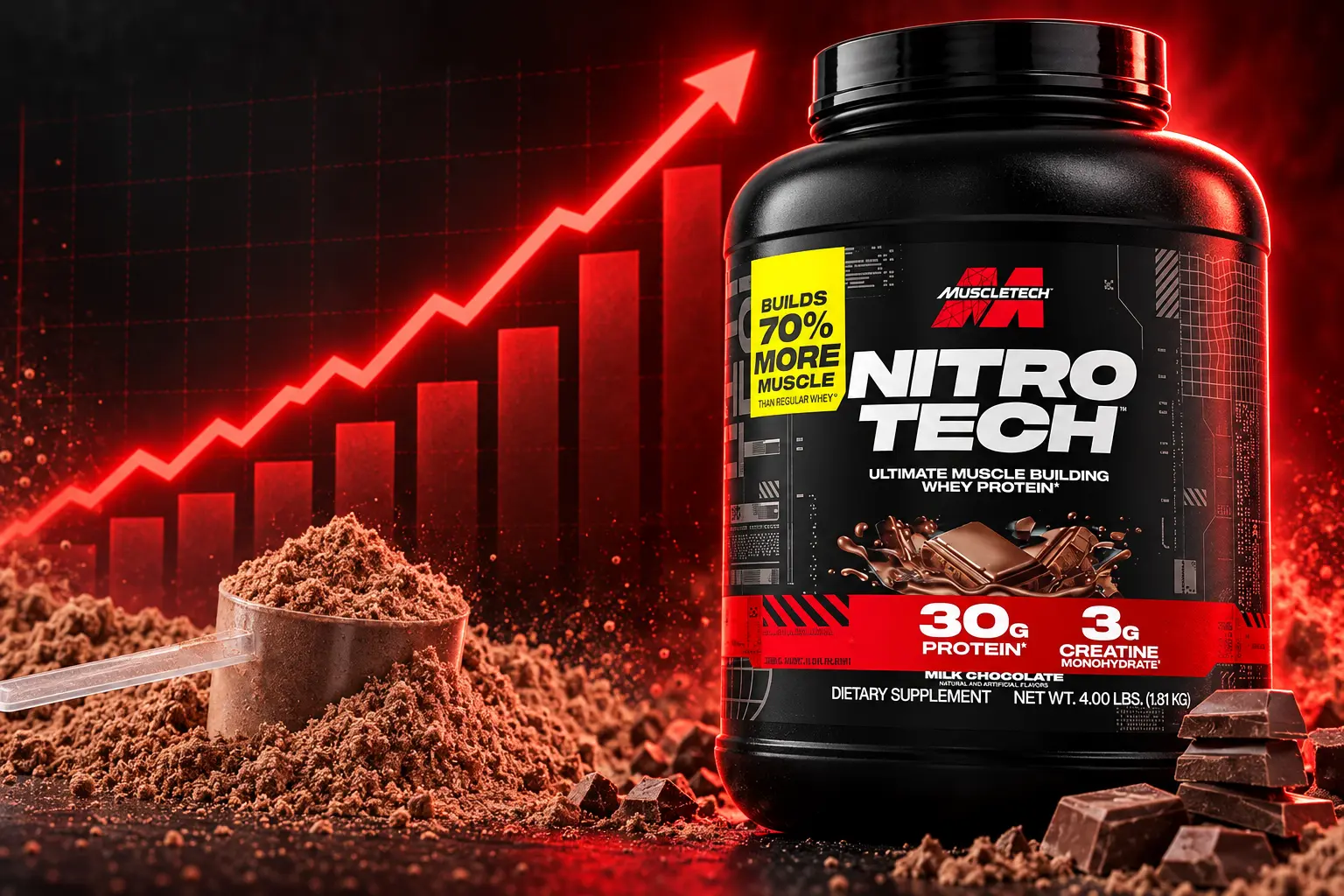
A five-pound tub of whey concentrate sold for $102.95 on September 18, 2026, up from $59.95 for the same tub in May 2024. USDA’s mid-October print still has whey isolate in the $14s a pound. The bid is no longer just gym traffic. It includes patients on GLP-1 drugs who were told to eat more protein while they eat less food.
Isolate Is Still Stuck in the $14s
Tracked Amazon orders put a five-pound whey isolate tub at $54.95 on October 18, 2021. By May 27, 2024, a five-pound concentrate tub, the cheaper and less filtered grade, was $59.95. On September 18, 2026, that same concentrate, same seller, same monthly drop, hit $102.95. That is a $43 jump on one SKU, a 72 percent increase in 28 months, not a five-year double of the same product.
The farm-gate move is steeper on the low-protein grade. USDA’s benchmark for 34 percent whey protein concentrate averaged 97 cents a pound in January 2024 and $2.14 in August 2026, the highest monthly figure on that series. That is a 121 percent rise. Dairy Market News, in the week of October 12-16, 2026, then printed 34 percent concentrate at $2.35 to $3.20 a pound.
The grade people were told to buy as the bargain did something else. In July, USDA had 80 percent concentrate at $12.50 to $13 a pound and isolate near $14, with bulk buyers “willing to pay whatever it takes” for loads. By mid-October, 80 percent concentrate was mostly in the $9s, with trades from the $8s into the mid-$10s. Isolate did not follow it down. It stayed in the $14s, with prints from the $13s to near $15, and inventories still described as tight.
BULK WHEY, POUND FOR POUND
| Grade | Earlier USDA print | October 2026 USDA print |
|---|---|---|
| 34% concentrate | $0.97/lb average, January 2024 | $2.35 to $3.20/lb, week of October 12-16 |
| 80% concentrate | $12.50 to $13/lb, July 2026 | Mostly in the $9s |
| Whey isolate | Near $14/lb, July 2026 | The $14s, $13s to near $15 |
Retail bags have not marked down with that 80 percent dip. Porch prices still look like the July panic, which is what you get when brands buy isolate, print labels months ahead, and run subscriptions on last quarter’s cost.
Eleven Percent of Adults Joined the Queue
Gallup’s National Health and Well-Being Index now finds that 11 percent of U.S. adults take GLP-1 drugs for weight loss, up from 3 percent in 2024. Fifteen percent say they have used one at some point. The web survey ran May 28 to June 5, 2026, among 5,065 adults on the Gallup Panel, and the firm updated the weighting on September 8.
GALLUP’S 2026 GLP-1 COUNT
- Now on a shot: 11 percent of adults, nearly four times the 3 percent reading in 2024.
- Ever used one: 15 percent, a nine-point rise from the prior cycle.
- Awareness: 90 percent of adults know these drugs are used for weight loss, up from 80 percent in 2024.
- Obesity rate: 36.8 percent so far in 2026, down from a 39.9 percent peak in 2022.
Brand-name pens such as Ozempic and Wegovy still make up 66 percent of current use. Eighteen percent are on a compounded mix, and 13 percent are not sure which they take. Diabetes diagnoses sit at 12.8 percent, the first reading under 13 percent since 2022.
The protein problem is mechanical. These drugs cut appetite. Trial scans have put roughly a quarter to two-fifths of the lost weight on lean mass, not only fat. A 2026 review in Clinical Nutrition ESPEN, by Sedat Arslan, puts a working target at 1.2 grams of protein per kilogram of body weight, up to 1.6 grams in adults without chronic kidney disease, split across meals, with lifting. The old recommended daily allowance is 0.8 grams per kilogram. Katie Knappenberger, a registered dietitian and program director for performance nutrition at Northwestern Medicine, notes that most Americans already clear that 0.8 gram floor from food. The new patient does not. Nausea and a small stomach make a steak hard. A shake goes down.
That is how a diabetes-class drug turned a cheese leftover into a bidding war. Gym regulars never wrote the prescription. They still pay the protein line it created.
Whey Only Exists When Cheese Gets Made
Whey is what is left when milk curdles into cheese. For most of the 20th century, cheesemakers dumped it in streams or spread it on fields. Federal water rules ended that. Filtration later turned the leftover into powder, and a complete, fast-digesting protein at that. For years the input was cheap because the supply was, in effect, free, and tub brands marked it up.
FROM DUMPED WASTE TO BID-UP POWDER
- Late 20th century: Cheesemakers treat liquid whey as waste and dump or spread it.
- Environmental crackdown: Dumping is phased out, so dairies must process the stream.
- Filtration era: Concentrate and isolate become saleable powder, not a disposal problem.
- 2008: Glanbia buys Optimum Nutrition and starts selling its own whey back to lifters in a tub.
- 2024-2026: GLP-1 use and high-protein food launches hit a cheese plant that cannot grow on a gym calendar.
Jeff Byers, co-founder and CEO of Momentous and a former NFL offensive lineman with the Carolina Panthers, sells one whey SKU, a 91 percent grass-fed European isolate. He locates the shortage in cheddar, not in marketing.
Whey is expensive because we don’t have enough cheese manufacturing to make more whey protein. You have to have more cheese factories to have more whey protein isolate.
Jeff Byers, co-founder and CEO, Momentous
Brett Massimino, PhD, chairs supply-chain management and analytics at Virginia Commonwealth University and is a former bodybuilder. He calls the constraint inelastic. It takes a lot of cheese to yield a modest amount of concentrate. If the cheese market does not want much more output, whey volume stays capped. Beef prices have also pulled animals. “The profitability of beef cows has been much higher than dairy,” he said, and farms with fixed stalls have shifted herds.
Americans drank 127 pounds of fluid milk per person in 2024, against 196 pounds in 2000, a 69-pound drop. Fluid milk has fallen from 46 percent of all dairy consumed in 1975 to under 20 percent. They kept eating cheese. USDA’s Economic Research Service put per capita cheese at 39.9 pounds in 2024, three-tenths of a pound off the 40.2-pound record in 2023. Butter hit 6.8 pounds, an all-time high. Total dairy on a milk-equivalent basis sits at 651 pounds a head, up 12 percent over 30 years. The cheese business is fine. It is not building vats on a protein-fad clock. High-protein product launches quadrupled between 2013 and 2024.
Glanbia is the hinge. The Irish nutrition group became a top American-style cheddar maker and Idaho’s largest milk processor, then bought Optimum Nutrition in 2008. Its Southwest Cheese joint venture in Clovis, New Mexico, with Dairy Farmers of America and Select Milk Producers, is North America’s largest cheddar plant and a major whey shop. Even that stack cannot pour enough isolate for the new line at the door.
Pepsi Locked a Price Gym Brands Still Chase
Massimino draws a clean split. Pepsi and General Mills sit on large long-term contracts that hold their protein cost still. Sports-nutrition brands mostly buy spot whey, which whips around, so they pass the spike into the tub. Byers said his cost per kilo is four times higher than it was four years ago.
Concentrate’s weird year follows from that spot market. Because raw prices ran so high, Byers said, brands put more concentrate into finished products than isolate. That pulled demand into the cheaper grade faster than into the premium one, and the bargain grade stopped being a bargain. USDA’s October print, with 80 percent concentrate off the July high and isolate still tight, fits a plant floor that then swung production toward isolate for the fourth quarter.
Richie Kirwan, a senior lecturer in nutrition and exercise physiology at Liverpool John Moores University, has coached lifters for a decade and still will not upsell isolate. He recommends it only for people who cannot handle the lactose in concentrate. For everyone else, he said, isolate is not worth the extra cost. Massimino said the same: for people without lactose trouble, concentrate builds the same muscle at a lower price. Byers, who sells only isolate, argues a cleaner input needs fewer flow agents, fillers, and emulsifiers to mix and taste right.
Jay Luthar, MD, who runs a longevity clinic in Boston and teaches at Harvard Medical School, treats those extras as a tax on the scoop. His shorthand is grams of protein per serving divided by serving size in grams. A decent powder, he said, comes in at 70 to 80 percent or higher. Below that, you are paying for filler. Massimino expects the first cheating to show up as smaller tubs, “whey blends” that quietly add soy or pea, and non-essential amino acids used to puff the protein number. His rule and Luthar’s match: a certified cheap tub beats an uncertified expensive one.
The New Plants Miss This Winter’s Milk
Help is on a construction calendar, not a shopping one. Glanbia chief executive Hugh McGuire told investors on November 19, 2025, that the company had approved an extra 10 million pounds, about 4,500 tonnes, of whey protein isolate at the Clovis joint venture, due in 2027. Ireland’s Tirlán, a key Glanbia supplier, has a separate €126 million whey plant due in mid-2027 at Ballyragget in Kilkenny, including clear whey for ready-to-drink drinks. McGuire said Glanbia would be “a happy buyer of that product.”
PLANTS DUE IN 2027
- Clovis, New Mexico: Glanbia and its dairy partners add 10 million pounds of isolate at Southwest Cheese.
- Ballyragget, Kilkenny: Tirlán spends €126 million, about $146 million, on advanced whey, including clear isolate, with operations expected by mid-2027.
- What it does not do: Reprice the milk being set now for first-quarter 2027 tubs.
Martin Heydon, Ireland’s agriculture minister, said at the Kilkenny launch that whey had moved from a cheese leftover to one of the most valuable nutrition ingredients in the world. Byers does not read that as a 2026 discount. He saw no relief in his first-quarter 2027 pricing. “The price is not down,” he said. “The whey protein I’m buying in January is getting milked probably today.” Northern Hemisphere cows drop in winter, and some European farms Momentous buys from do not milk in the cold months, so next spring’s raw material is priced before either new plant runs.
“I don’t think price relief for whey protein is a six-month or 12-month thing. I think this is a 2028 thing,” Byers said. “The price will come back to earth. They will never go back to normal.” Creatine, the other powder Momentous is known for, followed the same capex wall. One contract maker watched a container’s spot price jump from $85,500 to $630,000 within a year, a sevenfold move, after two quiet decades and a wave of brain-health headlines. Until the factories exist, he said, suppliers hold the key.
What a Certified Scoop Is Still Worth
Byers still does the per-gram math in isolate’s favor. Twenty grams of high-quality whey isolate, he said, is still about $3 a serving. A checkout meat stick is 8 grams of protein for about $3. A half-decent rib eye at a store like Whole Foods runs $25 to $30 a pound. Even at the high, he said, whey remains the cheapest complete protein per gram. Kirwan agrees on the muscle science and not on the whey obsession. Once intake is at 1.6 grams per kilogram, he said, muscle growth does not really differ between whey and plant proteins such as soy, and if the budget buys only one supplement, he would take creatine.
Massimino’s starter kit for a broke lifter is a certified protein, creatine, no pre-workout circus, and no testosterone booster. Treat the tub as a convenience tool, he said, not the diet.
CHECKS BEFORE YOU BUY THE TUB
- Unit price: Shrink the bag before you raise the sticker. Compare cost per pound, not the number on the lid.
- Protein share: Divide protein grams by serving size. Luthar wants 70 to 80 percent or higher.
- The blend line: “Whey blend” on a label can mean soy or pea in the scoop, or amino spiking that inflates the count.
- The mark: Look for NSF Certified for Sport testing for 290 banned substances, or Informed Sport. The certificate is on a tub, not a brand name.
- Lactose: If you tolerate concentrate, Kirwan and Massimino say skip isolate’s extra bill.
NSF’s sport program screens finished lots for stimulants, steroids, diuretics, and other WADA-list chemicals, and it inspects plants on an ongoing cycle. Major-league baseball, the NHL, and the CFL only allow clubs to hand out products that carry that mark. It is a contamination check, not a taste award, and it is still the cleanest way to tell a cheap tub from a mystery blend.
Soy and Pea Tubs Still Sell Near $50
Byers thinks the protein-in-everything wave will pass the way low-fat and gluten-free did. “Putting protein in chips doesn’t make chips healthier,” he said. A cereal with 3 or 4 grams a serving is still cereal with a protein claim. When those shoppers leave, whey demand should ease a little. The cheap era is gone. Knappenberger is less alarmed for ordinary diets. If someone already eats dairy, eggs, fish, meat, soy, beans, and lentils, she said, a powder is generally unnecessary. A lifter chasing 160 grams a day is a different customer, and for that person the shake is still cheaper than stacking steaks.
Five-pound soy and pea tubs can still be found around $50, and peer-reviewed work has found those proteins viable for most trainees. That swap is the only real price cut on the shelf right now. Plant powders are not immune; import-heavy markets have seen those bags climb too, which is what you would expect when the whole protein aisle is suddenly a medical aisle.
Byers put the household hit plainly. Ten extra dollars here and there, $20 extra a month, is not nothing. He also will not pretend a 2027 ribbon-cutting reprices the milk already in the pipe. New vats in Clovis and Kilkenny will add isolate after this winter’s pricing is done. Until 2028, the people who never took a GLP-1 shot keep paying as if they had, and the five-pound bag stays a cheese problem in a plastic tub.
Disclaimer: This article is news reporting and analysis of dairy-ingredient prices and protein-powder retail, and it is for information only. It is not medical, dietetic, or nutrition advice, and it is not a recommendation to start, stop, or change a GLP-1 medicine, a supplement, or a training plan. Speak with a licensed physician or registered dietitian before changing protein intake, especially if you take a GLP-1 drug, have kidney disease, or have been told to limit protein. Figures and product statuses come from USDA Dairy Market News, Gallup, company statements, and the experts named above as of the dates on those sources, and they can move with the next weekly print.

Xbox Sells Cloud Playtime Packs Ahead of November Caps

Xbox Puts a $1,800 Helix Behind a 2027 Handheld

Brussels Asks If Bio-Based Plastic Can Replace Recycled Content

EU Organic Deal Gates the Leaf and Doubles Exemptions

Barilla Strike Exposes Who Gains the Italian Plants

Boston Scientific Cyberattack Leaves Hospitals Waiting on Implants

Guizhou Cave Cafes Spread When Each Cavern Fills

The Second Ned Stark Kit Lands When a Banner Dies

Satellites Saw Nepal’s Ice Slope Move Before the Flood

OpenAI’s Jalapeño Chip Turns Watts Into Faster Agent Steps
-
 NEWS2 months ago
Boston Scientific Cyberattack Leaves Hospitals Waiting on Implants
-
 NEWS2 months ago
Guizhou Cave Cafes Spread When Each Cavern Fills
-
 GAMING2 months ago
The Second Ned Stark Kit Lands When a Banner Dies
-
 NEWS2 months ago
Satellites Saw Nepal’s Ice Slope Move Before the Flood
-
 NEWS2 months ago
OpenAI’s Jalapeño Chip Turns Watts Into Faster Agent Steps
-
 NEWS2 months ago
MLB Quiet Periods Copy a Freeze Other Leagues Use
-

 NEWS2 months ago
Roman Space Telescope Launches After a Decade-Long Budget Bet
-

 BUSINESS2 weeks ago
Saks Kept 15 Stores While Rivals Took the Shoppers