
LIFESTYLE
Colloidal Silver Keeps Returning Through a 1999 Loophole
The FDA rejected colloidal silver as a drug in 1999, yet a supplement loophole keeps wellness drops on sale despite permanent blue-gray skin risk.

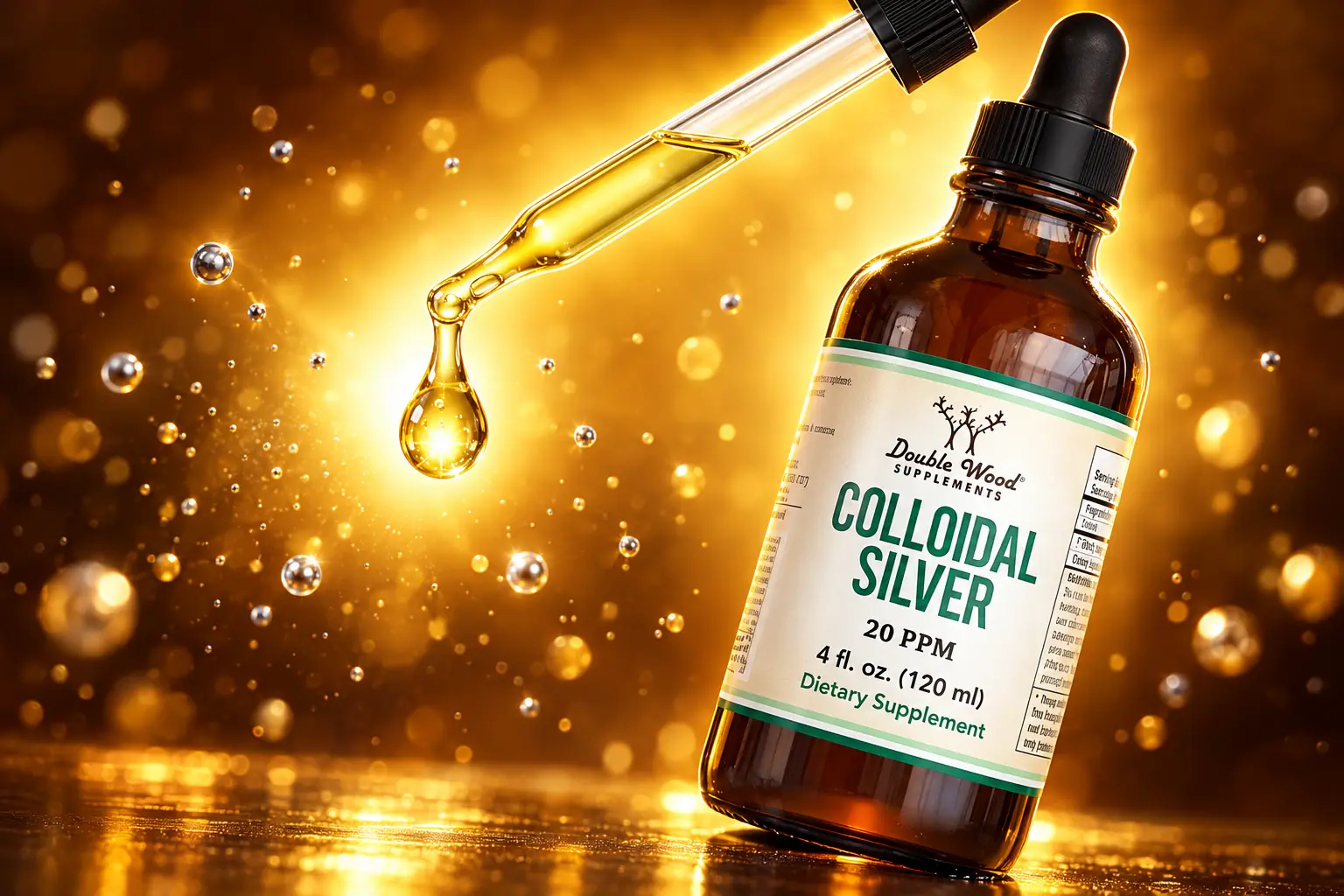
Colloidal silver is still sold as a wellness drop 27 years after the FDA said silver drugs are not safe or effective. Tiny silver particles sit in a pale yellow liquid, usually in a brown bottle with a dropper. Sellers promise immune support, cleaner sinuses, and a cheap stand-in for antibiotics. Federal health agencies say those claims have no backing, and the metal can stain skin for life.
The bottles look new on Instagram. The legal trick that keeps them legal is from 1999.
Wellness Accounts Still Pour Silver Into Dropper Bottles
In late September 2026, wellness posts still named colloidal silver next to magnesium and vitamin D as a daily extra. The pitch is familiar. Silver has been around for centuries, the posts say, and drug makers do not want you to use it. Then comes a link to a bottle, a spray, or a diffuser.
The mix is sold as a dietary oral supplement. The bottles look much the same: brownish glass, an eye dropper, a pale yellow liquid. Some brands add nasal sprays. None of that packaging changes what the National Center for Complementary and Integrative Health, part of the National Institutes of Health, puts in plain language. Scientific evidence does not support colloidal silver dietary supplements for any disease or condition. Silver is not an essential mineral.
Harvard Medical School has warned that taking it may harm the brain, nerves, and kidneys, and that it can cause stomach distress and headaches. The better-known effect is a color change. Silver builds up in tissue. Light hits it. Skin, nails, and the membrane over the eyes can turn bluish gray. The name for that stain is argyria, and it is usually permanent.
The 1999 Rule That Left a Side Door Open
On August 17, 1999, the Food and Drug Administration published a final rule on over-the-counter silver drugs. The agency said every OTC drug with colloidal silver or silver salts, for internal or external use, was not generally recognized as safe and effective and was misbranded. The rule took effect on September 16, 1999. It is now 21 CFR 310.548.
FDA said it was acting because many silver products were being sold for serious diseases, and it knew of no substantial scientific evidence that they worked. Manufacturers, the rule added, would no longer be able to market OTC silver drugs after that date. Buried in the same document is the sentence that explains why the dropper bottles never left the shop.
A product containing silver could, under certain circumstances, be marketed as a dietary supplement if it meets the definition in section 201(ff) of the act and other applicable requirements.
U.S. Food and Drug Administration, Federal Register, August 17, 1999
That is the side door. A silver liquid that claims to treat a disease is an unapproved drug. A silver liquid that calls itself a supplement, avoids disease claims on the label, and is meant to be swallowed can stay on the market. Nasal gels fail that test on a separate ground: the law says a dietary supplement must be intended for ingestion. FDA made that point in a February 5, 2019, warning letter to Blue Ridge Silver over colloidal silver products, including nasal sprays, sold from a North Carolina site.
The pattern did not start in 1999. FDA issued Health Fraud Bulletin 19 in October 1994, saying it knew of no substantial evidence that any OTC colloidal silver solution prevented or treated a serious disease. It proposed the ban in October 1996. Between October 1993 and September 1994 it had already sent warning letters to five marketers. In 2000, after the rule took effect, it warned more than 20 companies whose websites still made illegal treatment claims. The product kept finding a new channel.
After Every Scare, the Same Blue Cases Return
Argyria is not a social-media invention. Doctors described it when silver nose drops and throat paints were still routine. The public face of the modern version is Paul Karason, a Washington man whose skin turned deep blue-gray after years of homemade silver. He said he drank about 10 ounces a day of a brew he made with electrolysis, first for dermatitis on his face. He later said it eased acid reflux and arthritis. The color did not. He appeared on national television in 2008. He died on September 23, 2013, at 62, after a heart attack, pneumonia, and a severe stroke. Clinicians did not blame argyria for his death. His skin stayed blue anyway.
The most shared photo of that face now travels as a joke. Strangers reached for a cartoon nickname. A permanent injury filed under trivia is a gift to anyone still selling the drops.
THE CYCLE THAT KEEPS COMING BACK
- 1930s: A clinical spectroscopy paper described seventy cases of generalized argyrosis after organic and colloidal silver medication, including fifteen children under 10 who had been given silver nose preparations in a single year.
- October 1994: FDA issues Health Fraud Bulletin 19 on colloidal silver sold for serious disease.
- August 17, 1999: Final rule says OTC silver drugs are not safe or effective and are misbranded; dietary-supplement marketing remains possible if the product meets section 201(ff).
- 2008: Paul Karason becomes the public image of argyria after years of homemade colloidal silver.
- March 9, 2020: FDA and the Federal Trade Commission warn seven companies over unsupported coronavirus claims, including colloidal silver products from Vital Silver, N-ergetics, and The Jim Bakker Show.
- May 30, 2025: FDA warns Nefeteri Wellness over vaginal gels that describe colloidal silver as a natural antibiotic.
Case reports keep pace with the marketing. In 2015, the Journal of Drugs in Dermatology described a 72-year-old man with blue-gray face and nails after taking colloidal silver as a supplement for more than 10 years. A 2025 clinical report in the Medical Journal of Australia described a man who mixed a homemade silver drink for a flu-like illness during the COVID-19 pandemic, used it for two months, then applied a store ointment to his legs for two years. His blue-gray tint did not fade after two months off the products. He declined a biopsy.
What Doctors Used Silver For Before Antibiotics
Doctors used silver on infected wounds before modern antibiotics existed, and NCCIH states that history directly. That old hospital use is the seed of the current sales pitch. It does not make a swallowed drop an immune tonic. Silver still appears in some licensed wound and burn products as a topical agent. That is a controlled dressing on broken skin, not a daily liquid sold next to vitamins.
NCCIH says a few studies tested colloidal silver nasal spray for chronic sinus infections and did not show meaningful improvements. It also says there is no clinical evidence that colloidal silver prevents or treats COVID-19, and that no dietary supplement has been shown to prevent or cure that disease. During March 2020, that gap did not stop the first joint FDA-FTC coronavirus warning letters. The products named in that wave included teas, essential oils, tinctures, and colloidal silver. FTC Chairman Joe Simons said the country did not need companies preying on fear with fraudulent prevention and treatment claims. The agencies asked for a reply within 48 hours.
The Jim Bakker Show was among the seven. The letter cited antiviral claims for Silver Sol liquid, gel, and lozenges. N-ergetics had claimed colloidal silver was “the only known anti-viral supplement” against human coronaviruses. Vital Silver had claimed ionic silver kills coronaviruses. Those lines are the same family of claims that 1990s websites used for AIDS, tuberculosis, and cancer. Only the virus name had changed.
An Unproven List That Never Changes
Current labels and videos still run a long menu: immune support, bacteria and viruses, lungs and gut, cuts, pink eye, eczema, acne, warts, even hand sanitizer. NCCIH’s page, last updated in April 2023, answers that menu in one stroke. Silver has no known functions or benefits in the body when taken by mouth.
WHAT SELLERS PROMISE VERSUS WHAT AGENCIES FOUND
| Claim on the bottle or feed | Federal finding |
|---|---|
| Treats or prevents disease | OTC silver drugs are not generally recognized as safe or effective; disease claims make the product an unapproved new drug under 21 CFR 310.548 |
| Daily immune or gut tonic | Silver is not an essential mineral and has no known function when swallowed |
| COVID-19 remedy | NCCIH finds no clinical evidence; FDA and FTC warned silver sellers in March 2020 |
| Sinus spray for chronic infection | NCCIH: a few studies did not show meaningful improvements |
| Safe because it is “natural” or old | Argyria is usually permanent; silver can also interfere with some antibiotics and thyroxine |
The sales talk that survives every letter is a cover-up story. Sellers say agencies hid a cheap antimicrobial so drug firms could keep their market. The 1999 rule said the opposite in public: FDA could not find substantial evidence that the OTC silver drugs worked for the diseases on the labels. Immunologist Andrea Love has put the contradiction another way. Accounts that warn about toxins building up in the body are the same accounts selling a metal that can stay in skin and organs for life.
HARMS NAMED ON THE NCCIH PAGE
- Argyria: Silver builds up in tissue and can leave a bluish-gray discoloration of the skin that is usually permanent.
- Drug absorption: Colloidal silver can reduce absorption of some antibiotics and of thyroxine used for thyroid deficiency.
- Organs: There is some evidence it can cause kidney, liver, or nervous system problems.
- Delayed care: Unproven products should never be used as a reason to put off seeing a clinician about a medical problem.
That last point is the part a blue selfie does not show. A person who treats a lung infection, a thyroid gap, or a wound with a dropper can wait too long for a drug that actually works. FDA said the same in 2020 when it warned that fake COVID-19 products could lead people to stop or delay proper treatment, with life-threatening harm.
A North Carolina Gel Drew a May 2025 Warning
The newest public letter is not about a pandemic. It is about intimate care. On April 2, 2025, FDA reviewed the website thelotusfreshline.com. On May 30, 2025, the Office of Unapproved Drugs and Labeling Compliance sent owner Nerissa Irving of Nefeteri Wellness in Garner, North Carolina, a May 2025 warning letter on silver gels. The products were LOTUS FRESH intimate/flora gel and LOTUS FRESH v-gel, sold without a prescription.
Colloidal silver is a natural antibiotic that treats yeast infections, bacterial vaginosis, and vaginal itching.
Product website text quoted in FDA Warning Letter to Nefeteri Wellness, May 30, 2025
The same site called colloidal silver a “game changer” in feminine wellness and said it had been used for centuries to fight bacteria, fungi, and viruses. FDA said those lines made the gels OTC colloidal silver drugs intended to treat vaginal infections. Under the 1999 rule, any such product promoted for treatment or prevention of disease is a new drug that needs an approved application. None existed. CAPT Tina Smith, the office director, signed the letter and gave the firm 15 working days to explain how it would fix the violations. Failure, the letter said, could bring seizure or an injunction.
The citation in that file is the same regulation written in 1999. FDA still treats silver disease claims as unapproved new drugs. The channel moved from late-night radio to a feminine-wellness cart. The statute did not.
The Gray Does Not Fade When the Bottle Stops
Karason cut back on silver after he became famous. His skin stayed blue. The Australian patient stopped for two months and saw no change. Harvard’s write-up is blunt: once silver is deposited, there is no way to get it out, so the discoloration may be permanent. Sun-exposed skin darkens more, because the metal and extra melanin sit where light hits.
That is the product wellness feeds are still moving in 2026: a metal with no job in the human diet, barred as an OTC drug since September 16, 1999, and still pourable through a supplement label if the seller watches the wording. The stain outlasts the account that sold the bottle.
Disclaimer: This article is news reporting and analysis of public health guidance and federal enforcement records. It is for information only and is not medical advice, a diagnosis, or a recommendation to start, stop, or replace any supplement, drug, or treatment. Readers who have taken silver products, who notice unusual skin color changes, or who are deciding on a supplement should speak with a licensed physician or pharmacist who knows their history before acting. Figures, letters, and medical statements here reflect the cited federal pages and clinical reports on the dates given in the piece and can change if agencies or clinicians issue new findings.

Xbox Sells Cloud Playtime Packs Ahead of November Caps

Xbox Puts a $1,800 Helix Behind a 2027 Handheld

Brussels Asks If Bio-Based Plastic Can Replace Recycled Content

EU Organic Deal Gates the Leaf and Doubles Exemptions

Barilla Strike Exposes Who Gains the Italian Plants

Boston Scientific Cyberattack Leaves Hospitals Waiting on Implants

Guizhou Cave Cafes Spread When Each Cavern Fills

The Second Ned Stark Kit Lands When a Banner Dies

Satellites Saw Nepal’s Ice Slope Move Before the Flood

OpenAI’s Jalapeño Chip Turns Watts Into Faster Agent Steps
-
 NEWS2 months ago
Boston Scientific Cyberattack Leaves Hospitals Waiting on Implants
-
 NEWS2 months ago
Guizhou Cave Cafes Spread When Each Cavern Fills
-
 GAMING2 months ago
The Second Ned Stark Kit Lands When a Banner Dies
-
 NEWS2 months ago
Satellites Saw Nepal’s Ice Slope Move Before the Flood
-
 NEWS2 months ago
OpenAI’s Jalapeño Chip Turns Watts Into Faster Agent Steps
-

 NEWS2 months ago
MLB Quiet Periods Copy a Freeze Other Leagues Use
-

 NEWS2 months ago
Roman Space Telescope Launches After a Decade-Long Budget Bet
-

 BUSINESS2 weeks ago
Saks Kept 15 Stores While Rivals Took the Shoppers