
NEWS
Fanatics Sells Scarce Sports Cards on Its Own Live App
Fanatics now prints exclusive NFL, NBA and MLB cards and sells them in live sports card breaks, while Whatnot faces lottery claims over the same format.

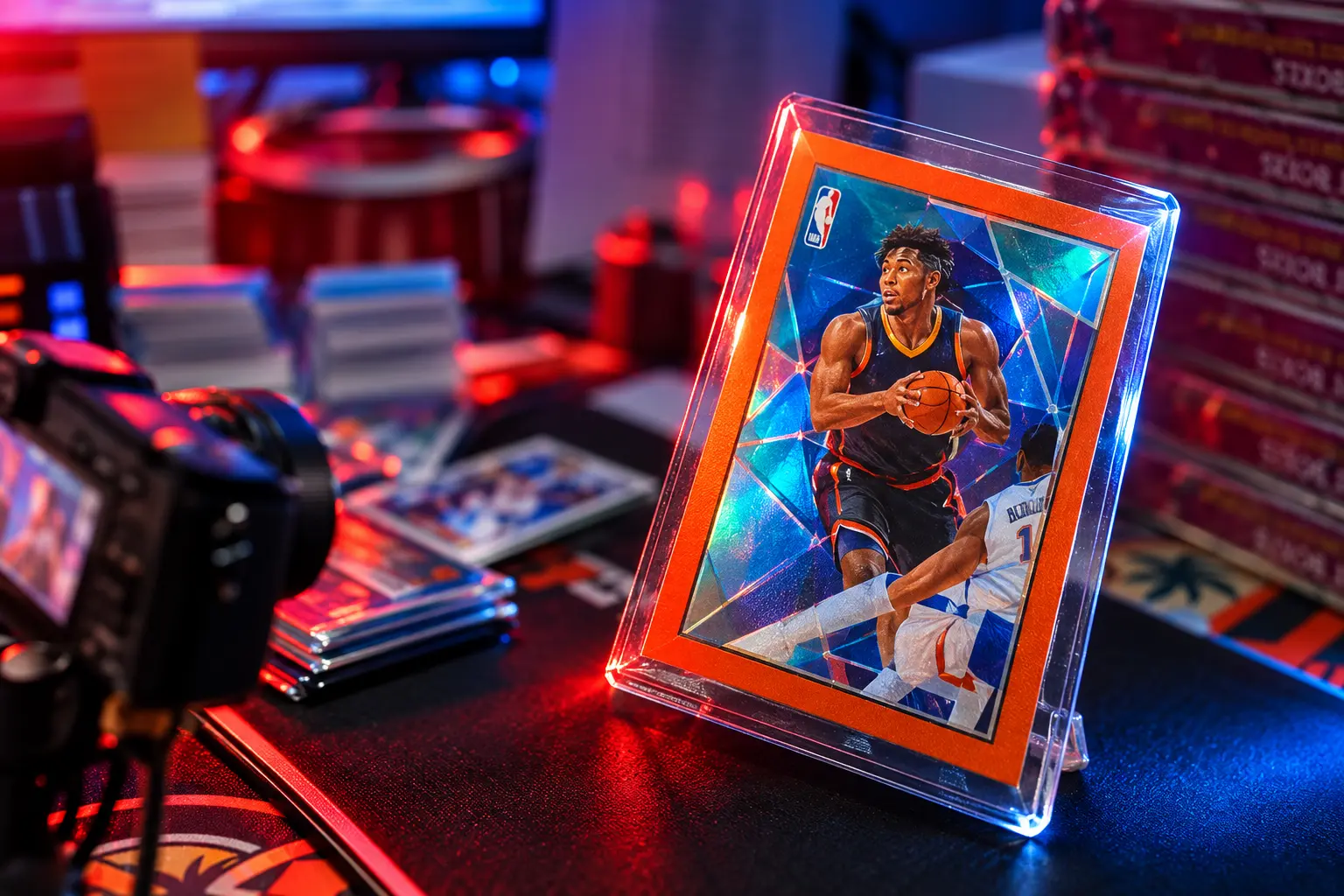
Fanatics now holds the exclusive card licenses for the NFL, NBA, and MLB, and it sells those packs on its own livestream app. Buyers join sports card breaks to bid on slots in unopened boxes, hoping a seven-figure hit falls to them.
The public fight is aimed at Whatnot, the live-shopping app facing claims that randomized breaks are illegal lotteries. Fanatics prints the scarce cards, put Fanatics Live on the first licensed football release, and now streams with a Knicks champion.
Fanatics Prints the Cards and Hosts the Stream
In January 2022 Fanatics bought Topps, the baseball-card brand that had defined the hobby for decades. Under Fanatics, Topps locked exclusive trading-card deals with MLB, then the NBA, then the NFL, leaving Upper Deck with the NHL as the one major North American holdout.
On October 15, 2025, the NBA and the National Basketball Players Association named Topps the official exclusive trading card licensee for the first time since the 2009-10 season. The first licensed set, 2025-26 Topps Basketball, landed on October 23. Fanatics Collectibles CEO Mike Mahan did not talk about kids flipping commons on a bedroom floor. He talked about one-of-one Rookie Debut Patch Autographs and Gold NBA Logoman patches designed to be chased.
Beginning with the 1-of-1 Topps Rookie Debut Patch Autograph cards and limited-edition Gold NBA Logoman Patch cards, we are constantly iterating on innovative and interactive ways with which we can deliver new and unique card formats. These then become collectibles to chase, cherish, and provide the current generation of fans and collectors with excitement.
Mike Mahan, CEO, Fanatics Collectibles, NBA license announcement
On April 2, 2026, Fanatics Collectibles, the NFL, and the NFLPA put Topps back on licensed football for the first time since 2016. The first set, 2025 Topps Chrome Football, was due April 15, with the first official product on Fanatics Live, NFLShop.com, and select shops. The chase pieces were one-of-one Rookie PREM1ERE Patch Autographs, cut from jerseys worn in a player’s first regular-season game, and Gold Shield relics from 2024 award winners.
That is the part the addiction stories skip. The same company that rations the hits also runs a live storefront where those hits are auctioned in 30-second slots. Around the 2026 NFL Draft in Pittsburgh, Topps and the NFL even planned a fan space with free packs and live pack openings, ending with Collector Celebration Day on April 25 on the field at Acrisure Stadium.
WHO HOLDS THE LICENSES NOW
| League | Exclusive card licensee | When it locked in | Live storefront named at launch |
|---|---|---|---|
| MLB | Topps under Fanatics | Fanatics bought Topps on January 4, 2022 | Fanatics Live among other apps |
| NBA | Topps under Fanatics | Announced October 15, 2025 | Hobby shops, retail, Topps.com |
| NFL | Topps under Fanatics | Announced April 2, 2026 | Fanatics Live, NFLShop.com, shops |
| NHL | Upper Deck | Still the outlier | Not a Fanatics license |
FIFA later sold Fanatics a long-term exclusive for World Cup cards and stickers starting in 2031, which tells you where the company thinks the next scarcity machine sits. Panini still prints some football and basketball without team marks. For licensed logos on the three biggest U.S. leagues, the printer is Fanatics.
What a Buyer Owns in a Random Break
A break is not a pack you carry out of a drugstore. A breaker opens sealed boxes on a livestream. Viewers buy “slots” that give them a claim on certain cards if those cards appear. Some slots are players. Some are teams. Some are random, assigned by a digital wheel after a 30-second auction.
At Trace ’n Chase in Totowa, New Jersey, Danny Vallario and Nick DiNicola ran a random-player break of 2025-26 Topps Chrome Basketball Sapphire during a reporter’s visit in April 2026. Five sealed boxes sat on the table, about $5,000 apiece unopened, roughly $25,000 of wax for one show. Each box held eight packs of four cards, 160 cards in all, with an autograph guaranteed in each box.
The break had 328 slots. The first went for $36, which DiNicola called a weak start. He told the room the slots should be around $100. A $55 slot landed on Dylan Harper, a name that can pay several times that in common form and thousands in a rare parallel. If no Harper card is in those 160, the buyer still paid $55 and gets a consolation card that may be worth little more than the cardboard.
Breakers do not open packs until every slot is sold. For hours the show is a wheel filling a spreadsheet, sports-radio chatter, and the hope that a life-changing card is in the stack. Vallario once opened a one-of-one Luka Dončić Logoman on stream and screamed when it came out. The shop later held that card in a safe for a client who had already turned down $1.2 million. Last year an 11-year-old pulled a one-of-one Paul Skenes Rookie Debut Patch Auto that sold for $1.1 million. The box had cost $320 on the resale market.
People inside the hobby already talk about this as a losing bet they still place. The thrill is the hit, the chat, and a host who knows your screen name. The product is a claim on unseen inventory, sold at a pace no corner shop could match.
Whatnot Booked $8 Billion in Live Sales
Whatnot started in 2019 as a live market for Funko Pops and became the default room for breaks. The company said users in the United States were spending about the length of a ballgame on the app each day. In 2025 it reported $8 billion in live gross merchandise value, more than double about $3 billion in 2024, and about $1 billion in revenue. It added more than 20 million accounts that year.
WHATNOT’S 2025 LIVE TALLY
- Live volume: $8 billion in goods sold through livestreams, more than double 2024.
- New accounts: more than 20 million added in 2025.
- Card traffic: more than 6.4 million sports cards bought per month in the United States.
- Later raise: a $545 million Series G in August 2026 valued the company at $20 billion, after a $225 million Series F at $11.5 billion in October 2025.
In the first half of 2026, Whatnot said live volume had already passed $8 billion, matching the whole of 2025 in six months. Sports cards remain a top U.S. category, but the $8 billion figure is the whole live marketplace, not cards alone. Fashion, coins, and luxury goods ride the same rails.
Whatnot takes a seller commission of 6.5 to 8 percent on sports cards, and it requires shipments within two business days, a brutal clock for someone opening thousands of packs. One-eighth of its sellers do it full time. The company says breakers are only 4 percent of sellers. That 4 percent is the format that filled overnight rooms and taught a generation to bid on a wheel.
After complaints, Whatnot added a one-tap tool for time and spending limits and said more updates would roll through the year. It also banned wheel-based randomization, which had been built into the seller tools. The company still says gambling is not allowed on the app.
His Clients Spent $252 Million on Breaks
Paul Lesko, a St. Louis attorney who works sports memorabilia cases, showed up at the 2025 National Sports Collectors Convention in Rosemont, Illinois, in a jersey that read HOBBY LAWYER. Collectors stopped him to say they were spending more than they had on Whatnot breaks. He later filed arbitration demands against Whatnot for about 70 clients.
Lesko has said those clients spent more than $252 million on the platform. After he went public with the first 15 cases in March 2026, more than 240 people contacted him. The filings call randomized box breaks and “repack” breaks, packs assembled by a streamer or a third party rather than the card maker, unlawful lotteries under California law. Whatnot is incorporated in Delaware and based in California. Its terms push disputes into private arbitration.
WHAT THE DEMANDS ASK FOR
- The label: A finding that randomized and repack breaks are unlawful lotteries or gambling, not ordinary retail.
- The money: Restitution, disgorgement, and damages for buyers who say they were pulled into compulsive spending.
- The brakes: Addiction warnings, self-exclusion, spending limits, and support resources of the kind licensed sportsbooks must offer.
- The stop: An order to halt randomized breaks and repack products on the app.
A Whatnot spokesperson rejected the claim that the app is a casino. “Gambling isn’t allowed on Whatnot, and we strictly enforce this policy,” the company said, adding that on Whatnot you buy and receive real products, while in gambling you play for a chance to win. Trace ’n Chase made the same point in different words: a customer is buying a defined position in real inventory that exists, and a kid opening a pack in 1952 did not know what was inside either.
Lesko’s cases are still early in arbitration. A separate lawsuit filed in July 2025 makes similar claims against Whatnot and Fanatics Live. A Utah collector, Kevin Parker, sued Whatnot as an alleged illegal gambling enterprise; that case has been steered toward arbitration. A California false-claims filing, later unsealed, named Whatnot and Fanatics Live over unlicensed box-break lotteries; the state Department of Justice declined to intervene.
Belgium classed paid loot boxes as gambling in 2018, even when the prize stayed in a game. U.S. live breaks ship a physical card, which is the industry’s favorite distinction, and it is also why the cards can be flipped the same night on eBay. Licensed sportsbooks have to offer cooling-off tools. A live-shopping app does not, unless a contract or a new law says so.
Why Collectors MD Meets Every Week
Jay Abrenica, a 57-year-old legal marketer in New York, had already lost somewhere between $200,000 and $300,000 on sports bets after New York legalized them in 2022. Gamblers Anonymous got him off sportsbooks. He quit fantasy football, office brackets, even watching the Yankees live, because a game still felt like a ticket.
Late in 2024 he found breaking. It looked like the cardboard he collected as a kid, not a bet. Beginner’s luck hit. Then he was drinking Celsius through 12-hour streams, replaying the “Jay, you won!” clips at lunch, and telling breakers to ship cards straight to an eBay flipper. He sold stocks, lied to his wife and his advisor, and spent nearly six figures on breaks. His son found him asleep on the keyboard with a stream still running and called it a relapse. Abrenica said he had no real argument.
Jamie Glick, a clinician and executive director of the Problem Gambling Coalition of Colorado, uses a wide definition on purpose.
The definition of gambling that I like to use is risking something of value in hopes of gaining something in return when the outcome is uncertain. When you use that definition, it really opens your eyes to a lot of types of behaviors that could be considered gambling that I consider non-traditional.
Jamie Glick, executive director, Problem Gambling Coalition of Colorado
Glick calls it gamblified collecting: chasing losses, spending money you do not have, using the stream to escape. He said the typical story is not only a drained savings account. It is that plus credit-card debt or a loan. Colorado built what he describes as the first U.S. curriculum on the pattern. He also said plenty of collectors keep a healthy relationship with breaks, and that the scale of the harm is still foggy.
The cases around him are not foggy. A California pizza-shop owner spent $100,000 on breaks in a month. A Mid-Atlantic man who had self-excluded from casinos and sportsbooks spent more than a year’s salary in five months after a death in the family. A Colorado accountant tied his employer’s PayPal and company card to a breaking account and spent more than $2 million of company money. He is divorced and sold his house toward the debt.
Alyx Effron, a recovering gambling addict and collector, founded Collectors MD in 2025 as a peer group for people who cannot get that story heard in a standard Gamblers Anonymous room. The group offers support for compulsive collecting, free Wednesday meetings, a Thursday “Unboxed” session with Glick’s coalition, a harm-reduction tag, #RipResponsibly, and a referral list that includes 800-GAMBLER and blocking tools. Effron’s line is that the childhood-hobby costume is what makes the spiral hard to explain. How, he asks, could collecting destroy a life?
Collectors MD lists Trace ’n Chase among its hobby partners, on the same page as RipHamiltonRips, the breaking brand Vallario worked under before Totowa. The shop that projects $85 million from sound-proofed stream rooms is also named next to a group built for people those rooms can wreck. The group says it is not anti-breaking. It is anti-exploitation, and it still wants people in the hobby who can keep a boundary.
Karl-Anthony Towns Now Breaks on the License Holder’s App
Vallario, 23, started breaking in college after Covid killed his Division III football season at Fairleigh Dickinson. He camped at Target for restocks, took the 3 a.m. shift on Whatnot because nobody else wanted it, then dropped out after a hernia and a call to his coach that he was living a double life. He later helped run a roster of about 25 Trace ’n Chase streamers, on pace for about 7,000 streams a year, with at least one breaker on almost around the clock. He once stayed up for a 38-hour show. The night before that April visit he had opened 960 packs. “My hands hurt so bad, bro,” he said.
In June 2026 he left to launch Big Bodegas Cards with Karl-Anthony Towns, the Knicks center and a known collector. They stream on Fanatics Live, not Whatnot. Nick DiNicola went with him. The July 13 debut ran ten hours through six-figure Topps Dynasty Baseball boxes. They pulled a one-of-one Aaron Judge that a buyer later sold for $108,000 at auction. Towns joked that he had been thinking about cards through the Finals. Vallario told the chat to put “professional breaker” on his tombstone.
On August 6, Big Bodegas promoted a 100-case 2025-26 Topps Chrome Updates Basketball show on Fanatics Live, 828 boxes, billed as the largest basketball break in hobby history, a claim that has not been independently checked. Late that month a one-of-one Aaron Judge dual Gold Logoman patch autograph sold for $900,000 through Fanatics Collect. Towns posted “ALL RISE” and said the card was his. The player who helps sell the slots is also a whale in the same market.
Vallario has said he once asked a customer to slow down because he felt uncomfortable, and that he talks to dozens of regulars about their lives, not only their bids. He also said sports, cards, and the streams are all hype. That is a host’s job. It is also the job of a company that designs one-of-one patches, then puts the wax on a live app with an NBA champion in the chair.
Totowa Still Ships a Million Orders a Year
The Totowa shop still looks like a fancy version of a 1990s card store until someone buzzes you in. Behind the glass is a two-story operation of about 80 people, a shipping floor on pace for about one million orders a year, and a padlocked Cage of unopened boxes. The money that pays for the panic buttons and the basketball-court ceiling is in the studios: two cameras, a branded mat, a tray, Yves Klein blue walls, and a can of foil.
HOW THE SCARCITY MACHINE WAS BUILT
- 2020: Stuck-at-home collectors push eBay trading-card sales up 142 percent, and new sports-card sales hit an estimated $1 billion for the first time since the early 1990s boom.
- January 4, 2022: Fanatics acquires Topps and begins gathering exclusive league licenses instead of flooding the market the way the Junk Wax Era did.
- October 15, 2025: Topps returns as the NBA’s exclusive licensee, with Rookie Debut Patches and Gold Logoman cards built as chase objects.
- March 2026: Lesko files the first wave of Whatnot arbitration demands; the company rejects the casino label and later limits spending tools and wheel randomizers.
- April 2, 2026: Fanatics takes the NFL exclusive and lists the first official football product on Fanatics Live the same month.
- July 13, 2026: Vallario and Towns open Big Bodegas on that Fanatics app.
- August 2026: Whatnot raises at a $20 billion valuation, with first-half live volume already past $8 billion.
Kevin O’Leary has said he and partners treat a $13 million basketball card like bitcoin, ether, or gold. That is the top of the market the streams advertise. The bottom is a slot that pays out a Gradey Dick base card and a shipping label. In between sits a live-shopping industry that does not have to post odds, cut off a whale, or staff a problem-gambling line unless a private arbitrator or a legislature says so.
Lesko’s demands are still early in arbitration, Fanatics Live is still selling slots in licensed packs, and the Totowa rooms are still on the air.
Disclaimer: This article is news reporting and analysis of the sports-card and live-shopping market. It is informational only and is not legal, investment, or gambling advice, and it is not a diagnosis of addiction or a recommendation to buy, sell, or bid on cards, breaks, or related products. Anyone facing debt, compulsive spending, or a dispute with a platform should consult a qualified attorney, a licensed financial counselor, or a problem-gambling clinician before acting. Figures, case counts, product dates, and company statuses reflect the statements and documents cited here and can change as arbitration, licenses, and live-app rules move.

Xbox Sells Cloud Playtime Packs Ahead of November Caps

Xbox Puts a $1,800 Helix Behind a 2027 Handheld

Brussels Asks If Bio-Based Plastic Can Replace Recycled Content

EU Organic Deal Gates the Leaf and Doubles Exemptions

Barilla Strike Exposes Who Gains the Italian Plants

Boston Scientific Cyberattack Leaves Hospitals Waiting on Implants

Guizhou Cave Cafes Spread When Each Cavern Fills

The Second Ned Stark Kit Lands When a Banner Dies

Satellites Saw Nepal’s Ice Slope Move Before the Flood

OpenAI’s Jalapeño Chip Turns Watts Into Faster Agent Steps
-
 NEWS2 months ago
Boston Scientific Cyberattack Leaves Hospitals Waiting on Implants
-
 NEWS2 months ago
Guizhou Cave Cafes Spread When Each Cavern Fills
-
 GAMING2 months ago
The Second Ned Stark Kit Lands When a Banner Dies
-
 NEWS2 months ago
Satellites Saw Nepal’s Ice Slope Move Before the Flood
-
 NEWS2 months ago
OpenAI’s Jalapeño Chip Turns Watts Into Faster Agent Steps
-
 NEWS2 months ago
MLB Quiet Periods Copy a Freeze Other Leagues Use
-

 NEWS2 months ago
Roman Space Telescope Launches After a Decade-Long Budget Bet
-
 BUSINESS2 weeks ago
Saks Kept 15 Stores While Rivals Took the Shoppers