
BUSINESS
Anthropic Prices an $81.3 Billion IPO Without Board Control
Anthropic priced ANT at $83 and raised $81.3 billion, while a trust still elects most of the board and a $900.9 billion compute bill sits on the books.

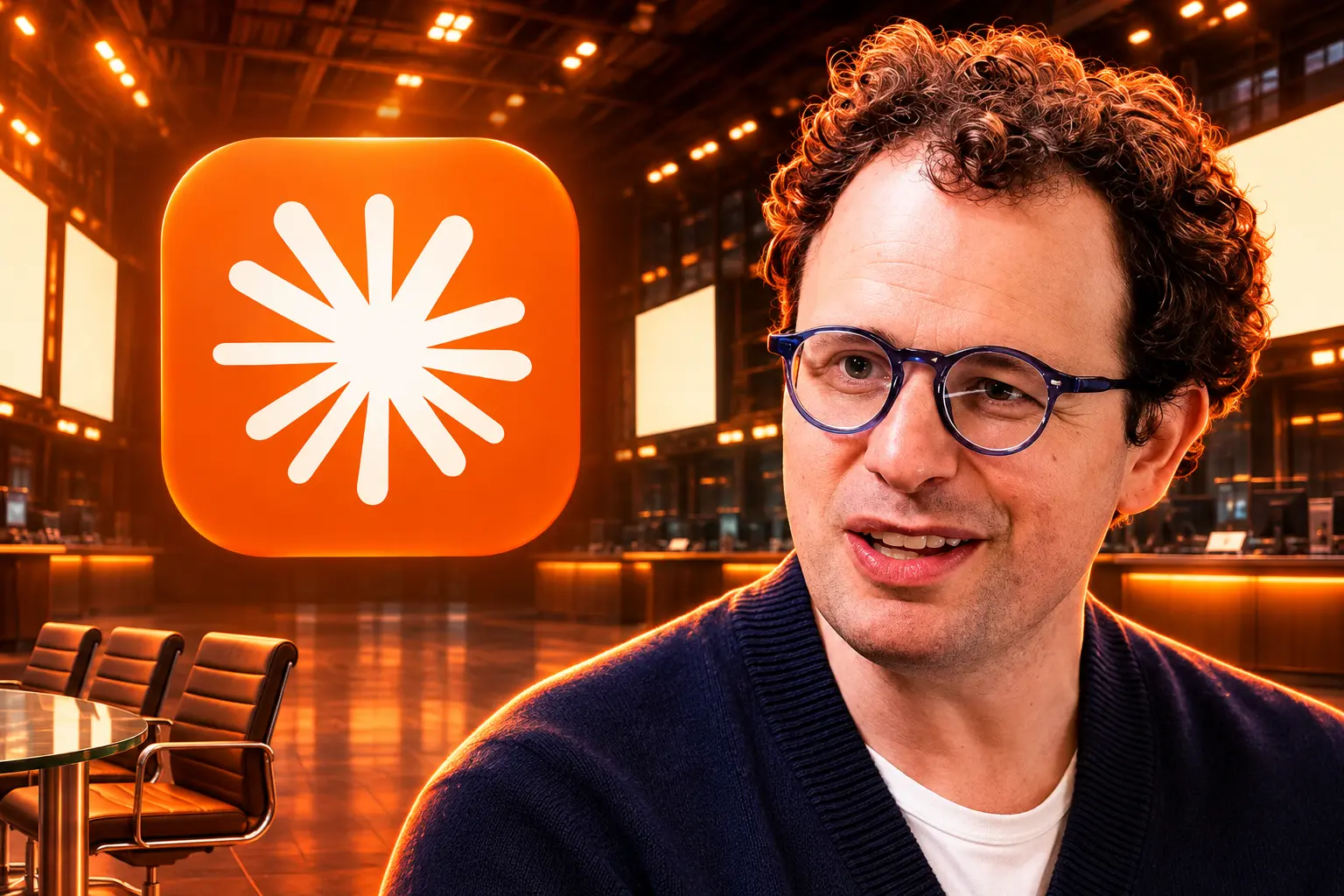
Anthropic priced its Class A stock at $83.00 a share on November 18, 2026, above a $70 to $78 range, and enlarged the sale to 980 million shares. The print raises $81.3 billion and values the Claude maker at about $1.5 trillion on a fully diluted basis, per PitchBook. Shares are expected to start trading on the Nasdaq Global Select Market on November 19, 2026, under ANT.
The order book cleared above the range. What it buys is narrower. A trust still elects four of seven directors, a founder share holds 50.1% of the general vote, and the company has already signed approximately $900.9 billion of committed spend on compute, most of it stretching to 2045.
The Offering Grew After Demand Piled Up
Anthropic, PBC sold 956,351,354 new Class A shares. Selling stockholders, the seven co-founders, sold 23,648,646 more. The company receives nothing on that second slice, about $1.96 billion at $83.00. Its own shares raise about $79.4 billion before bank fees.
The November 10 filing had listed 825 million shares. The extra 155 million shares are the upsizing. Banks also hold a 30-day option on 147 million more shares, about $12.2 billion if they take every one. Goldman Sachs and Morgan Stanley led the books. The sale is expected to close on November 20, 2026, after the SEC declared the registration effective on November 18.
THE ROAD TO THE $83 PRINT
- October 26, 2026: Files its Form S-1 and describes a novel capital and corporate governance structure for a Nasdaq listing as ANT.
- November 10, 2026: Sets a $70 to $78 range on 825 million Class A shares and opens the roadshow, with a $26 billion Class N placement beside it.
- November 17, 2026: Updates the prospectus, including compute totals of $900.9 billion and $70.7 billion due in the next 12 months.
- November 18, 2026: Prices 980 million shares at $83.00 after the SEC declares the registration effective.
- November 19, 2026: Expected first trade on the Nasdaq Global Select Market. Nasdaq does not print a new listing at a fixed minute; SpaceX’s first trade on June 12, 2026, landed at 11:46 a.m. Eastern.
- November 20, 2026: Expected closing of the offering, subject to customary conditions.
Each of the seven co-founders, Dario Amodei, the chief executive, Daniela Amodei, the president and board chair, Tom Brown, Jack Clark, Jared Kaplan, Sam McCandlish and Christopher Olah, is selling 3,378,378 shares, about $280 million apiece at the IPO price. That secondary sale is a sliver of their holdings. They have each pledged 80% of their personal Anthropic equity to philanthropic causes.
A $900.9 Billion Tab the IPO Does Not Cover
The amended registration statement puts approximately $900.9 billion of committed spend on purchase agreements and leases, substantially all of it for compute and infrastructure. About $451.6 billion is expected before December 31, 2030. The rest is slated mostly between 2031 and 2045. About $70.7 billion falls in the 12 months after September 30, 2026.
Set that against cash. Anthropic held $131.8 billion of cash and short-term investments at September 30, 2026. The next year of bills is covered. The IPO is not. At $81.3 billion, the sale is about 9% of the $900.9 billion tab. Add the $26 billion private placement and the new equity is still a down payment.
Revenue can carry some of the load if it keeps climbing. Third-quarter 2026 sales were $17.0 billion, up from $1.4 billion a year earlier. The October 31 run rate reached $81 billion. The second quarter produced a $974 million operating profit on $11.6 billion of sales. The third quarter slipped to a $567 million operating loss after a burst of short-term compute. For the first nine months of 2026 the operating loss was $1.3 billion. The $104.0 billion net loss in that span is mostly a non-cash mark on convertible notes that rose as the private value rose.
NAMED COMPUTE CONTRACTS IN THE FILING
| Partner | Amount | What it is | Window |
|---|---|---|---|
| Broadcom | $161.2 billion | Equipment leases for TPU-based compute | Five-year leases |
| $121.3 billion | Minimum spend, owed whether used or not | 2026 to 2033 | |
| SpaceX (SpaceXAI) | Up to $120.5 billion | Paid as capacity is delivered | Through 2029 |
| Amazon | $110.0 billion | Minimum spend, owed whether used or not | 2026 to 2036 |
| Microsoft | $47.2 billion to $49.2 billion | Minimum spend, owed whether used or not | 2026 to 2033 |
Google, Amazon and Microsoft alone account for at least $278.5 billion that Anthropic must pay even if it leaves capacity idle. The SpaceXAI contracts are the rare ones either side can end on 90 days’ notice after short initial periods. Customers paying $100,000 or more a year numbered more than 11,900 in September 2026, against a staff of about 5,300. Usage fees were 79% of nine-month revenue. The model works if token demand stays ahead of the rack schedule. If it does not, the minimums still come due.
Who Elects Anthropic’s Board After the Listing?
A financially disinterested Long-Term Benefit Trust, holding one Class T share, generally elects and removes four of seven directors, a majority of the board. Class F and Class A, voting together, elect the other three, initially Dario Amodei, Daniela Amodei and Yasmin Razavi. The Class T directors named in the filing are Reed Hastings, Vas Narasimhan, Christopher Liddell and a vacant seat.
The October 26 registration statement calls the result a novel capital and corporate governance structure. Immediately before closing, Anthropic will issue one Class F share to a Founder LLC whose members are the seven co-founders. That share casts 50.1% of the vote on matters put to stockholders generally, including the three non-trust seats. Class A, even in a bloc, cannot outvote it.
Class A holders generally will not be able to affect the outcome of any matter submitted to a vote of our stockholders or the election of our directors, regardless of how they vote.
Anthropic, PBC, Form S-1/A, November 17, 2026
The trust does not take a share of profits. Its job, in the company’s telling, is to keep the public-benefit purpose in the boardroom: the responsible development and maintenance of advanced AI for the long-term benefit of humanity. Trustees as of the filing include Neil “Buddy” Shah, chair and head of the Clinton Health Access Initiative, Richard Fontaine, a national security specialist, Ben Bernanke, the former Federal Reserve chair, and Christopher Stubbs, an experimental physicist, with one seat empty. They may not hold Anthropic securities.
THE FIVE COMMON-STOCK CLASSES
- Class A: Sold to the public and held by most existing owners; one vote a share and a pro rata claim on dividends and a liquidation.
- Class N: Held mainly by strategic partners; the same economics as Class A and, in general, no vote.
- Class T: One share at the Long-Term Benefit Trust; elects a board majority and has no economic rights.
- Class F: One share at the Founder LLC; 50.1% of the general vote and no economic rights.
- Class E: Issued to employees other than the co-founders; votes only on limited matters and has no economic rights.
Because the trust can elect a board majority, Anthropic is a Nasdaq “controlled company.” Dual-class tech listings are common. A purpose trust with no economics picking most directors, sitting next to a founder share that never falls below 50.1% as new Class A is issued, is not the Meta or Google template. Public holders get a price. They do not get the wheel.
Seven Suppliers Park $26 Billion in Class N
Beside the public sale, seven chip and cloud vendors agreed to buy $26 billion of non-voting Class N stock at the IPO price, closing only if the IPO closes. Google and Nvidia take $10.0 billion each. AMD takes $2.5 billion. Broadcom, Micron and Microsoft take $1.0 billion each. TSMC takes $500 million.
THE $26 BILLION SIDE BUYERS
- Google: $10.0 billion, on top of a $121.3 billion minimum compute contract through 2033.
- Nvidia: $10.0 billion, with no matching minimum named in the same way in the filing.
- AMD: $2.5 billion, counted toward a stock-purchase pledge that came with a supply deal.
- Broadcom, Micron, Microsoft, TSMC: $1.0 billion, $1.0 billion, $1.0 billion and $500 million, the rest of the chip and foundry stack.
The placement turns Anthropic’s vendors into its shareholders, in a class that converts to Class A only on a public sale or a transfer to a small unaffiliated holder. Money raised in ANT and Class N will, in large part, flow back to the same names as lease payments and GPU bills. Amazon, which is not on the $26 billion list, still sits on the other side of a $110.0 billion minimum and holds convertible notes with $6.2 billion of principal that convert into Class N at the IPO, subject to a 12% ownership cap.
PitchBook tallies the IPO plus the placement at $107.3 billion and, counting earlier rounds, puts Anthropic’s capital raised at $219 billion against $186.4 billion for OpenAI. OpenAI has pointed to 2027 for its own listing. The first frontier lab into public markets is the one that sold non-voting stock to its suppliers on the way out the door.
Public Votes Cannot Move a Majority of Seats
Anthropic is a Delaware public benefit corporation. Directors must balance stockholder money against a public benefit named in the charter, and against the interests of people materially affected by the company’s conduct. The filing says the board cannot guarantee that a conflict would be resolved in stockholders’ favor. A listed PBC also reports to stockholders at least every two years on how it is meeting that duty.
Before the listing the company contributed 846,840,960 Class N shares, 5% of fully diluted stock as of June 30, 2026, to Anthropic Public Benefit Fund, LLC. The board may issue more Class N to that fund, up to an extra 2% of then-outstanding shares, each time the share price rises 50% above the last milestone, starting at the IPO price. Those grants dilute Class A the same way any other issuance would, and Class F’s 50.1% does not shrink with them.
The $1.5 trillion tag asks public holders to underwrite that design. Third-quarter sales of $17.0 billion against that price is a bet that Claude’s run rate keeps compounding while the trust and the founders keep the mission ahead of a buyback or a sale. Jon Ma, chief executive of the data firm Artemis, put the operating contrast in labor terms: Google needed about 105,000 people to reach $100 billion of revenue, and Anthropic is trying to get there with a staff on the order of 5,000, putting the human cost into compute. The filing’s headcount, about 5,300 in September 2026, is the number that claim leans on. It is also why the $900.9 billion of racks, not the payroll, is the bill that can break the story.
SpaceX’s $75 Billion Record Lasted Five Months
Measured at pricing, before any overallotment, Anthropic’s $81.3 billion sale is larger than SpaceX’s $75.0 billion Nasdaq listing on June 11, 2026, at $135 a share. That June print had taken the record from Saudi Aramco’s $25.6 billion in 2019. SpaceX later sold extra shares under its option and reached $85.7 billion, a different total, after banks exercised. Anthropic’s own 147 million-share option is still outstanding and would add about $12.2 billion if taken in full.
LARGEST IPOS AT PRICING, BEFORE THE OPTION
| Company | Year | Proceeds at pricing | Exchange |
|---|---|---|---|
| Anthropic | 2026 | $81.3 billion | Nasdaq (ANT) |
| SpaceX | 2026 | $75.0 billion | Nasdaq (SPCX) |
| Saudi Aramco | 2019 | $25.6 billion | Tadawul |
| Alibaba Group | 2014 | $21.8 billion | NYSE |
Renaissance Capital’s U.S. ranking still showed SpaceX at $75.0 billion and SK hynix’s July 2026 listing at $26.5 billion before this print. The ANT sale also arrives with a thinner public slice than those older listings: 980 million shares against a fully diluted book that supports a $1.5 trillion value. Demand that pushed the price through $78 will meet that float on November 19, 2026, without a vote that can change the board. The record, at pricing, is real. So is the lock on who runs the company after the tape starts.
Frequently Asked Questions
Is Anthropic a Nasdaq controlled company, and which rules does it skip?
Yes. The S-1 says it qualifies because the Long-Term Benefit Trust, as sole holder of Class T, generally can elect a majority of the authorized board. Anthropic plans to use that exemption only for its nominating and corporate governance committee, which Daniela Amodei chairs and which will not be fully independent. The audit and compensation committees are fully independent under the filing.
When does the founders’ 50.1% Class F vote go away?
The Class F share has no calendar end date. It ends if the Founder LLC redeems it or dissolves, or after a 450-day transition that starts once fewer than three Continuing Founders have remained in place for 90 consecutive days. A co-founder who keeps less than 2% of the Class A shares they held on the IPO date can also be removed from the LLC, which is how the 50.1% block can shrink without a public vote.
What happens to Amazon’s $6.2 billion of convertible notes at the IPO?
That $6.2 billion is principal on non-interest-bearing Amazon rollover notes, not a cash loan of that size on the balance sheet. The notes convert into Class N stock at $2.0928 a share under the 2023 agreement and $5.0478 under the 2024 agreement, or at the IPO price if lower, subject to Amazon’s 12% ownership cap, for up to about 1.84 billion Class N shares before the cap binds. Their fair value, which produced most of the nine-month GAAP loss, is far larger than the principal because it tracks Anthropic’s rising private value.
Can the Long-Term Benefit Trust lose the right to elect a board majority?
Yes, but the bar is high. The filing’s Trust Amendment Threshold lets the company change the trust or redeem the Class T share for no consideration with approval from 80% of the authorized board and 80% of the trustees in office. Over the trustees’ objection, the change needs set votes from the Founder LLC, Class E employees and Class A holders, or, once no Class F share remains, approval of 85% of outstanding Class A.
Who can sue Anthropic over its public benefit duty?
Delaware law lets stockholders of a listed public benefit corporation enforce the directors’ balancing duty only if they hold at least 2% of outstanding shares or shares worth at least $2,000,000, whichever is less. The company must also send stockholders a statement at least every two years on how it is promoting the charter purpose. Those are the statutory hooks. They are not a substitute for electing directors.
Disclaimer: This article is news reporting and analysis of Anthropic’s priced initial public offering and related SEC filings. It is for information only and is not investment advice, a solicitation to buy or sell ANT or any other security, or a recommendation of any broker or offering. Readers who are considering an investment in newly listed shares, or in companies that supply Anthropic with compute, should consult a licensed financial adviser or securities lawyer who can review their own facts, including lockups, share-class rights and the still-open underwriters’ option. Share counts, prices, valuations and contract figures reflect the company announcement of November 18, 2026, and the prospectus amendments cited here, and they can change as the offering closes and as ANT begins trading.

DK Metcalf’s Eye Poke Hits a Thin Steelers Season

The Canadiens Bet a Top Prospect on Dylan Larkin

Cassidy Blocks O’Neill and Leaves NSF Without a Director

Alpöge Posts a Riemann Hypothesis Proof Nobody Can Read

TSMC Pauses China Chips That SMIC Cannot Replace

Boston Scientific Cyberattack Leaves Hospitals Waiting on Implants

Xbox Sells Cloud Playtime Packs Ahead of November Caps

Guizhou Cave Cafes Spread When Each Cavern Fills

The Second Ned Stark Kit Lands When a Banner Dies

Satellites Saw Nepal’s Ice Slope Move Before the Flood
-
 NEWS3 months ago
Boston Scientific Cyberattack Leaves Hospitals Waiting on Implants
-
 GAMING4 weeks ago
Xbox Sells Cloud Playtime Packs Ahead of November Caps
-
 NEWS3 months ago
Guizhou Cave Cafes Spread When Each Cavern Fills
-
 GAMING3 months ago
The Second Ned Stark Kit Lands When a Banner Dies
-
 NEWS3 months ago
Satellites Saw Nepal’s Ice Slope Move Before the Flood
-
 NEWS3 months ago
OpenAI’s Jalapeño Chip Turns Watts Into Faster Agent Steps
-

 NEWS3 months ago
MLB Quiet Periods Copy a Freeze Other Leagues Use
-
 NEWS3 months ago
Roman Space Telescope Launches After a Decade-Long Budget Bet