
BUSINESS
The Bank of Japan Hiked and the Yen Still Fell
Japan lifted its policy rate to 1.25 percent, a 31-year high, yet the yen fell after a 7-2 vote left cheap yen funding in place.

The Bank of Japan raised its overnight rate to 1.25% on September 18, the highest since April 1995, and the yen still fell. A 7-2 vote and a still-wide gap with U.S. rates told traders that cheap yen funding remains open.
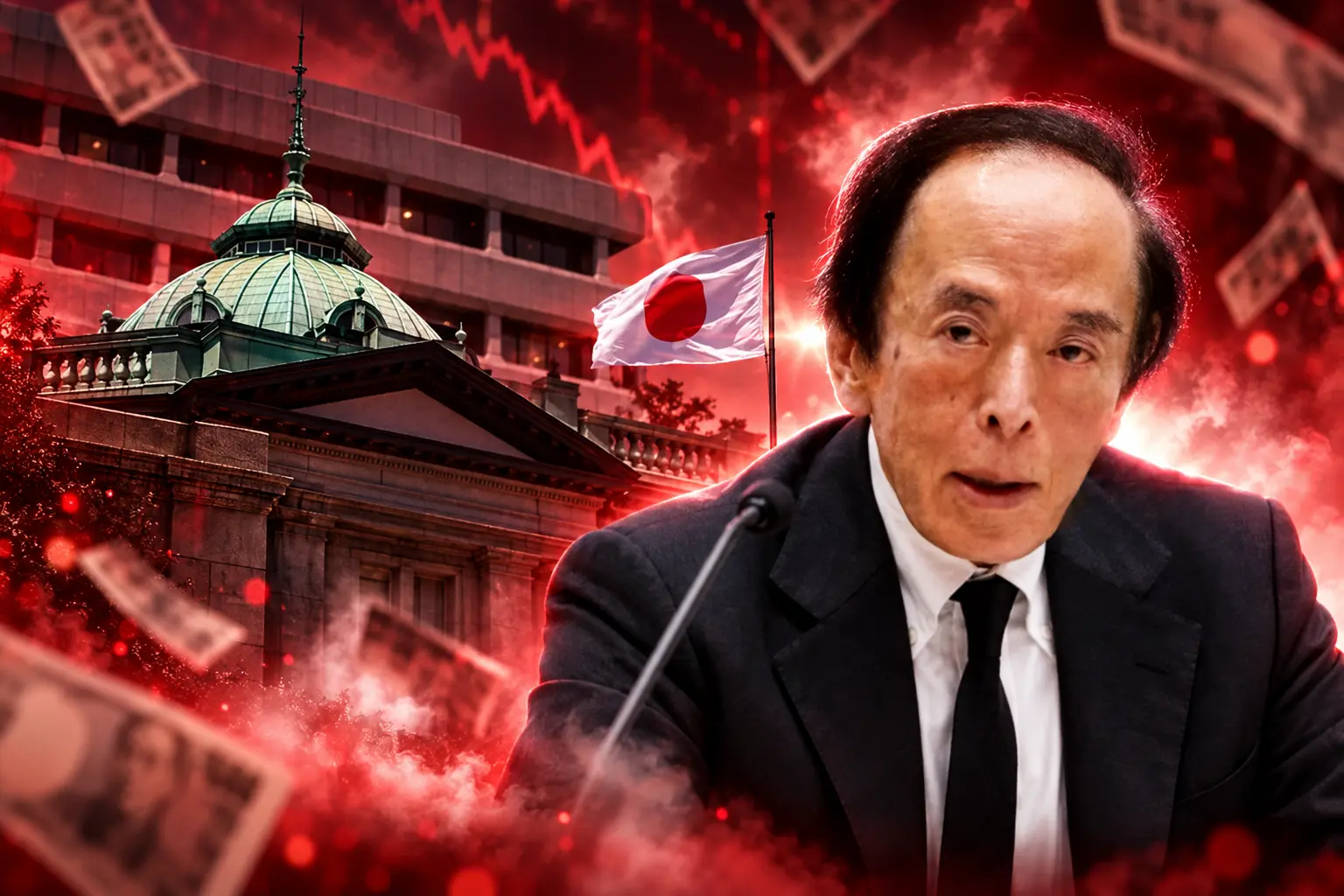
Governor Kazuo Ueda said the Bank’s aim has shifted from pushing inflation up toward 2% to stopping it from running past that line. Markets treated the two no votes as the nearer signal.
Two Dissenters Took the Yen With Them
The Policy Board, meeting over September 17 and 18, voted to set the uncollateralized overnight call rate to around 1.25 percent, up from 1.0%. The complementary deposit rate moves to 1.25% with it. The basic loan rate moves to 1.5%.
Voting for the step were Ueda, Deputy Governors Ryozo Himino and Shinichi Uchida, and board members Hajime Takata, Naoki Tamura, Junko Koeda and Kazuyuki Masu. Board members Toichiro Asada and Ayano Sato voted no.
Asada wanted the overnight target left at around 1%, arguing that consumer prices excluding fresh food were still below 2% and that the economy was not clearly strong. Sato said activity and prices had not sped up enough to justify a hike at this sitting.
The yen closed at 156.88 per dollar on September 18, up 0.91 yen, or 0.58%, from 155.97 the day before, after trading as high as 158.07. The 52-week range runs from 146.61 to 164.00, the weak end of that band having been reached in July.
YEN ON SEPTEMBER 18
- Close: 156.88 yen per dollar, from 155.97 on September 17.
- Session high: 158.07 yen per dollar.
- Move: 0.91 yen, or 0.58%, cheaper on the day.
- 52-week band: 146.61 to 164.00 yen per dollar.
Steven Englander, head of G10 FX research at Standard Chartered, said the “lack of hiking punch” made it easier for the dollar to go higher. On September 19, Scotiabank’s FX desk was still describing the move as a dovish hike that left the yen under pressure.
Rate increases in this cycle have not, on their own, produced lasting yen gains. The July 2024 jump was the exception, and it came with weeks of currency intervention already under way. Currencies price the expected path, not the print that everyone already had in the book. A 52-economist survey had the quarter-point step as a done deal before the doors opened.
A New Phase Without a Timetable
Ueda told reporters the Bank’s short-term focus had been to push underlying inflation up from below 2%. That job, he said, is giving way to keeping the trend from overshooting, a phase that “has just started.” He said the Bank will try to put numbers on the effect of the hikes in its next quarterly report in October.
If we were to do big rate hikes or consecutive rate hikes, that would depend on whether Japan sees very big inflation risks, or sees inflation sharply overshooting our target. Underlying inflation hasn’t exceeded 2% yet, and we want to keep it that way. That’s why we’d like to act pre-emptively.
Kazuo Ueda, Governor, Bank of Japan news conference, September 18, 2026
He would not rule out a 50-basis-point step or back-to-back increases. He also said the Board is in a phase that requires careful data reading, “but that doesn’t mean we can move slowly.”
The statement that went out at 11:54 a.m. in Tokyo is blunter about the risks than about the calendar. Underlying CPI inflation has been approaching 2%, financial conditions are still easy, and the Bank “will continue to raise the policy interest rate and adjust the degree of monetary accommodation.” Timing and pace, it said, will depend on the baseline outlook and on three named risks: the situation in the Middle East, the expansion in global AI-related demand, and moves in the yen.
Ueda was clear that FX is an inflation channel, not a target. “We don’t guide policy to control currency moves or stabilise currency rates at a certain range,” he said. That line matters for anyone who thought a 31-year-high print would double as a yen rescue.
Why Japan’s Core Inflation Is Still Below 2 Percent
The consumer numbers that landed just before the meeting did not show a blowout. Nationwide core CPI eased to 1.7 percent in August from 1.8% in July, below the 1.8% median call. Headline inflation held at 1.9%. The index that strips out fresh food and energy, the trend gauge the Bank watches most closely, held at 1.9%.
JAPAN CONSUMER PRICES, AUGUST 2026
| Measure | August 2026 | July 2026 |
|---|---|---|
| Headline CPI | 1.9% | 1.9% |
| Core (ex fresh food) | 1.7% | 1.8% |
| Core-core (ex fresh food and energy) | 1.9% | 1.9% |
| Food | 3.1% | 3.5% |
Energy prices fell 0.7% from a year earlier and 5.0% from July, after electricity charges were reset and fuel subsidies did their work. Food inflation cooled to 3.1% from 3.5%. Services inflation stayed soft. The Board is not waiting on that print. Producer prices, the Bank’s corporate goods index, rose 7.6% in August from a year earlier, the third month above 7%, as oil, coal and chemicals moved with the Middle East conflict and as AI-related demand lifted some industrial goods.
The statement says upward pressure in business-to-business deals has started to spill into consumer prices, and that firms are still passing wage gains into selling prices. Medium- to long-term inflation expectations have kept rising. On that basis the Bank expects consumer inflation excluding fresh food to run “clearly above 2 percent” from the second half of fiscal 2026, then ease back toward 2% later in the forecast window.
Takata, who voted for the hike, had already sketched the worry in a September 2 speech in Sapporo. He called third phase of policy-rate normalization the right label for 2026, and he compared the oil shock with the 1970s. Easy real rates, firm spring wage rounds for a third year, wider cost pass-through, and energy subsidies that let households keep using fuel as usual could, he said, feed second-round price rises if the Bank stays slow.
The Fed Vote Left a Wide Rate Gap
Two days earlier, the Federal Reserve raised the federal funds rate to 3.75 to 4 percent by a 12-0 vote, its first increase since 2023. Chair Kevin Warsh said inflation had been too high for too long and that policy was hard to describe as tight. The median official path points to about 4.1% at the end of 2026 and again in 2027.
TWO HIKES, TWO VOTES
| Central bank | Date | New rate | Vote |
|---|---|---|---|
| U.S. Federal Reserve | September 16, 2026 | 3.75% to 4% | 12-0 |
| Bank of Japan | September 18, 2026 | 1.25% | 7-2 |
After both decisions, the gap between the top of the U.S. range and Japan’s overnight target is 2.5 to 2.75 percentage points. That spread is the carry trade’s raw material. Ueda said other central banks’ moves can hit Japan through several channels, including the currency, and that the Fed, the European Central Bank and the Bank of Japan were all answering similar forces: inflation from the Middle East conflict, and heavy spending on AI that is lifting growth and prices at the margin.
The statement still calls Japanese financial conditions accommodative. Real rates remain low in the short-to-medium zone, firms still want funds, banks are still willing to lend, and commercial paper and corporate bond issuance remains easy. A 25-basis-point step does not close that description. It also does not close the gap with New York.
Still the World’s Cheap Funding Currency
Borrowing yen to buy higher-yielding dollars, Treasuries, Asian bonds or other risk assets only works while Japanese money stays cheap and the yen does not jump. Friday’s print raised the cost of that funding by a quarter point and then, because the yen cheapened, improved the mark-to-market on the currency leg. That is the opposite of a squeeze.
WHAT THE 1.25% PRINT DID NOT DO
- Close the rate gap: U.S. policy still pays 2.5 to 2.75 points more than the overnight yen rate.
- Force a yen squeeze: The dollar bought more yen after the decision, not less.
- Set a terminal rate: Ueda said the neutral level is hard to pin down in advance.
- Map the next step: October and December meetings are on the calendar, with no promised date.
The fear that gets rehearsed around every Tokyo hike is a forced unwind, the kind of rush that hit global books in August 2024 after a quarter-point move landed next to a weak U.S. jobs report. That scare is real when the yen jumps and leveraged books have to buy yen back at the same time. It is not the tape from September 18. The cheaper yen after a fully priced hike is what a carry book wants, not what it fears.
Japanese households sit on the other side of the same number. Deposit rates have been crawling up as the overnight target has, and housing investment is already on a declining trend in the Bank’s own account of the economy. Private consumption has stayed resilient on jobs and incomes, even as household sentiment has been soft. The 1.25% overnight rate is still a long way from the borrowing costs that would freeze that picture overnight.
Japan Left Negative Rates in March 2024
Friday’s move is the sixth increase since the Bank ended negative rates in March 2024 under Ueda, who took office in 2023. Until this sitting, the pace had been roughly two hikes a year. The June 2026 rise to 1.0% was the previous step. The Board held in July. Three months is the shortest gap of Ueda’s term, and the shortest interval of this sort since the bubble-era tightening.
THE HIKE PATH SINCE NEGATIVE RATES ENDED
- March 2024: Ends negative rates and yield-curve control, and sets a 0 to 0.1% overnight range.
- July 2024: Lifts the overnight rate to 0.25% and sets a plan to taper Japanese government bond buying.
- January 2025: Raises the rate to 0.5%.
- December 2025: Raises the rate to 0.75%.
- June 2026: Raises the rate to 1.0%.
- September 18, 2026: Raises the rate to 1.25% on a 7-2 vote, effective September 24.
The last time the policy rate stood at 1.25% was April 1995. The Bank’s working band for the nominal neutral rate, the level that neither cools nor heats the economy, is estimated somewhere between 1.1% and 2.5%. At 1.25%, policy has entered that band. It has not walked through it. Economists who map the path have the next stop at 1.5% by the end of March 2027, and 1.75% in the second quarter of 2027. Those figures are forecasts, not Board guidance.
Silver Week Pushes the New Rate to Thursday
The new overnight target takes effect on September 24. Monday through Wednesday are national holidays, the Silver Week cluster, so the operations change waits until Thursday. The Bank has two policy meetings left in 2026, in October and December. A summary of opinions from this sitting is due at 8:50 a.m. on October 1. The minutes follow on November 5.
October is also when Ueda said the quarterly outlook will try to quantify what the hikes have done. Until that report, the Board has a phrase and not a path: keep raising the policy rate if activity, prices and financial conditions evolve as expected, and watch oil, AI demand and the yen for reasons to move faster or wait. Asada and Sato have already said wait. The foreign-exchange market, on September 18, sided with them on the near-term pace even as it took the 1.25% print as fact.
The yen that closed at 156.88 is still far cheaper than it was when this tightening cycle began, and funding in yen is still cheap next to the dollar. That is the result the Board posted, whatever the headline rate now says about 1995.
Frequently Asked Questions
What Other BOJ Rates Moved With the Overnight Target?
The interest rate on the complementary deposit facility, the rate paid on current-account balances at the Bank excluding required reserves, was set at 1.25%, matching the new overnight target. The basic loan rate under the complementary lending facility was set at 1.5%. A separate climate-related lending facility was shifted to a floating rate by a unanimous vote, with a 50 trillion yen cap on total loans and a 10 trillion yen cap per counterparty.
When Will the Bank Release the Meeting Minutes?
The Summary of Opinions from the September 17-18 meeting is scheduled for 8:50 a.m. on October 1, 2026. The full minutes are scheduled for 8:50 a.m. on November 5, 2026. Those documents will show how the seven-member majority and the two dissenters framed oil, wages and the yen in the room, beyond the short notes already attached to the rate statement.
Where Does 1.25 Percent Sit Against the BOJ’s Neutral Range?
The Bank has described Japan’s nominal neutral rate as somewhere between 1.1% and 2.5%, a wide band rather than a point. At 1.25%, the overnight target has entered the lower end of that range and remains well below the top of it, which is why Ueda said the terminal rate will be known only as the Board keeps adjusting.
What Is the Second Half of Fiscal 2026 in Calendar Terms?
Japan’s fiscal year runs from April 1 to March 31, so the second half of fiscal 2026 begins on October 1, 2026, and ends on March 31, 2027. That is the window in which the Bank said consumer inflation excluding fresh food is likely to run clearly above 2%, before easing toward 2% later in the projection period.
Disclaimer: This article is news reporting and analysis of a central-bank decision and related market prices, and it is for information only. It is not investment advice, a recommendation to buy or sell any currency, bond, stock or other instrument, and it is not a forecast you should trade on. Readers who are considering a position in yen, Japanese government debt, or any asset funded in yen should consult a licensed financial adviser or broker who can assess their own objectives and risk limits. Interest rates, yen levels, inflation prints and policy guidance are those given by the cited official statements and market data as of the dates named above, and all of them can change at the next meeting or the next session.

Xbox Sells Cloud Playtime Packs Ahead of November Caps

Xbox Puts a $1,800 Helix Behind a 2027 Handheld

Brussels Asks If Bio-Based Plastic Can Replace Recycled Content

EU Organic Deal Gates the Leaf and Doubles Exemptions

Barilla Strike Exposes Who Gains the Italian Plants

Boston Scientific Cyberattack Leaves Hospitals Waiting on Implants

Guizhou Cave Cafes Spread When Each Cavern Fills

The Second Ned Stark Kit Lands When a Banner Dies

Satellites Saw Nepal’s Ice Slope Move Before the Flood

OpenAI’s Jalapeño Chip Turns Watts Into Faster Agent Steps
-
 NEWS2 months ago
Boston Scientific Cyberattack Leaves Hospitals Waiting on Implants
-
 NEWS2 months ago
Guizhou Cave Cafes Spread When Each Cavern Fills
-
 GAMING2 months ago
The Second Ned Stark Kit Lands When a Banner Dies
-
 NEWS2 months ago
Satellites Saw Nepal’s Ice Slope Move Before the Flood
-
 NEWS2 months ago
OpenAI’s Jalapeño Chip Turns Watts Into Faster Agent Steps
-

 NEWS2 months ago
MLB Quiet Periods Copy a Freeze Other Leagues Use
-

 NEWS2 months ago
Roman Space Telescope Launches After a Decade-Long Budget Bet
-

 BUSINESS2 weeks ago
Saks Kept 15 Stores While Rivals Took the Shoppers