
BUSINESS
Barilla Strike Exposes Who Gains the Italian Plants
Barilla’s eight-hour Italian strike targets mill and plant sales to Casillo and Liguori, while Foggia is lined up for a €100 million owned pasta hub.

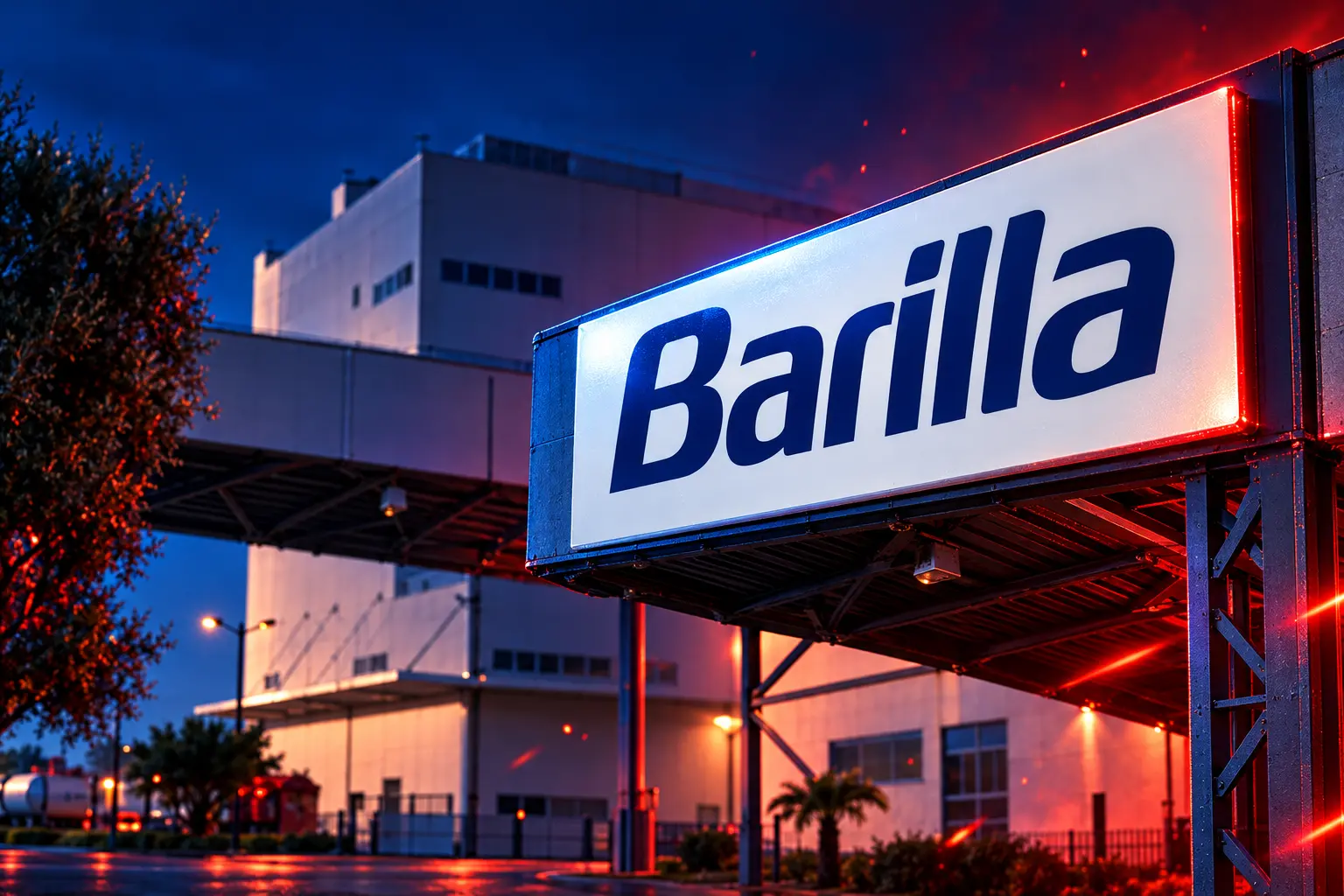
Barilla workers across Italy stopped work for eight hours on 21 October over plans to sell a pasta plant and two mills. Fai-Cisl, Flai-Cgil and Uila-Uil called the stoppage as the first half of a 16-hour package that covered every Italian site in the Parma group, from Pedrignano to Puglia.
The family firm wants a new mill in Foggia and is in advanced talks to pass Marcianise to Pastificio Liguori and the mills at Castelplanio and Altamura to Casillo. Barilla would remain their customer. The unions want those sales stopped.
The Strike Hit Every Barilla Site in Italy
Pickets went up at plants that are not even on the block. At the Ferrara mill, 11 of 15 staff stood at the gate from 8:30 to 10:30. At Campolungo in Ascoli, more than 50 workers turned out. Parma unions set a picket at Pedrignano from 10:30, and Cremona and Castiglione delle Stiviere joined the same package.
At Castelplanio the stoppage began at 05:00 and ran through each shift, including five agency staff among the 18 people on the books. Luca Liguori of Flai-Cgil in Ferrara said union ties with Barilla “have always been good,” then said the company “decided unilaterally to sell plants without having called the unions.”
Ascoli’s gate made the same point in plainer words. “We are here today to strike to send a message of solidarity to our colleagues in other plants in difficulty, but also to protect the jobs of the Barilla production site in Ascoli, because the problems that today belong to other colleagues could be ours tomorrow,” the workers said.
The national food unions had already put that charge on the record. After a 16 October meeting of Barilla’s national RSU coordination with Fai, Flai and Uila, Fai-Cisl said Barilla had given no “concrete signals to resume talks without preconditions,” and the three unions 16 hours of strikes across the group, with the first eight hours set for 21 October to back a Campania Region crisis table the same day.
THE CLOCK ON THE DISPUTE
- 18 September 2026: Barilla presents its southern Italy plan, opens talks with the unions, and tells Castelplanio reps, at a meeting billed for the company bonus, that the mill is to be sold.
- 21 September 2026: Casillo SpA Società Benefit confirms it has made an offer for the Altamura and Castelplanio mills.
- 16 October 2026: National RSU and union secretaries meet Barilla and say they got no opening to halt the sales path.
- 17 October 2026: Fai-Cisl, Flai-Cgil and Uila-Uil confirm a state of agitation and call the 16-hour package.
- 21 October 2026: The first eight hours are struck group-wide, and Campania holds its table on Marcianise.
The remaining eight hours still have no date. Union notes named Ilario Valori of Flai-Cgil, Eugenio Zalocco of Uila-Uil and Francesca Monaldi of Fai-Cisl on the national coordination that called the action.
Three Plants Leave the Family Payroll
The plan does not close the three sites. It takes them off Barilla’s payroll and leaves the lines running for the same brand under new owners, if the talks finish. Castelplanio is a small mill. Marcianise is a pasta factory. Altamura sits in a durum district. They are not one kind of asset.
THE SITES ON THE BLOCK
| Site | What it is | Buyer in talks | Staff on site |
|---|---|---|---|
| Marcianise, Caserta | Pasta plant | Pastificio Liguori, Gragnano | About 90 |
| Castelplanio, Ancona | Mill, wholewheat semolina | Casillo | 18 (5 agency) |
| Altamura, Bari | Durum mill | Casillo | Not disclosed |
Local unions say Castelplanio is the only Barilla mill that makes wholewheat semolina, and they call it a profitable site. That is why a sale, rather than a shutdown, still landed as a shock. The 18 September session at the mill had been listed as a talk on the company bonus tied to a 16 July plant deal. Reps say the sale was dropped on them there.
Ivan Papazzoni and Luca Casu of Flai-Cgil in Mantova, speaking for Castiglione delle Stiviere as well, said that if Barilla moved to formal sale procedures it would show “a lack of will to talk” and “little respect” for the unions. The company has not withdrawn the three files.
Who Takes the Mills Barilla Wants to Sell?
The overlooked names on this strike are the buyers. Casillo is not a stranger knocking on Barilla’s door. Francesco Casillo, chief executive of Casillo SpA Società Benefit, said the offer grows out of a supply tie that is older than most of the staff now on the picket lines.
We have worked with Barilla for more than sixty years: this offer is the natural evolution of a relationship built over time. We approach the project with the firm will to give industrial continuity to the two sites and with a long-term view, in which people’s skills and the tie to the territories are a central value to develop.
Francesco Casillo, Chief Executive, Casillo SpA Società Benefit
The Corato group, founded in 1958, describes itself as a world leader in durum wheat and runs 14 milling plants across Italy. Casillo said Altamura sits in one of the country’s main durum districts, while Castelplanio is a reference mill for grain from the Marche, Tuscany, Umbria and Lazio, and that adding both would deepen its central Italy footprint. The offer, it added, still depends on contracts, the law, and talks with the unions.
Pastificio Liguori is the other party, a Gragnano pasta maker in talks for Marcianise. Barilla has said Liguori, like Casillo, has pledged to keep the sites running, protect jobs and skills, and still make product for Barilla on multi-year supply deals. Liguori has not put a public timetable of its own on those talks.
If those deals close, Barilla keeps the blue box and the orders. Casillo adds two Barilla mills to a network that already grinds wheat for pasta makers. Liguori takes a Campania plant and a contracted volume from the company that used to own it. The workers at the three gates would clock in for someone else.
Foggia Keeps the Barilla Name and the Money
The owned future in this plan is in Capitanata. On 18 September Barilla said it would spend €100 million ($112.2 million) on a new mill beside the existing Foggia pasta plant, to be built between 2028 and 2030, copying the mill-plus-pasta model it already runs in Parma. Giovanni Palopoli, head of operations for Meal Solutions, tied that spend to logistics and factory efficiency in a pasta market he called hard to stay in.
“The creation in Foggia of one of the Group’s strategic pasta hubs meets the need to improve our logistics and production efficiency, an indispensable element to remain competitive in a challenging market such as pasta,” Palopoli said. He also said continuity of production at the sites being sold, and protection of jobs and pay for everyone touched by the deals, were “essential conditions.”
FOGGIA HUB IN FIGURES
- The spend: €100 million for a new mill next to the pasta plant already in Foggia.
- The years: Construction is set for 2028 to 2030, so the hub is still on paper.
- The model: Mill and pasta lines on one site, as Barilla already runs in Parma.
- The group: Barilla posted €4.8 billion in 2025 sales and employed 8,823 people worldwide.
Antonio Decaro, president of the Puglia Region, welcomed the Foggia choice and called the province the grain basket of Italy. That is the political half of the southern plan: money and the Barilla name stay in Puglia, at Foggia, while Altamura’s mill is lined up to leave the group and remain in the same region under Casillo.
Supply Contracts Are the Whole Employment Promise
Barilla’s answer to the strike is not that the sales are off. It is that jobs are a condition of the sales. The group said occupational continuity “for all the people involved is a fundamental prerequisite for both operations,” and that the Marcianise plant would keep making product destined for Barilla under multi-year supply contracts with the buyer.
That is a contractor model, not a promise that the same company will still sign the pay slip. The length of those contracts, the volumes, and what happens when they expire have not been published. Agency staff at Castelplanio, five of the 18, are inside the union’s strike count and outside any public transfer term.
WHAT BARILLA SAYS STAYS IN PLACE
- The jobs: Headcount at the sold sites is a condition of the deals, not a later extra.
- The lines: Marcianise, Altamura and Castelplanio would still make product for Barilla.
- The paper: Multi-year supply contracts with Liguori and Casillo would replace ownership.
- The buyers: Both firms have, in Barilla’s telling, said they will keep the sites and the skills.
- The talks: Barilla says it is willing to go through the industrial plan with unions and public bodies.
Parma’s own RSU, in the 19 October note from Pedrignano, Rubbiano Bakery and the sauces site, warned that a plan sold as southern efficiency had already spread unease into the home plants. They said factory talks in the Parma province had for some time failed to deal with problems workers put on the table, and they told the company to stop making choices that hit people with no prior comparison of the options.
No Dates Came Out of the Campania Meeting
The eight-hour stoppage was timed to a table the Campania Region called on Marcianise. After that meeting, Barilla thanked the Region, said the session had set out the project and the guarantees for the Caserta plant, and said the next step should be a technical table that also brings in Liguori. It asked for firm dates for that table. It did not give any.
“In the passage from Barilla to Pastificio Liguori, a historic Gragnano producer, occupational and production continuity will be guaranteed,” the company said. It also said it welcomed the unions’ willingness to talk about the content of the project and the guarantees, “involving the buyer Liguori as well.”
That is a narrower opening than the one the unions asked for on 16 October, when they told Barilla to reverse the sales of Marcianise, Castelplanio and Altamura. The company, on 21 October, was still describing the industrial plan as sound. Formal sale procedures, which the unions feared could start in the days after their 16 October meeting, have not been confirmed as filed.
WHAT WE KNOW
- The walkout: The first eight hours were struck on 21 October across the Italian group.
- The talks: Liguori’s bid for Marcianise and Casillo’s bid for the two mills are advanced, not signed.
- The hub: The Foggia mill is a 2028-2030 project on a €100 million budget.
WHAT IS UNCONFIRMED
- The calendar: No date is public for the second eight strike hours or for the technical table.
- The contracts: Term and volume of the multi-year Barilla supply deals have not been released.
- The agency five: How Castelplanio’s temporary staff would transfer has not been spelled out.
Union officials are still asking Barilla to reverse the sales of Marcianise, Castelplanio and Altamura. The company has not withdrawn them, and the second eight hours of the strike package still hang over every Italian site in the group.

Xbox Sells Cloud Playtime Packs Ahead of November Caps

Xbox Puts a $1,800 Helix Behind a 2027 Handheld

Brussels Asks If Bio-Based Plastic Can Replace Recycled Content

EU Organic Deal Gates the Leaf and Doubles Exemptions

Barilla Strike Exposes Who Gains the Italian Plants

Boston Scientific Cyberattack Leaves Hospitals Waiting on Implants

Guizhou Cave Cafes Spread When Each Cavern Fills

The Second Ned Stark Kit Lands When a Banner Dies

Satellites Saw Nepal’s Ice Slope Move Before the Flood

OpenAI’s Jalapeño Chip Turns Watts Into Faster Agent Steps
-
 NEWS2 months ago
Boston Scientific Cyberattack Leaves Hospitals Waiting on Implants
-
 NEWS2 months ago
Guizhou Cave Cafes Spread When Each Cavern Fills
-
 GAMING2 months ago
The Second Ned Stark Kit Lands When a Banner Dies
-
 NEWS2 months ago
Satellites Saw Nepal’s Ice Slope Move Before the Flood
-
 NEWS2 months ago
OpenAI’s Jalapeño Chip Turns Watts Into Faster Agent Steps
-

 NEWS2 months ago
MLB Quiet Periods Copy a Freeze Other Leagues Use
-

 NEWS2 months ago
Roman Space Telescope Launches After a Decade-Long Budget Bet
-
 BUSINESS2 weeks ago
Saks Kept 15 Stores While Rivals Took the Shoppers