
BUSINESS
ACCC Egg Cartel Case Restarts a Fight Lost in 2017
The ACCC’s first concerted-practice case since 2017 puts Sunny Queen and 11 other egg firms in court.

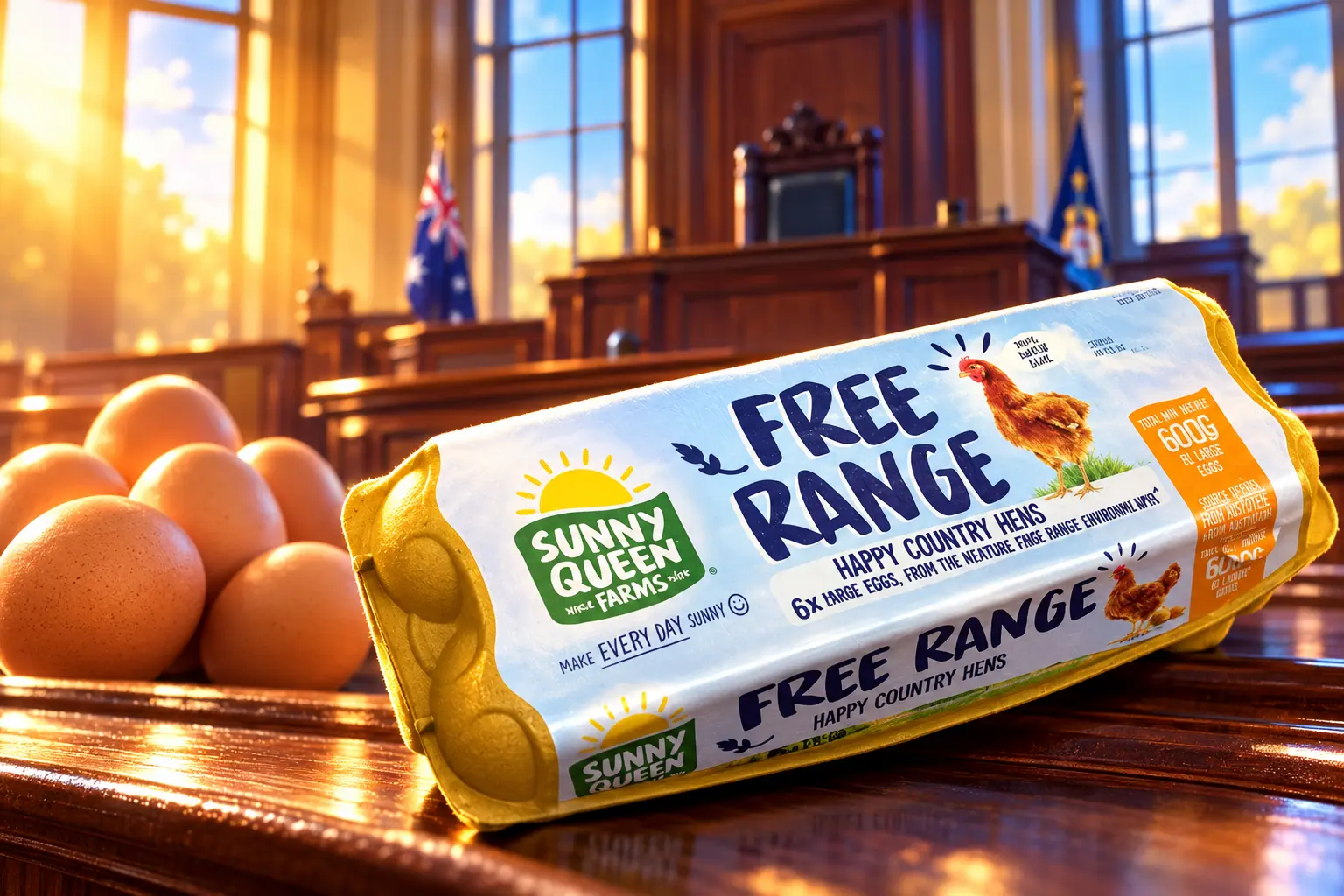
The Australian Competition and Consumer Commission filed civil proceedings in the Federal Court on 13 October 2026 against Sunny Queen, Australia’s largest egg supplier, and 11 other producers. The regulator alleges cartel conduct and concerted practices in free-range, cage and organic eggs since at least October 2020.
It is the first ACCC case to plead concerted practices since that ban took effect in 2017, nine years after the watchdog lost a similar egg-oversupply fight. Sunny Queen denies the claims and says it will defend the case.
Nine Years After the Last Egg Oversupply Case
In May 2014 the ACCC sued the Australian Egg Corporation Limited, Farm Pride Foods, Twelve Oaks Poultry and two executives over an “Egg Oversupply Crisis Meeting.” The regulator said producers had been urged to cut supply after prices sagged. The Federal Court dismissed that case in February 2016. The Full Court dismissed the ACCC’s appeal on 25 September 2017.
Then-chairman Rod Sims said Australians spent over half a billion dollars a year on eggs, and that a successful cut in supply could have lifted prices. The judges were not persuaded the meeting was meant to create a reciprocal deal. In May 2016, in a related matter, former Farm Pride managing director Zelko Lendich was ordered to pay a A$120,000 penalty for an attempt to induce a cartel arrangement.
This case highlights the importance of the Federal Government’s Competition Policy Reform Bill, which introduces a concerted practices prohibition into Australian competition law.
Rod Sims, then ACCC Chairman, 25 September 2017
The ban commenced on 6 November 2017. Until 13 October 2026, the ACCC had not put concerted-practice allegations before a court. The new filing, VID1229/2026 in the Victoria registry, now does so against the same staple, and against alleged culling and output cuts during perceived oversupply, the same problem that sat at the centre of the 2012 meeting.
THE PATH FROM THE LAST EGG CASE
- 8 February 2012: The Australian Egg Corporation holds an oversupply meeting of major producers.
- May 2014: The ACCC files proceedings alleging an attempt to induce a cartel.
- February 2016: The Federal Court dismisses that case.
- May 2016: Zelko Lendich is ordered to pay a A$120,000 penalty in a related proceeding.
- 25 September 2017: The Full Federal Court dismisses the ACCC appeal. Sims flags the concerted-practices bill.
- 6 November 2017: The concerted-practices prohibition takes effect.
- October 2020 onward: The ACCC now alleges Hall, McLean and Sunny Queen coordinated production, pricing and supply, with Kinross later tied in through supply contracts.
- 13 October 2026: The ACCC files VID1229/2026 against 12 entities.
A court loss in 2017 did not end the regulator’s interest in how egg companies talk about surplus birds. It changed the statute they can plead.
What the 2017 Concerted-Practice Ban Covers
Cartel rules still require a contract, arrangement or understanding, often described as a meeting of minds. The 2017 amendment added a lower rung. A concerted practice, on the ACCC’s own account, is communication or cooperation between two or more businesses that is not quite a contract, arrangement or understanding, but goes beyond firms independently answering the market.
Sharing strategic information can be enough, even if the firms do not aim at the same result or behave in the same way. Parallel conduct that is only each firm watching the other remains lawful. The new egg case pleads both rungs: cartel provisions under sections 45AJ and 45AK of the Competition and Consumer Act, and concerted practices under section 45, plus exclusive dealing under section 47 and a section 50 challenge to a farm purchase.
WHAT THE FILING SAYS THE OWNERS AGREED
- Common channel: Hall and McLean would send substantially all their eggs through Sunny Queen for shared marketing and sale, with limited specialty exceptions.
- Information and planning: Each group would give Sunny Queen forward production and capacity plans and see the other’s plans through that channel.
- Equitable growth: When both wanted to meet extra Sunny Queen demand, they would share the extra volume evenly.
- Equitable reduction: When Sunny Queen wanted less supply, they would share the cut, balancing contributions over time.
- Common farm prices: Eggs of the same type and grade would be paid under a common pricing method set by Sunny Queen.
Chair Gina Cass-Gottlieb said the investigation found alleged widespread anti-competitive conduct that had affected egg supply to consumers since at least 2020, and that the alleged conduct was extremely serious. She said businesses must make production, supply and pricing decisions independently.
Hall and McLean Allegedly Shared Growth and Cuts
The concise statement treats Sunny Queen as the common sales desk for two east-coast producer groups. Doug Hall Poultry and related Hall companies, now grouped under Ellerslie Free Range Farms after a restructure, held 50 percent of Sunny Queen Australia. Alpair, trading as McLean Farms, held the other 50 percent. Sunny Queen is now jointly owned by Ellerslie and McLean Farms, with warehouses in Queensland, New South Wales, Victoria, South Australia and Western Australia.
Hall farms named in the background include Yandilla, Turralin and Punchs Creek. McLean farms include Pittsworth, Felton and Pinerow. Although the two groups ran separate farms, the ACCC says they sold almost all their eggs through Sunny Queen, swapped forward plans, split extra demand, split cuts, and took a common farm price. From at least October 2020, the filing says, there was little or no competitive rivalry between Hall and McLean as a result.
Shareholders’ deeds dated 21 February 2024 and 28 February 2024, the ACCC says, required each shareholder group to supply a minimum annual volume, put extra eggs through a first-offer process before outside sales, and, subject to qualifications, gave each a right to supply up to 50 percent of Sunny Queen’s purchases of each type of shell egg. Sunny Queen’s public response is that the allegations primarily relate to the terms of its agreements with its shareholders and main egg suppliers in Queensland and Victoria.
In December 2021, according to the filing, each producer group would reduce cage-egg supply by 200,000 dozen, and Sunny Queen compared and monitored those cuts. Hall and McLean producers were also to make matching free-range cuts. Kinross later agreed to cut free-range supply by 20,000 dozen a week. As recently as November 2025, Ellerslie and McLean Poultry allegedly divided organic and free-range cuts sought by Sunny Queen and sent that split back to the marketer.
THE 12 COMPANIES IN VID1229/2026
| Group | Companies named | Role in the filing |
|---|---|---|
| Sunny Queen | Sunny Queen Australia Pty Ltd; Sunny Queen Pty Ltd | Common marketer and distributor; alleged exclusive dealing with Kinross |
| McLean | Alpair Pty Ltd; McLean Poultry Pty Ltd; McLean Farm Sales Pty Ltd | 50 percent owner group; alleged party to the overarching arrangement |
| Hall | DHP Consolidated Pty Ltd; Ellerslie Free Range Farms Pty Ltd; Abbeyliz Pty Ltd; Yallamundi Farms Pty Ltd; Doug Hall Poultry Pty Ltd | Former 50 percent owner group, now under Ellerslie; alleged party to the same arrangement |
| Joint vehicle and Kinross | Hall & McLean Pty Ltd; Kinross Farm Pty Ltd | Joint buyer of Yarranlea; Victorian producer alleged to have been capped and locked out of major chains |
Each of those entities is alleged to have engaged in cartel conduct and in a concerted practice with the purpose, effect or likely effect of substantially lessening competition. The companies have not had their day in court. The document is a concise statement of allegations, not findings.
The Kinross Cap and the Coles Door
Kinross Farm, a large Victorian producer with farms including Euroa and Carisbrook, sat outside the Hall-McLean share register. On 23 December 2020 it signed an egg supply agreement with Sunny Queen Pty Ltd, starting on 1 January 2021. Under that contract Kinross had to send its first-quality eggs to Sunny Queen. It could sell up to 15,000 dozen free-range eggs a week to other buyers, but it could not sell those eggs to Coles, Woolworths, Aldi, Metcash or Costco.
The ACCC says Kinross knew those names were Sunny Queen’s major national retail customers and knew the clause stopped it supplying them in competition with Sunny Queen, and that it kept supplying on those terms until 3 April 2023. The same 2020 contract said that if both sides agreed the market was oversupplied, they would work in good faith on what to do, and any step required of Kinross was to be materially the same as the step required of Sunny Queen’s other major suppliers. Kinross also had to join a quarterly 18-month forecast process and disclose farm, shed, bird-number and stocking-density detail.
On 3 April 2023 the contract was amended. Kinross could then sell first-quality eggs to other buyers after meeting its Sunny Queen orders, but clause 3.3 still barred supply to Coles. The ACCC says Kinross had asked for the wider bans to come off, knew Sunny Queen supplied Coles, and agreed to leave the Coles door shut. Cass-Gottlieb put the retail list in public remarks: Coles, Woolworths, Aldi, Metcash or Costco.
Pace Farm acquired Kinross in 2025. Kinross Farm Pty Ltd remains a respondent. A court case does not, by itself, reset the ticket on a supermarket shelf. Those five retailers still set what a shopper pays, and none of them is a defendant in VID1229/2026.
Yarranlea Was Bought From Farm Pride, Then Left Idle
Between November 2020 and February 2021, the ACCC alleges, Doug Hall Poultry, Alpair and Hall & McLean Pty Ltd arranged to buy the Yarranlea farm in Queensland from Farm Pride Foods, splitting the cost equally. By February 2021, Hall & McLean Pty Ltd had put an offer that became a contract. Cass-Gottlieb described the site as a property in Pittsworth, bought to stop rival egg suppliers acquiring it, with the alleged effect of substantially lessening competition.
The filing says Yarranlea was an established egg-production site with specialised kit and material capacity, and that keeping it off the market raised barriers to entry. As at August 2023, it had not been used productively by the buyers or their related entities. The ACCC pleads the purchase as a breach of section 50.
Farm Pride was a respondent in the 2014-2017 egg case. The new proceeding does not reopen that judgment. It does put a Farm Pride asset at the centre of a fresh allegation that a competing farm was taken out of rivals’ reach and then left idle.
One Channel Supplies About a Third of Retail Eggs
The ACCC calls the egg industry highly concentrated, with few large suppliers and high barriers to entry and expansion. Eggs are a staple. The commission says Australians eat an annual average of over 250 eggs each. Australian Eggs, the industry services body, puts consumption at 259 eggs per person in 2024-25 and production at 6.87 billion eggs in 2024-25, or 573.1 million dozen, from a national flock of 24,890,517 layers in June 2025.
THE SCALE OF THE CARTON
- Retail reach: Sunny Queen holds approximately a third of the market for eggs supplied to retailers nationally, the ACCC says.
- Flock: 24,890,517 commercial layers were reported in June 2025.
- Output: 6.87 billion eggs, or 573.1 million dozen, in 2024-25.
- Diet: Over 250 eggs per person a year on the ACCC figure; 259 in the Australian Eggs 2024-25 series.
Those volumes are why a common sales channel, a cap on a rival’s outside sales, and a quiet farm purchase are pleaded as more than private contract terms. The alleged arrangements, the ACCC says, gathered substantial volumes that could otherwise have been sold independently and reduced the rivalry that would otherwise have existed.
Penalties will depend on when any proven conduct occurred. The maxima changed in November 2022 and again in March 2026. For conduct on or after 28 March 2026, the corporate maximum for this class of breach is the greater of A$100 million, three times the benefit reasonably attributable to the conduct, or 30 percent of adjusted turnover for the breach period. Most of the pleaded conduct sits in 2020-2025, so older caps apply to those years. The ACCC seeks declarations, penalties, injunctions, costs and other orders. This is a civil case, not a criminal prosecution.
Sunny Queen Will Fight the Federal Court Case
A Sunny Queen spokesperson said the company had cooperated fully with the ACCC through the investigation, denied the allegations and intended to defend the proceedings. The company said it was founded by Australian farmers and has supplied families for more than 50 years, and that it remains committed to the farming and consumer standards it cites. While the case runs, it said, it is business as usual and it will keep supplying eggs.
Anti-competitive conduct disadvantages Australian consumers, who can face reduced choice and higher prices, as well as those businesses seeking to compete fairly or who are seeking to enter markets.
Gina Cass-Gottlieb, ACCC Chair, media release, 13 October 2026
In June, Cal-Maine Foods, Versova and Hickman’s Egg Ranch reached an agreement with the US Department of Justice and 17 states over alleged price manipulation, under which they would supply 53 million eggs to food banks and non-profit groups and pay a total of US$3.3 million (about A$5 million) to the states. That settlement is a separate market and a separate statute. It is a reminder that egg supply has been a competition target in more than one country this year.
WHAT WE KNOW
- The filing: VID1229/2026 was lodged at 9:41 am AEDT on 13 October 2026 and accepted that morning in the Federal Court’s Victoria registry.
- The law: This is the first ACCC proceeding to include concerted-practice allegations since 6 November 2017.
- The defence: Sunny Queen denies the allegations and says they mainly concern agreements with shareholders and main suppliers.
WHAT IS UNCONFIRMED
- Liability: No court has found a cartel, a concerted practice, exclusive dealing or an unlawful purchase.
- Prices: The ACCC has not published a dollar figure for any extra amount paid by shoppers.
- Penalties: No fine has been sought as a specific sum in the public concise statement.
The 2017 Full Court told the ACCC that an industry meeting about surplus eggs was not, on that evidence, an attempt to induce a cartel. Parliament then lowered the bar. The first workout of that lower bar is a civil file in Melbourne about who may grow, who must cut, who may sell to Coles, and who may buy a farm at Pittsworth. Sunny Queen will put its supplier contracts in issue. The court will decide whether those contracts, and the conduct around them, stayed inside independent dealing.

Xbox Sells Cloud Playtime Packs Ahead of November Caps

Xbox Puts a $1,800 Helix Behind a 2027 Handheld

Brussels Asks If Bio-Based Plastic Can Replace Recycled Content

EU Organic Deal Gates the Leaf and Doubles Exemptions

Barilla Strike Exposes Who Gains the Italian Plants

Boston Scientific Cyberattack Leaves Hospitals Waiting on Implants

Guizhou Cave Cafes Spread When Each Cavern Fills

The Second Ned Stark Kit Lands When a Banner Dies

Satellites Saw Nepal’s Ice Slope Move Before the Flood

OpenAI’s Jalapeño Chip Turns Watts Into Faster Agent Steps
-
 NEWS2 months ago
Boston Scientific Cyberattack Leaves Hospitals Waiting on Implants
-
 NEWS2 months ago
Guizhou Cave Cafes Spread When Each Cavern Fills
-
 GAMING2 months ago
The Second Ned Stark Kit Lands When a Banner Dies
-
 NEWS2 months ago
Satellites Saw Nepal’s Ice Slope Move Before the Flood
-
 NEWS2 months ago
OpenAI’s Jalapeño Chip Turns Watts Into Faster Agent Steps
-

 NEWS2 months ago
MLB Quiet Periods Copy a Freeze Other Leagues Use
-

 NEWS2 months ago
Roman Space Telescope Launches After a Decade-Long Budget Bet
-

 BUSINESS2 weeks ago
Saks Kept 15 Stores While Rivals Took the Shoppers