
BUSINESS
Grupo Fuertes Buys Nutrave as Foreign Poultry Groups Advance
Grupo Fuertes bought Toledo processor Nutrave on 9 October 2026, a Spanish-family counter to Plukon, MHP and Lusiaves as they take Iberian poultry plants.

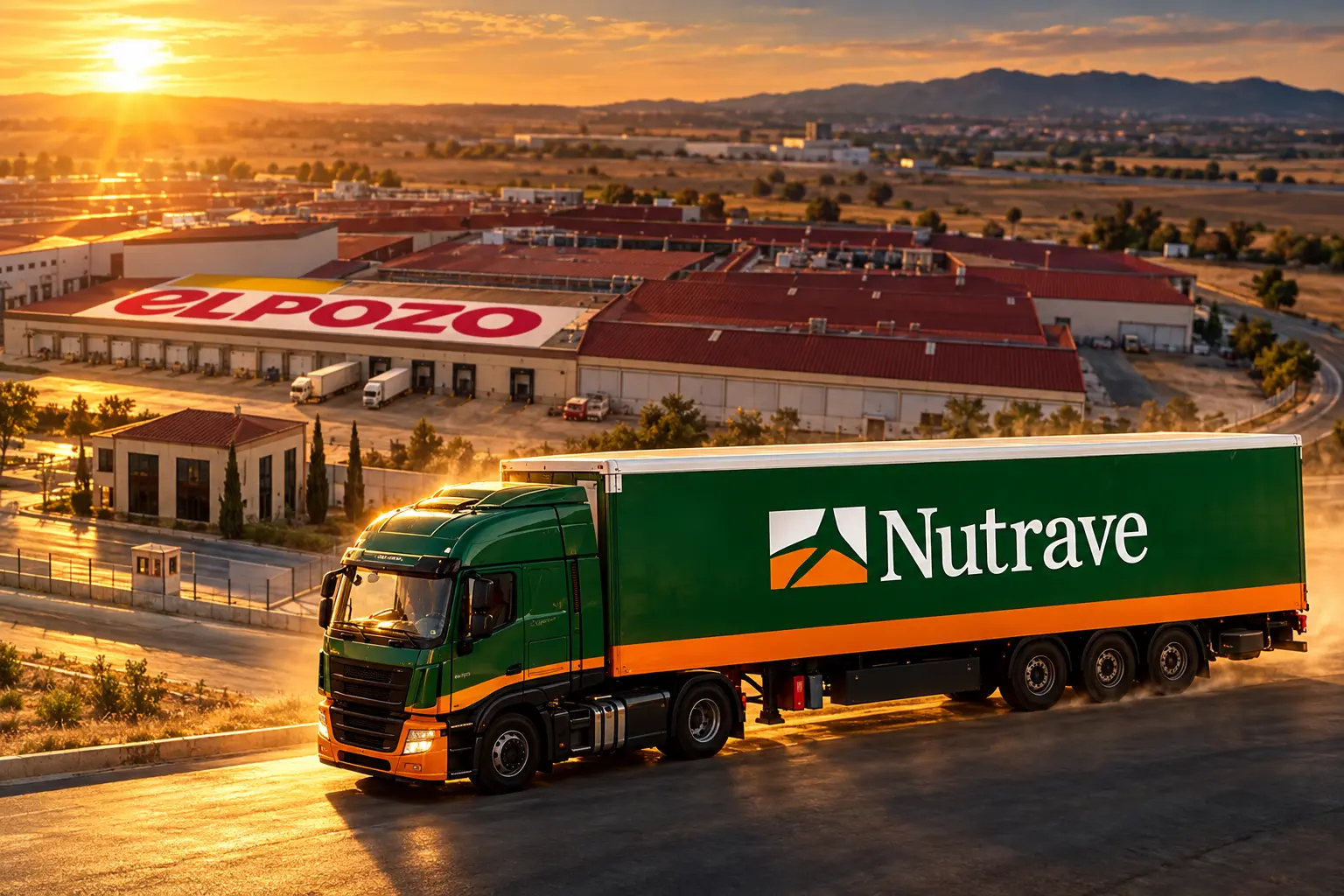
Grupo Fuertes bought Toledo poultry firm Nutrave on 9 October 2026, adding a feed-to-fillet chicken plant to the ElPozo owner eight days after Portugal’s Lusiaves took Catalan group Padesa. The three founding families stay on the register, and the group said it will keep the full workforce at the Bargas site.
Fuertes framed the deal as a brake on foreign buyers. Dutch, Ukrainian and Portuguese groups had already taken Spanish poultry firms in the past 20 months, and the Murcia holding is now bidding for the plants that are still in family hands.
Nutrave’s Three Families Stay on the Register
Fuertes, parent of ElPozo Alimentación and based in Alhama de Murcia, did not disclose a price. Garrigues advised the buyer. Nutrave S.A. sits on the Carretera Toledo-Valmojado in Bargas, south of Madrid, and was formed on 18 October 2002 as an integrated bird processor.
The company makes its own feed, hatches and rears birds, then processes chicken and hen meat. Fresh product goes out under the Imperial brand. The same site also turns out breaded nuggets and fillets, burgers and BBQ wings.
Fuertes said the three founding families will remain shareholders and will walk the Fuertes family through the handover, a pattern it has used on earlier buys. Accounts filed at the Registro Mercantil, read through Insight View, put Nutrave’s 2024 sales at 62.70 million euros and profit at 3.59 million euros.
The Bargas works cover about 20,000 square metres of plant, with a processing hall, a feed mill, a hatchery, broiler and hen farms, and a private truck fleet. After the sale the company kept posting whole-chicken recipes under its own name, with no public recast of the brand.
Foreign Groups Already Hold Three of Spain’s Top Ten
In its statement Fuertes said large international operators had bought Spanish chicken firms in recent months, and that three of the ten largest operators in the country are already in foreign hands. It called its two 2026 poultry buys an “important counterweight” that would keep local output in the “hands of Spanish family businesses”.
The names behind that claim are not abstract. Ukraine’s MHP took a majority of Uvesa, Spain’s second chicken producer after Vall Companys, in spring 2025, then agreed in June 2026 to buy Payán Hermanos in Granada. A USDA attaché report on EU poultry says Spain’s poultry sector is consolidating as domestic groups and foreign investors both chase plants, and that MHP wants to sit among the major industrial players in Spanish meat.
Plukon Food Group of the Netherlands bought Hidalgo and its Toledo plants in a deal dated 28 January 2025. Hidalgo, a family firm of more than 60 years, posted sales slightly above 100 million euros in 2024 and employed more than 400 people across Madrid, Valladolid and Toledo. In May 2026 Plukon added Avimosa (Avícola Moraleja), a fully integrated Madrid and Toledo business with 2025 sales of 56 million euros, more than 250 staff and four sites, including a slaughterhouse at Moraleja de Enmedio and hatchery and farm ground in Toledo province.
On 1 October 2026, after Spain’s competition authority cleared sole control, Portugal’s Lusiaves took a majority of Padesa (Pavo y Derivados) of Amposta. Lusiaves chairman Avelino Gaspar called it the group’s biggest international step in its 40th year. Padesa’s Salvadó and Centelles families stay as minority owners and still run the firm; Peru’s Valora took a smaller slice through Tecavi. Lusiaves had already bought Oblanca and Avícola Segoviana in 2025. Fuertes and Lusiaves both tried, and failed, to buy Uvesa before MHP did.
SPAIN’S RECENT POULTRY DEALS
| Target | Buyer | Buyer base | Closed | Target scale |
|---|---|---|---|---|
| Grupo Avícola Hidalgo | Plukon | Netherlands | January 2025 | Slightly above 100 million euros sales (2024); 400-plus staff |
| Uvesa (majority) | MHP | Ukraine | Spring 2025 | Spain’s second chicken producer |
| Avimosa | Plukon | Netherlands | May 2026 | 56 million euros sales (2025); 250-plus staff; four sites |
| Payán Hermanos | MHP | Ukraine | June 2026 (agreed) | Granada poultry firm |
| Tolvasa and Paasa | Grupo Fuertes | Spain | July 2026 | Albacete feed, farms and processing; first Fuertes chicken buy |
| Padesa | Lusiaves | Portugal | 1 October 2026 | More than 550 million euros sales; about 3,000 staff; 15 firms |
| Nutrave | Grupo Fuertes | Spain | 9 October 2026 | 62.70 million euros sales (2024); 3.59 million euros profit |
Padesa’s sales tower over Nutrave’s. Lusiaves said the Catalan group would take it to about 1.5 billion euros of turnover and about 9,000 staff across Portugal, Spain and France. Fuertes is buying smaller, fully integrated Spanish plants and leaving the founding families inside them.
Fuertes Stacked Ham and Chicken in One Summer
Chicken is new to ElPozo. Turkey is not. Procavi, the group’s Andalusian turkey arm, already runs a meat plant in Marchena and a hatchery in Campillos, so Fuertes was in poultry before it was in broiler chicken. The 2026 rush is about filling the bird that Spanish shops sell most.
FUERTES’S 2025-26 PROTEIN BUYS
- Early 2025: Cefusa, the livestock arm, buys pork producer Agropor in Las Torres de Cotillas, Murcia.
- June 2026: Spain’s competition authority clears exclusive control of Tolvasa and Paasa. The buy is announced on 30 July 2026, Fuertes’s first chicken deal. Tolosa y Valiente (Tolvasa) in Casas Ibáñez makes feed and rears birds; Productos Alimenticios Albacete (Paasa) slaughters, cuts and sells, including under the Koko Roko brand. Both are family firms of more than 50 years.
- 7 September 2026: Fuertes buys Jamones Albarracín from the Dobón family in Teruel, entering ham maquila for third parties. The firm has three plants and room to cure up to 4 million pieces; it cured 3.82 million in 2025, up 13%, with about 155 staff. ElPozo will use it for its Proyecto Jamón. Fuertes said it will invest to expand the drying rooms.
- 9 October 2026: Nutrave in Bargas joins the chicken stack. Price undisclosed. Three families remain in the capital.
The holding that is writing those cheques is much larger than any of the targets. Accounts filed at the Registro Mercantil put 2025 group sales at 2,772.9 million euros, up 8.3% from 2,559.3 million euros in 2024, with net profit of 333.7 million euros, up 48% from 225.4 million euros. The workforce was 7,954. ElPozo accounts for about 70% of group sales. About 82% of turnover is still earned in Spain.
GRUPO FUERTES IN 2025
- Group sales: 2,772.9 million euros, up 8.3% on 2024.
- Net profit: 333.7 million euros, up 48% on 225.4 million euros.
- Staff: 7,954 people across about 40 owned or partly owned firms.
- ElPozo share: about 70% of group sales, with the rest in frozen food, cheese, water, turkey, pigs, wine and property.
Food led the rise in sales. Frozen foods (Fripozo), Palancares cheeses, Aquadeus water and Procavi turkey also grew. Pig rearing at Cefusa, Agropor and Exaga was only slightly up. Fruit, some packing lines and the Luzón and Corral wine houses went the other way.
What Nutrave Brings to a Pork Giant
ElPozo already sells fresh and processed pork into the same retailers that stock chicken nuggets and fillets. Until July 2026 it had no broiler chain of its own. Tolvasa and Paasa gave it feed, farms and a cut plant in Albacete. Nutrave adds a second integrated site closer to Madrid, plus breaded and barbecue lines that look like the value-added packs foreign groups use to get onto Spanish shelves.
NUTRAVE’S INTEGRATED PLANT
- Feed mill: The company makes its own rations, the first lever Fuertes cites when it talks about traceability.
- Hatchery and farms: It incubates birds and rears both broilers and hens, so the live-bird side is not rented from a third party.
- Processing hall: Chicken and hen meat are cut and packed on the Bargas site, then moved on a private fleet.
- Prepared lines: Breaded nuggets and fillets, burgers and BBQ wings sit beside the Imperial fresh range.
Fuertes said the buy “strengthens” its place in Spanish poultry and lets it keep control and traceability along the chain, which it treats as a pillar of quality, food safety and animal welfare. That is the same integration logic ElPozo already uses in pigs. The difference is the clock: Fuertes had decades to build pork. It is compressing chicken into a few months of family-company deals.
BBVA Ran a Competitive Process for the Plant
The sale was not a quiet handshake. BBVA acted as exclusive financial advisor to Nutrave’s shareholders and said it ran a competitive process meant to price more than two decades of family work and to find an industrial partner with a long view.
This transaction reflects the value of combining a deep understanding of an industry undergoing consolidation with execution closely aligned with the client’s specific needs and circumstances. From the outset, our objective was to structure a competitive process that recognised the value created by Nutrave’s founding families over more than two decades while, at the same time, identifying an industrial partner with a long-term vision for the company.
Santiago Rodríguez Palacios, Managing Director, Consumer and Retail Advisory, BBVA
A competitive process in this market means foreign industrial buyers were in the room, or could have been. Plukon was already adding plants in the same Toledo belt. Lusiaves had just closed Padesa. MHP was buying in Granada. Fuertes won with a structure that left the three families on the register, which is also how Lusiaves kept the Salvadó and Centelles families inside Padesa, and how Plukon kept Hidalgo family managers after closing.
The patriotic line in the Fuertes note and the deal mechanics point at the same thing. Founding families who want cash and a future for the plant now have a choice between a Spanish pork giant and a foreign poultry group. Both are offering similar terms: keep the staff, keep a family slice, fold the site into a larger chain.
Castilla-La Mancha Is the Contested Poultry Belt
Look at a map of the 2026 deals and the centre of Spain is crowded. Nutrave is in Bargas. Avimosa’s slaughterhouse is in Madrid province, with a farm in Añover de Tajo and a hatchery in Villaseca de la Sagra, both in Toledo. Hidalgo already had ground in Toledo. Tolvasa and Paasa sit in Albacete. Fuertes has, in one year, parked chicken assets on both sides of the region that Plukon chose for its Spanish build-out.
That is why the “counterweight” language is local, not national. Vall Companys still leads Spanish chicken from Catalonia. Uvesa, now under MHP, was the Navarre prize Fuertes did not win. Padesa gives Lusiaves a Catalan platform and the Aldelís brand. Fuertes is building a Castilla-La Mancha chicken belt that can feed ElPozo’s existing supermarket accounts from plants it controls.
Margins are drawing the bidders in. The same USDA annual note says Spanish chicken prices have risen faster than feed costs, so feeding margins are positive, and that output should expand on steady home demand and lower costs than many other EU states. A separate USDA semi-annual on the bloc says EU chicken meat output set to rise 2% in 2026, with Poland still the largest producer. Spain is the EU’s second-largest chicken-meat producer in that outlook. The plants being sold are not distressed. They are scarce.
Independent Spanish Plants Have Fewer Local Buyers
Each closed deal removes one more family integrator from the list of assets a Spanish buyer can still take. Fuertes has now done two chicken transactions in 2026 and a ham deal in September. Lusiaves has stacked Oblanca, Avícola Segoviana and Padesa. Plukon has stacked Hidalgo and Avimosa on top of VMR Spain, which it has held since 2020. MHP has Uvesa and a Granada agreement.
The losers of the Nutrave sale are not the Bargas families, who stay in the capital, or the staff Fuertes said it will keep. They are the next independent Spanish poultry firms that wanted a domestic industrial partner, and the foreign groups that wanted a second Toledo plant. There are fewer of both than there were in January 2025.
Fuertes can still write that it is keeping chicken in Spanish family hands, because on this plant that is true. The wider auction is already international, and the next family that calls a bank will be selling into that field.

Xbox Sells Cloud Playtime Packs Ahead of November Caps

Xbox Puts a $1,800 Helix Behind a 2027 Handheld

Brussels Asks If Bio-Based Plastic Can Replace Recycled Content

EU Organic Deal Gates the Leaf and Doubles Exemptions

Barilla Strike Exposes Who Gains the Italian Plants

Boston Scientific Cyberattack Leaves Hospitals Waiting on Implants

Guizhou Cave Cafes Spread When Each Cavern Fills

The Second Ned Stark Kit Lands When a Banner Dies

Satellites Saw Nepal’s Ice Slope Move Before the Flood

OpenAI’s Jalapeño Chip Turns Watts Into Faster Agent Steps
-
 NEWS2 months ago
Boston Scientific Cyberattack Leaves Hospitals Waiting on Implants
-
 NEWS2 months ago
Guizhou Cave Cafes Spread When Each Cavern Fills
-
 GAMING2 months ago
The Second Ned Stark Kit Lands When a Banner Dies
-
 NEWS2 months ago
Satellites Saw Nepal’s Ice Slope Move Before the Flood
-
 NEWS2 months ago
OpenAI’s Jalapeño Chip Turns Watts Into Faster Agent Steps
-

 NEWS2 months ago
MLB Quiet Periods Copy a Freeze Other Leagues Use
-

 NEWS2 months ago
Roman Space Telescope Launches After a Decade-Long Budget Bet
-

 BUSINESS2 weeks ago
Saks Kept 15 Stores While Rivals Took the Shoppers